Coastal kitchens,
built for the coast.
The look is easy. The part that actually has to survive salt air and humidity is the part most guides skip.
The short answer
A coastal kitchen pairs a light, breezy palette — whitewashed or light timber, pale stone, woven or linen-look textures — with a specification that actually suits a humid, salt-air environment: moisture-resistant carcasses, laser-bonded edging and corrosion-resistant hardware. The look and the specification are not separate decisions here; a beautiful coastal kitchen built to a standard palette fails faster than almost anywhere else.
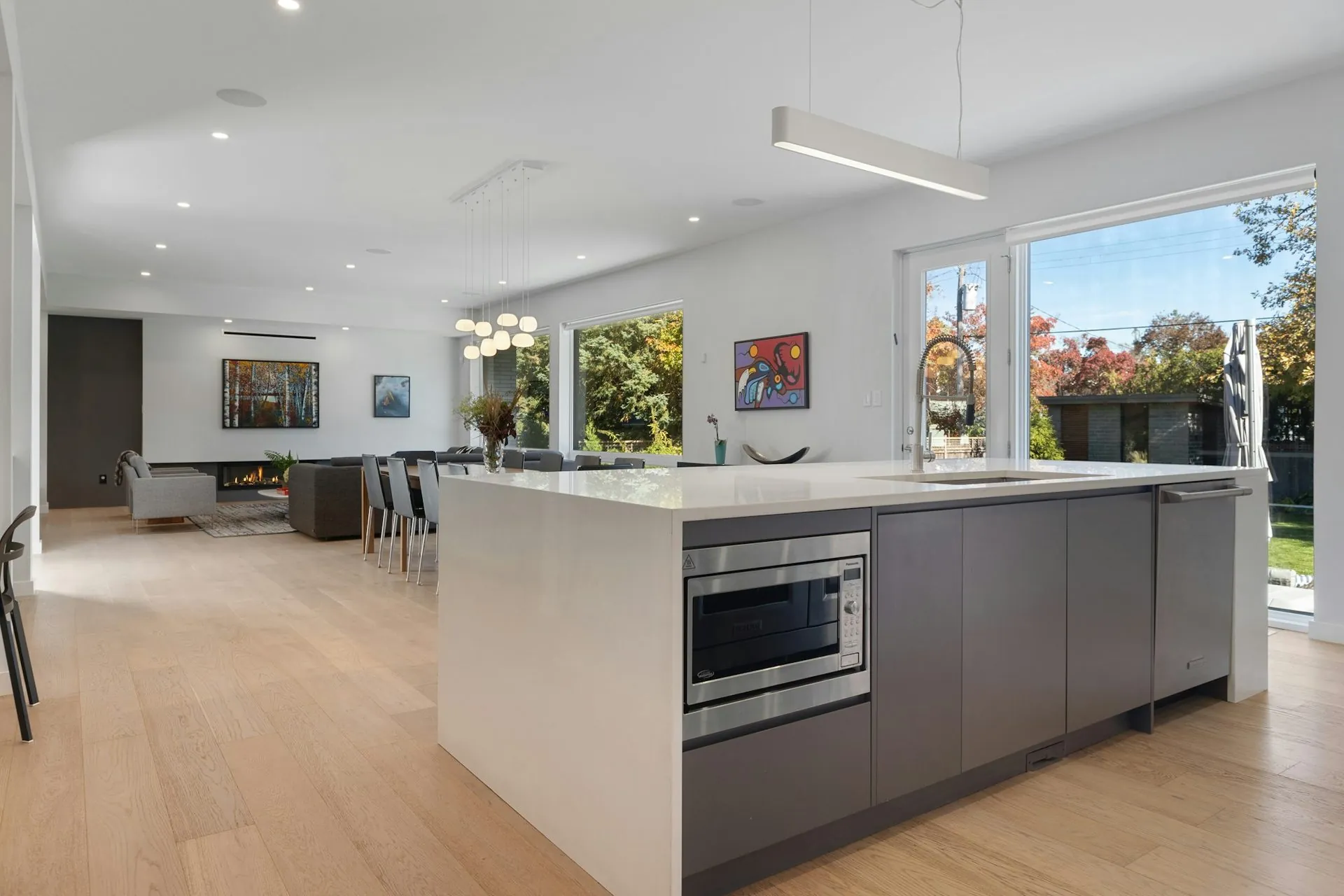
The palette: light, textural, unfussy
Whitewashed or pale oak cabinetry, a light stone or stone-look benchtop, woven pendant lights and linen-toned splashback tiles are the recognisable coastal vocabulary — deliberately understated rather than glossy, which reads as more relaxed against a bright, sun-filled room.
Why coastal specification is not optional
Salt-laden air accelerates every failure mode a kitchen can have: it gets into unsealed board edges faster, corrodes cheap hardware faster, and stresses hinges and runners that were not rated for it. Moisture-resistant board and laser-bonded edging are not stylistic choices here — they are the difference between a coastal kitchen that lasts and one that does not, which is exactly why we specify to that standard everywhere we ship, not only near the coast.
Hardware that will not corrode
Brushed or matte finishes generally resist salt-air corrosion better than bright polished chrome over the long term, and quality hinges and runners — see soft-close hinges explained — hold their action longer in humid conditions than unbranded equivalents.
Kitchen styles
More in this series: Hamptons style kitchen guide · Modern farmhouse kitchen guide · Japandi kitchen design guide · Industrial style kitchen guide · Scandinavian kitchen design guide.
Frequently asked
Common questions
If your question is not here, call the studio. We would rather talk it through than have you guess.
Ask us directly →What makes a kitchen "coastal style"?
A light, textural palette — whitewashed or pale timber, light stone, woven and linen-toned finishes — paired with a specification suited to salt air and humidity rather than a standard inland kitchen.
Does a coastal kitchen need special hardware?
It benefits from quality, well-sealed hardware and moisture-resistant carcasses regardless of where it is installed, since humidity and salt air accelerate the same failure modes an inland kitchen eventually faces anyway, just faster.
Is a coastal kitchen more expensive to build?
Not necessarily more expensive in palette, but it is a false economy to specify a standard-grade board or hardware near the coast — the earlier failure cost more in the long run than specifying correctly the first time.
Delivered assembled
The assembly is done
before it arrives.
Carcasses built square on a bench, Blum hardware fitted, doors hung and adjusted to even gaps. On site you are fixing finished cabinets to a wall, not building them on the floor. Our own team fits it in Central Queensland; your installer fits it anywhere else in Australia. Prefer to build it yourself? The same kitchen ships flat pack.
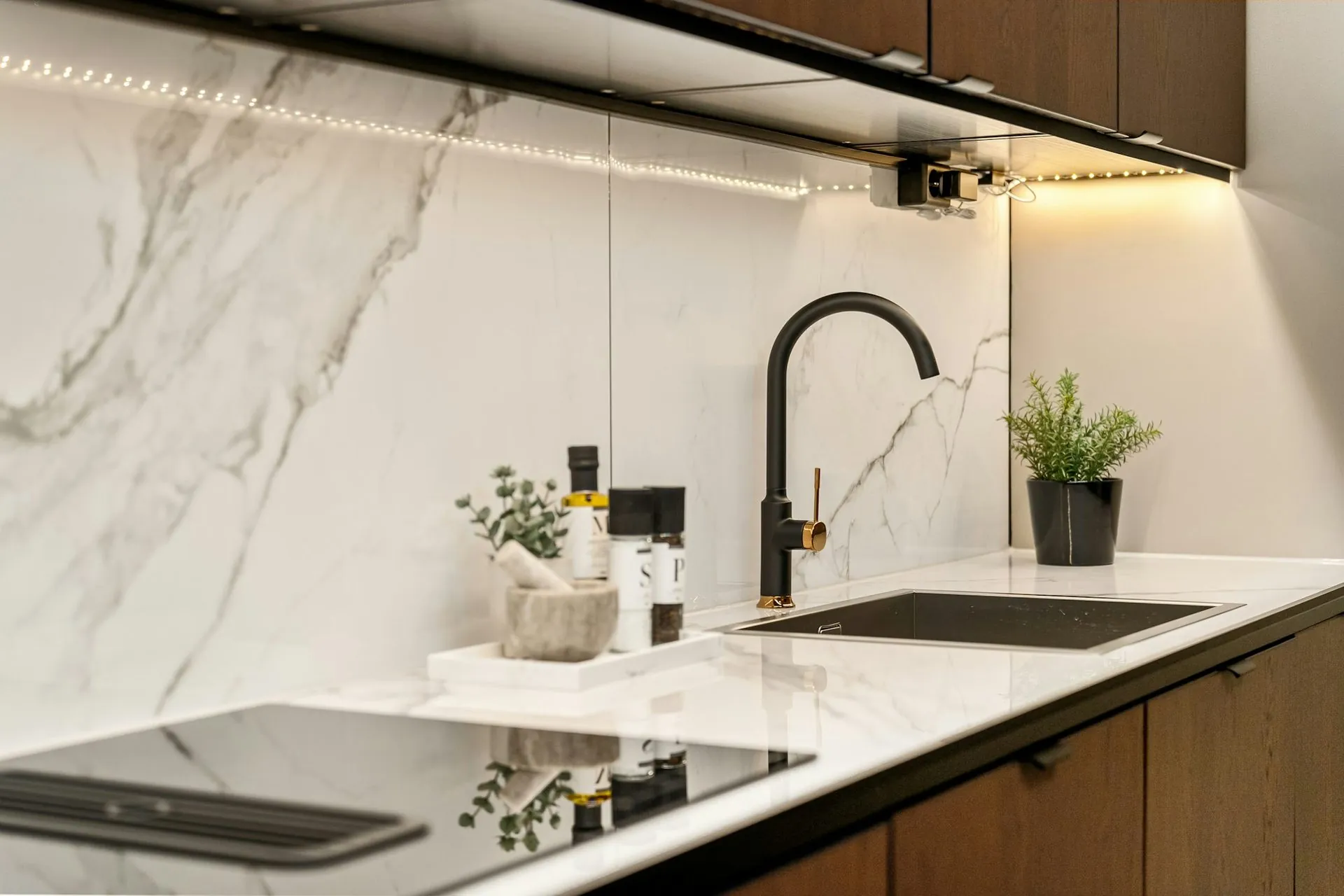
Full-height stone splashback
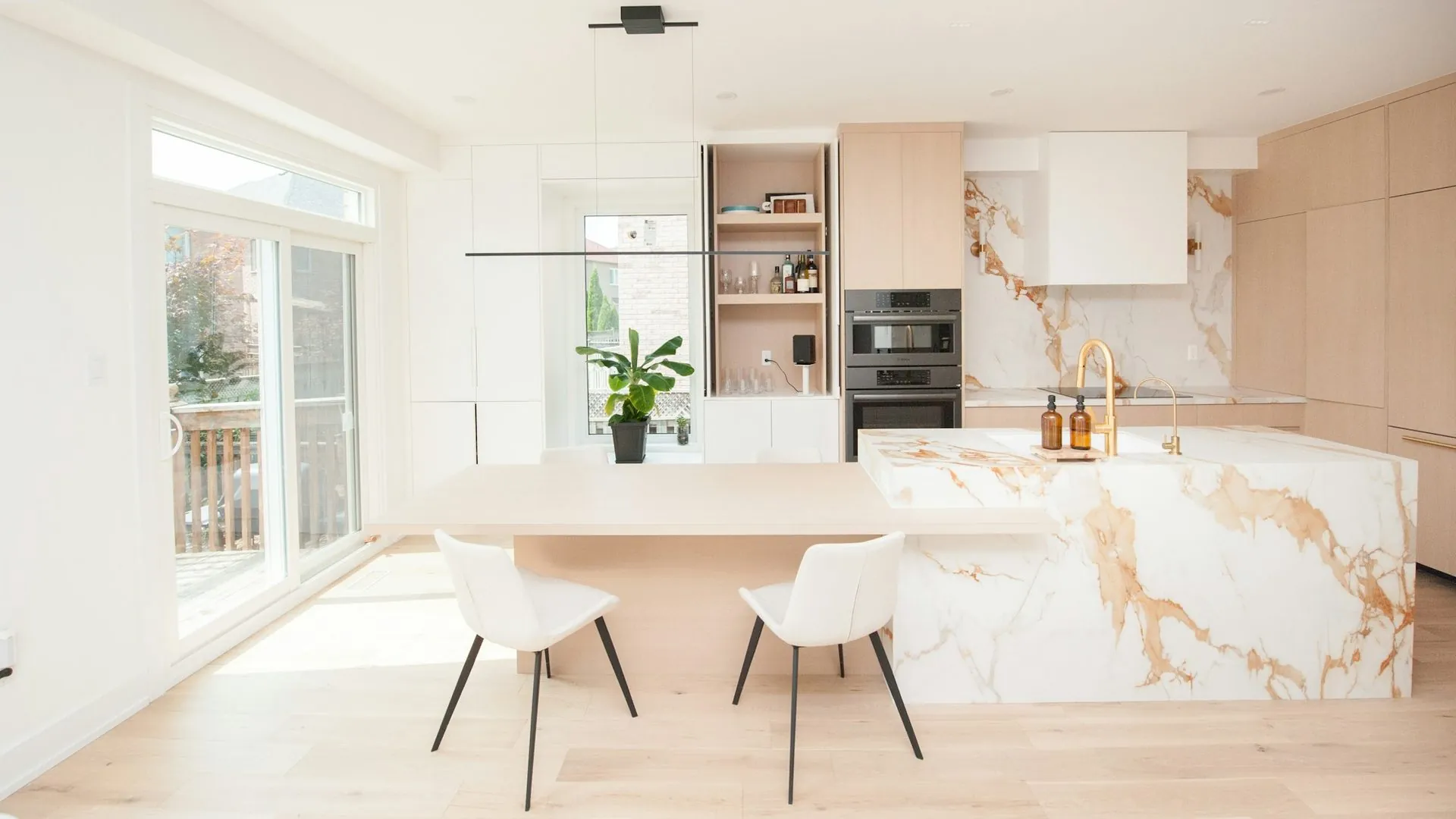
New build, kitchen fitted at fit-off
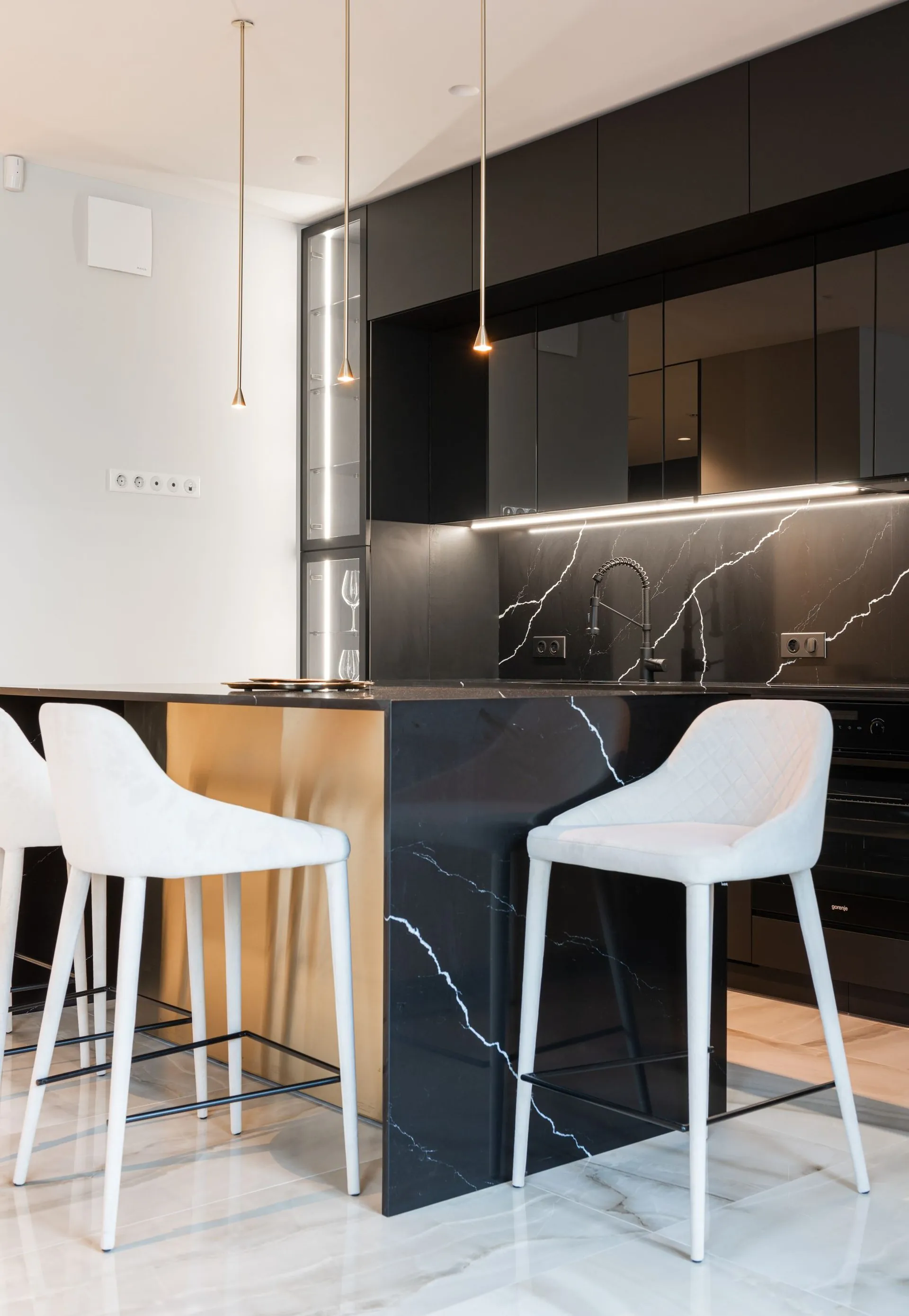
Black joinery, marble bar
Coastal
The look, and the
specification underneath it.
Send your room and your postcode and we will spec the kitchen for the climate it actually sits in.