Scandinavian design:
function first, always.
Not minimalism for its own sake — every decision here is justified by how the kitchen is actually used.
The short answer
A Scandinavian kitchen is light, pale timber and white or off-white cabinetry, simple flat or Shaker-lite door profiles, and a strong emphasis on genuine daily function over decoration — good task lighting, sensible storage, and nothing purely ornamental. It is close to Japandi in palette but warmer and less severe, with more visible timber grain and softer, rounder detailing allowed.
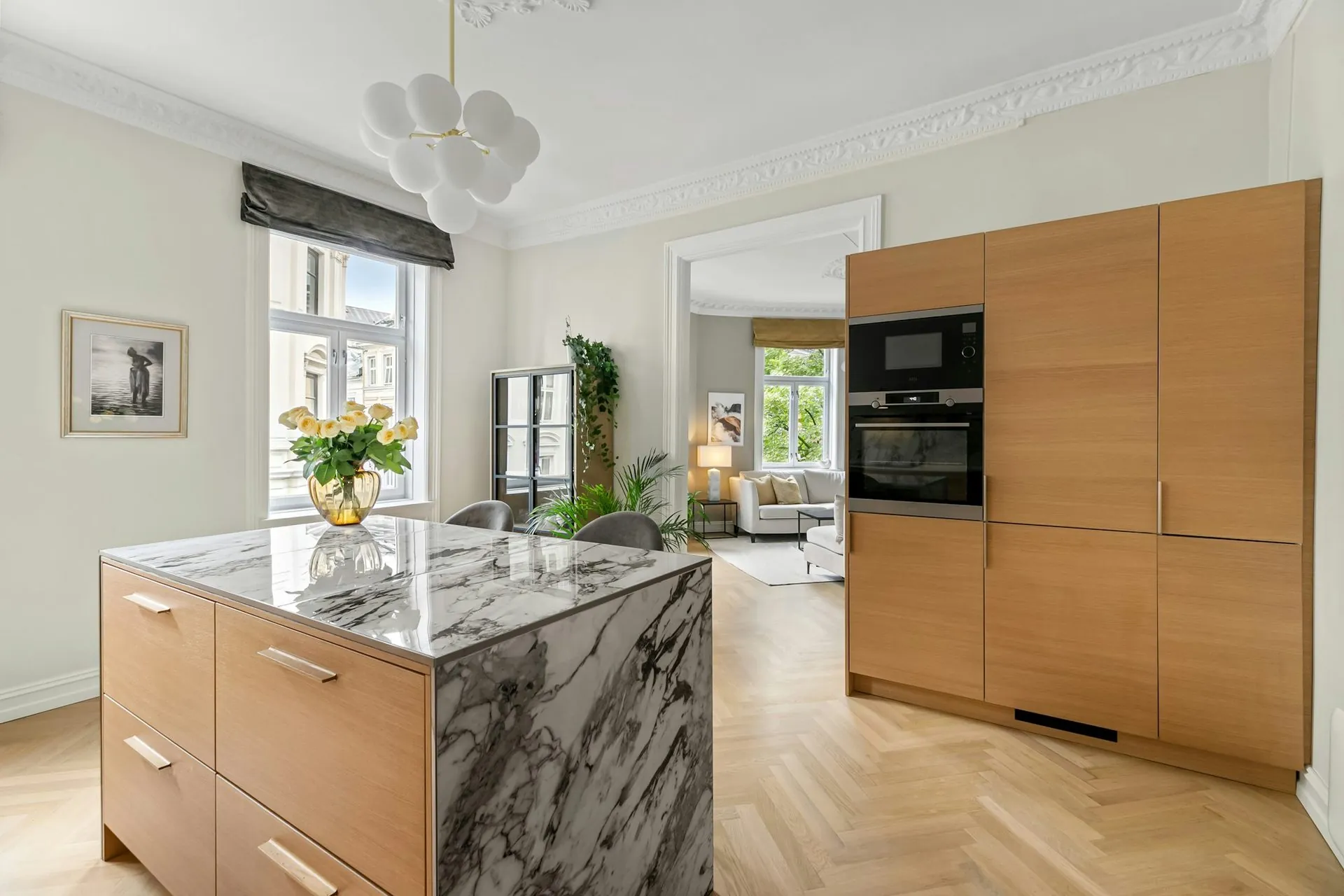
Light timber and white, kept warm
Pale oak or birch-look cabinetry against white or off-white walls and benchtops is the base palette, with enough visible timber grain to keep the room feeling warm rather than clinical — the detail that most separates it from a starker Japandi or minimalist look.
Function over ornament, in every decision
Open shelving that is actually used daily rather than styled for photographs, task lighting placed for real cooking rather than ambience alone, and storage chosen for what genuinely gets used — this style has a lower tolerance for decoration that does not also work.
Where it differs from Japandi
Scandinavian design allows softer, rounder details and more visible timber texture than the more severe restraint of Japandi, which favours flatter, more uniform surfaces. Both share a light palette and a dislike of clutter, but Scandinavian design is warmer and more forgiving of a busy household.
Kitchen styles
More in this series: Hamptons style kitchen guide · Modern farmhouse kitchen guide · Japandi kitchen design guide · Coastal kitchen design guide · Industrial style kitchen guide.
Frequently asked
Common questions
If your question is not here, call the studio. We would rather talk it through than have you guess.
Ask us directly →What is the difference between Scandinavian and Japandi kitchen styles?
Scandinavian design is warmer and more forgiving, with visible timber grain and softer detailing; Japandi is more severe and restrained, favouring flatter surfaces and a stricter, smaller material palette.
Does a Scandinavian kitchen need open shelving?
It is common but not essential — the defining trait is function-first design generally, which can be achieved with closed storage just as validly if that suits the household better.
What benchtop suits a Scandinavian kitchen?
A light engineered stone or a simple white benchtop keeps the palette consistent, paired with pale timber cabinetry rather than a dark or heavily veined stone that would dominate the room.
Delivered assembled
The assembly is done
before it arrives.
Carcasses built square on a bench, Blum hardware fitted, doors hung and adjusted to even gaps. On site you are fixing finished cabinets to a wall, not building them on the floor. Our own team fits it in Central Queensland; your installer fits it anywhere else in Australia. Prefer to build it yourself? The same kitchen ships flat pack.
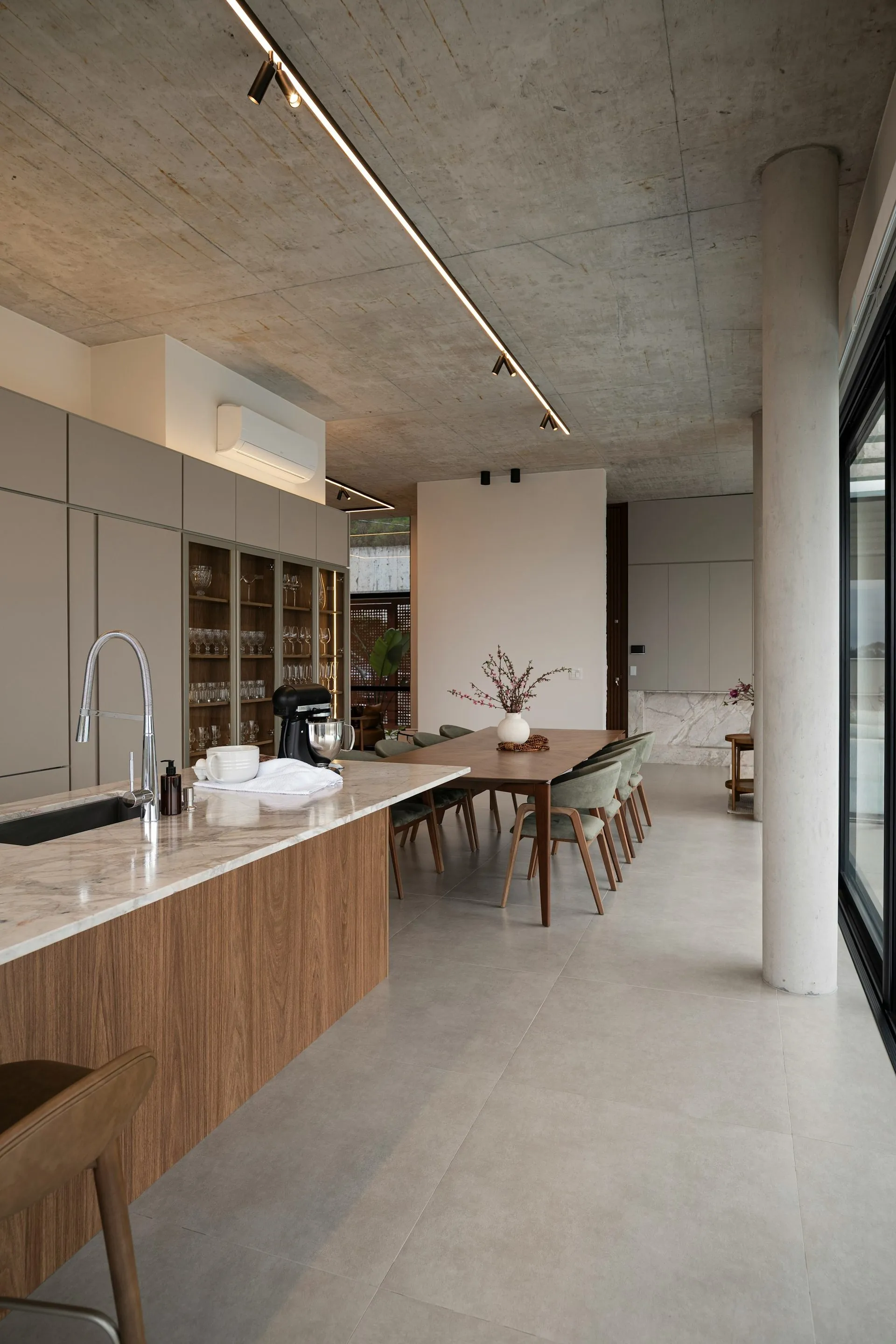
Timber island, stone top
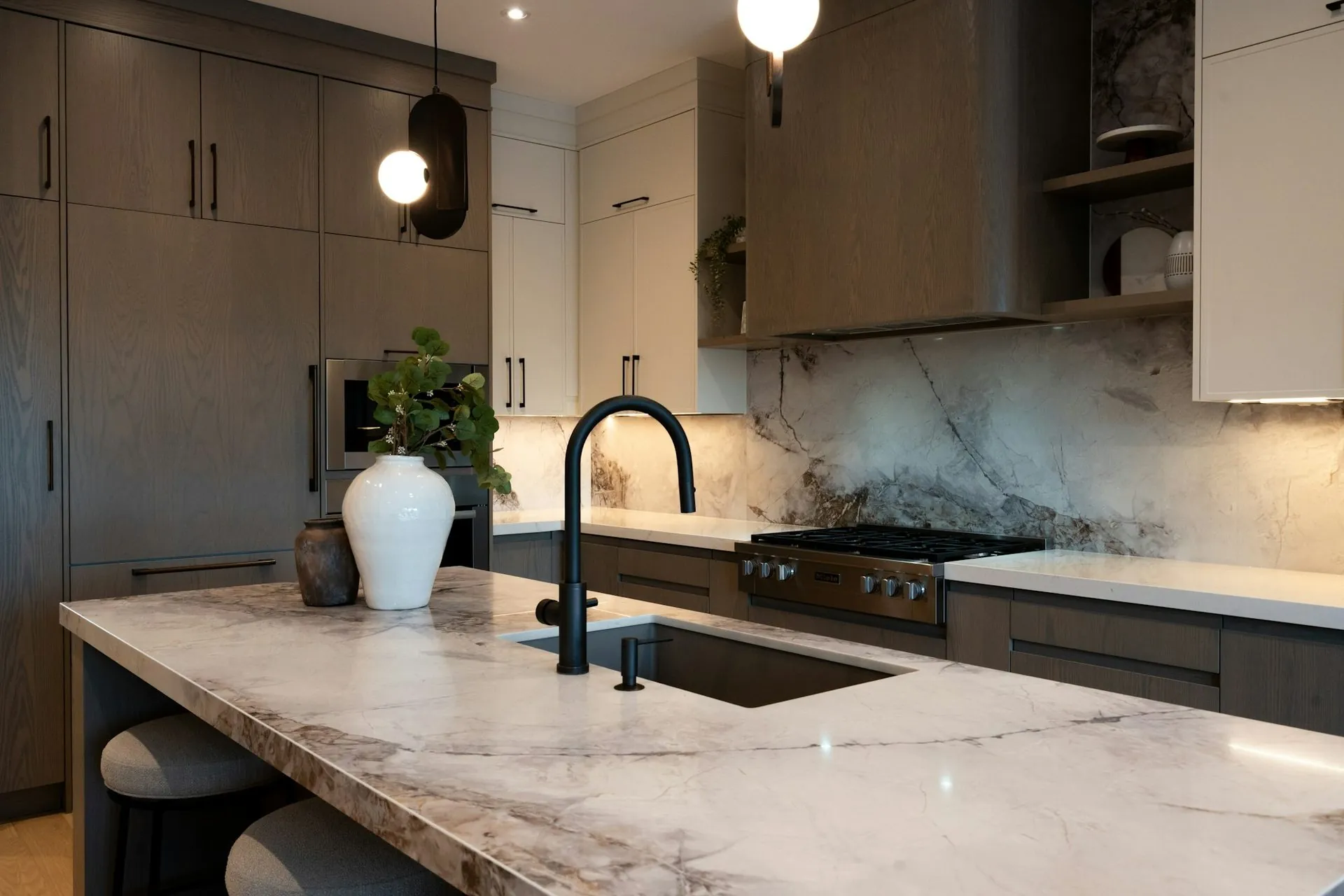
Mitred stone edge over assembled carcasses
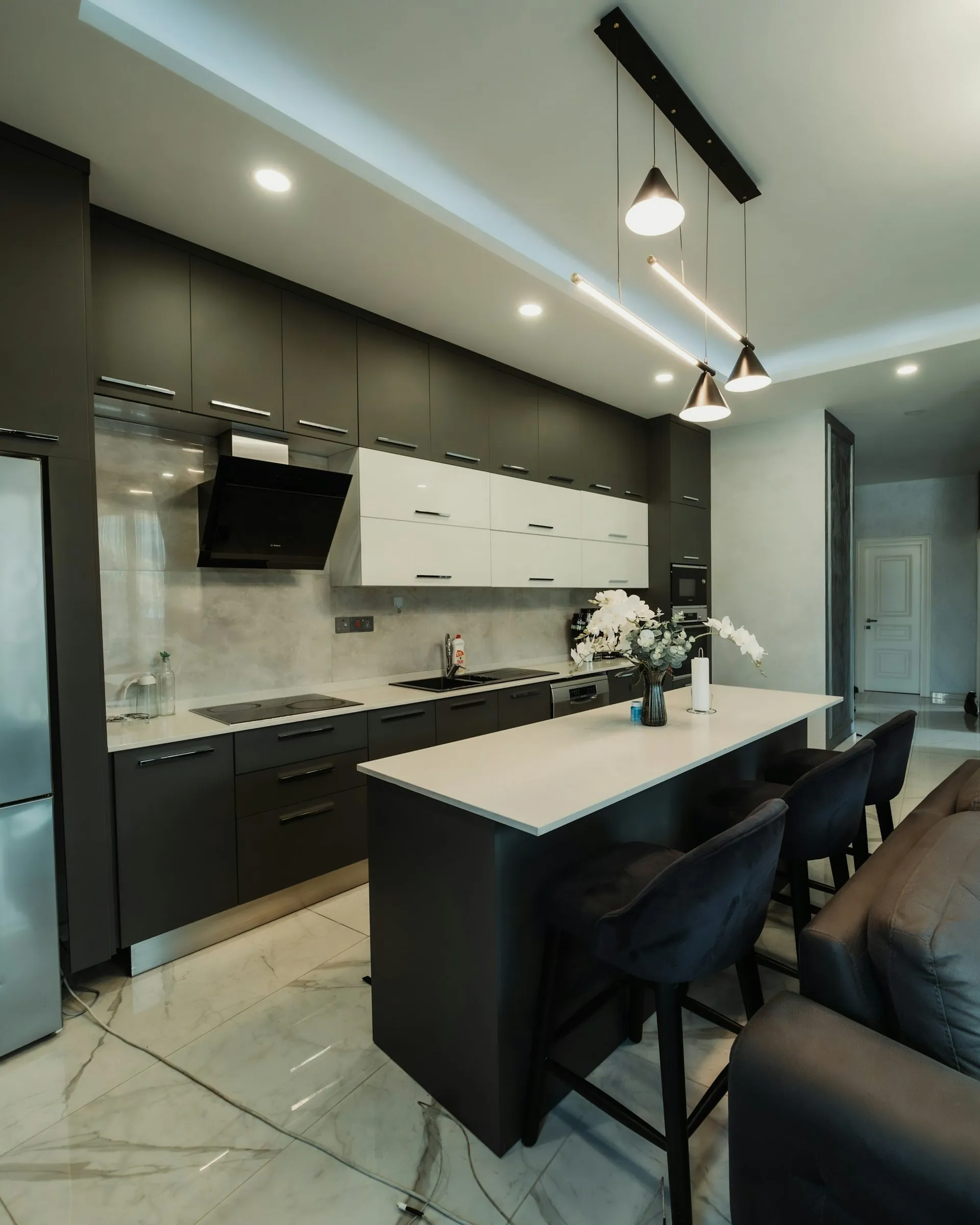
Long island, one delivery
Scandinavian
Light, warm,
and built to be used daily.
Send your room and we will design around function first, then the palette on top of it.