Transitional kitchens,
and how not to sit on the fence.
The most popular style in Australia, and the hardest to describe, because it is defined by what it sits between.
The short answer
A transitional kitchen combines traditional form with contemporary restraint: a simple framed or lightly profiled door, clean lines, a quiet palette, and modern hardware and appliances. It exists because most people want neither a period reproduction nor a stark handleless box. Done well it reads as calm and unplaceable in time. Done badly it reads as two decisions that did not get resolved, which is the one real risk of the style.
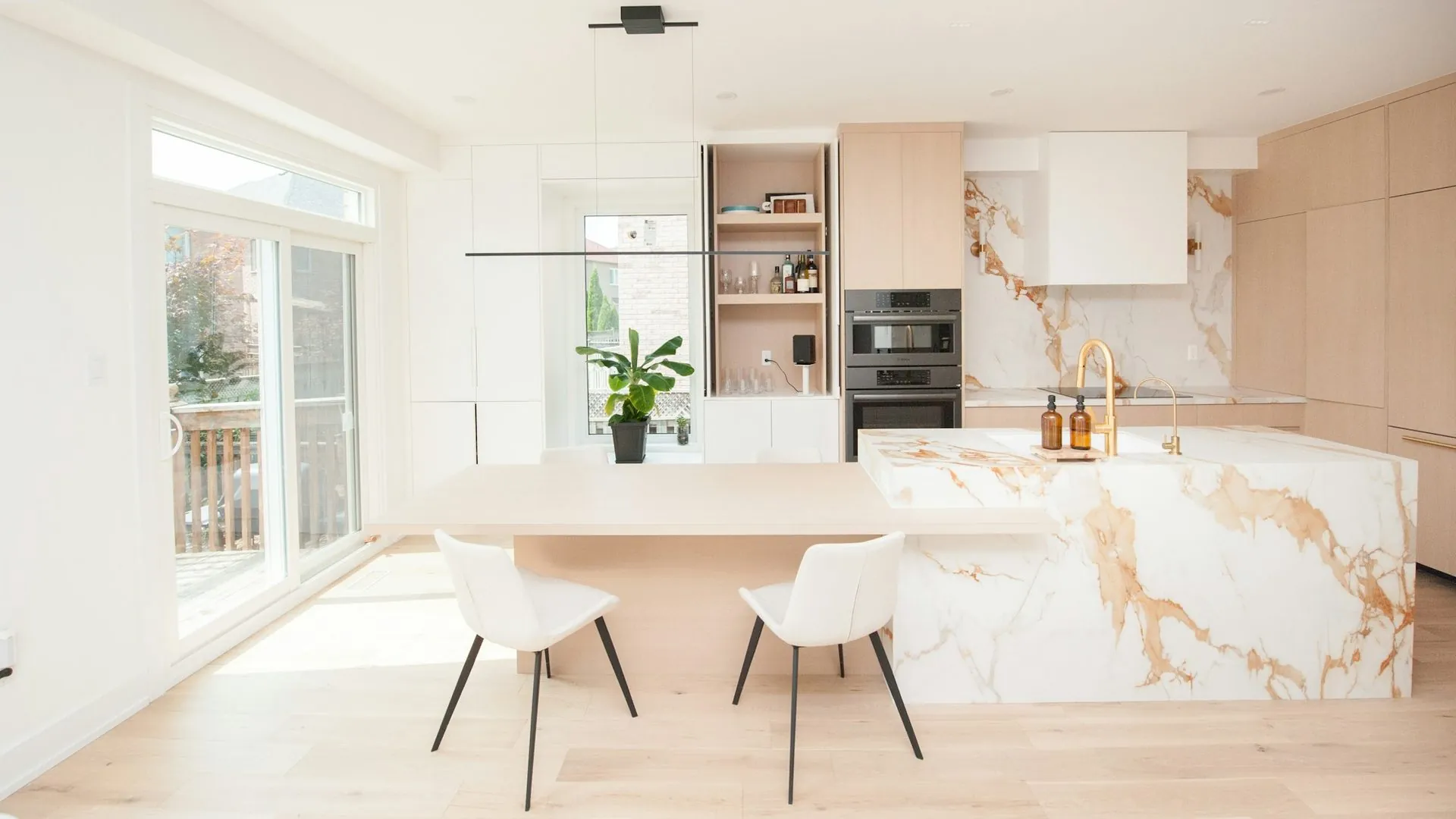
Pick a side on each element
The way transitional fails is by compromising on every element at once — a half-profiled door, a half-visible handle, a mid-grey nobody chose. The way it works is picking a side on each: a clearly traditional door with clearly modern hardware, or a flat door with a traditional island and a classic benchtop. Commit on each decision and the whole reads deliberate.
The door is usually Shaker
A Shaker door is the default transitional door, because its frame gives traditional form with no ornament to date. Pair it with a slim contemporary bar pull rather than a knob and the kitchen moves modern; pair it with a knob and it moves traditional. One hardware decision shifts the whole room.
Where to put the contemporary half
Usually the benchtop and the appliances. Honed stone with a slim 20mm edge, integrated appliances and a plain splashback give the modern half while the cabinetry does the traditional half. Reverse it — a flat door with an ornate splashback — and it rarely holds together.
What it costs
Shaker and lightly profiled doors sit in our Maison range; flat doors start at Essence. The cost page sets out the linear metre figures and what the benchtop upgrade adds. 18mm moisture-resistant board, laser-bonded edging and Blum hardware on every collection.
Kitchen styles
More in this series: Hamptons style kitchen guide · Modern farmhouse kitchen guide · Japandi kitchen design guide · Coastal kitchen design guide · Industrial style kitchen guide · Scandinavian kitchen design guide · Shaker · Two-tone · Contemporary · Country · French provincial · Classic · Federation · Victorian · Art Deco · Mediterranean · Cottage.
Frequently asked
Common questions
If your question is not here, call the studio. We would rather talk it through than have you guess.
Ask us directly →What is a transitional kitchen?
One combining traditional form — a framed or lightly profiled door — with contemporary restraint: clean lines, a quiet palette and modern hardware.
Why is transitional so popular?
Most people want neither a period reproduction nor a stark handleless box. Transitional is the middle, and it dates slowly because it has no strong markers.
How do I stop a transitional kitchen looking indecisive?
Pick a side on each element rather than compromising on all of them. A clearly traditional door with clearly modern hardware works; half-measures everywhere do not.
What is the difference between transitional and modern?
Transitional keeps a framed door and visible hardware. Modern and contemporary kitchens go flat and handleless.
Delivered assembled
The assembly is done
before it arrives.
Carcasses built square on a bench, Blum hardware fitted, doors hung and adjusted to even gaps. On site you are fixing finished cabinets to a wall, not building them on the floor. Our own team fits it in Central Queensland; your installer fits it anywhere else in Australia. Prefer to build it yourself? The same kitchen ships flat pack.
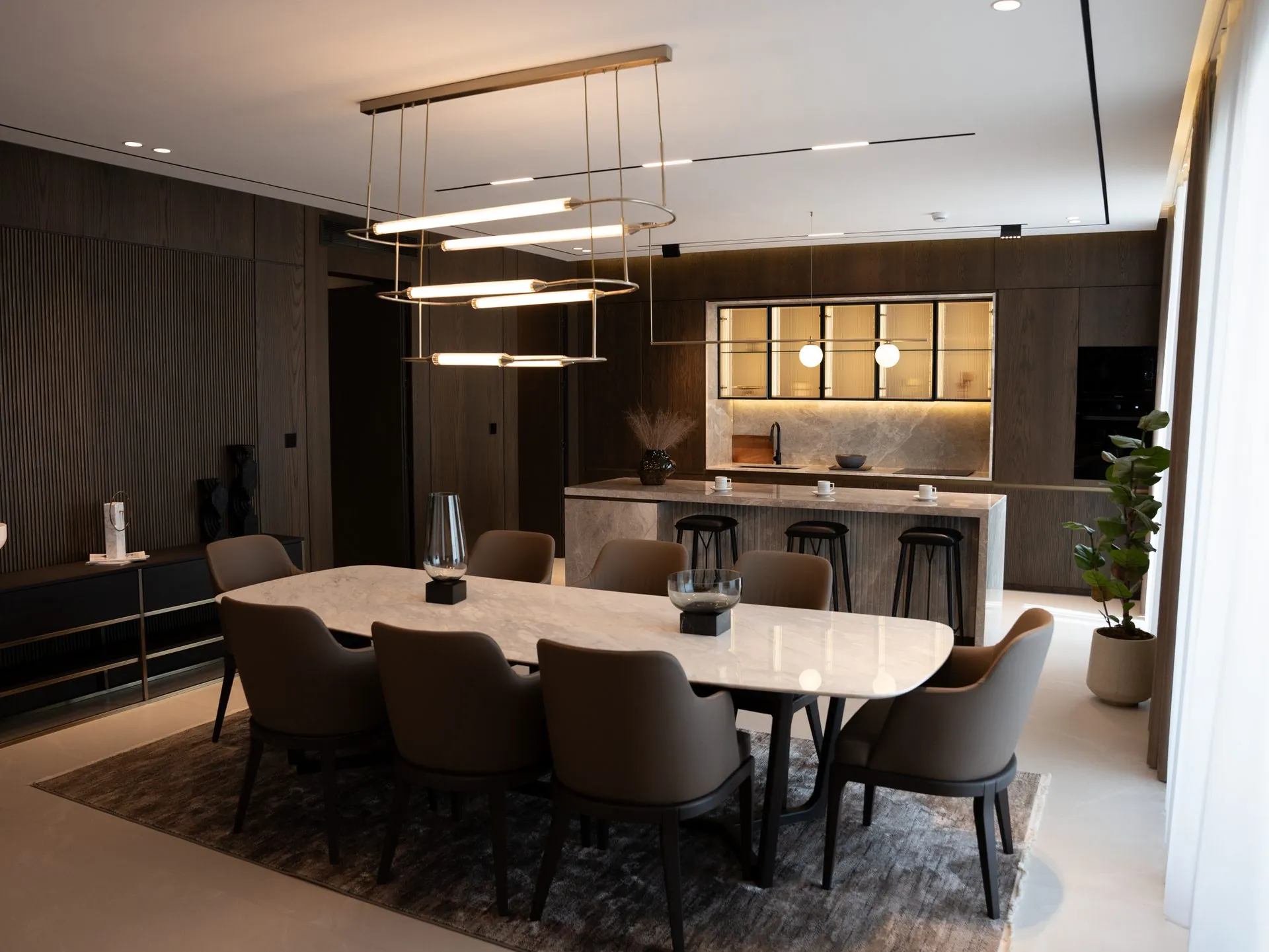
Full-height joinery, fitted in days
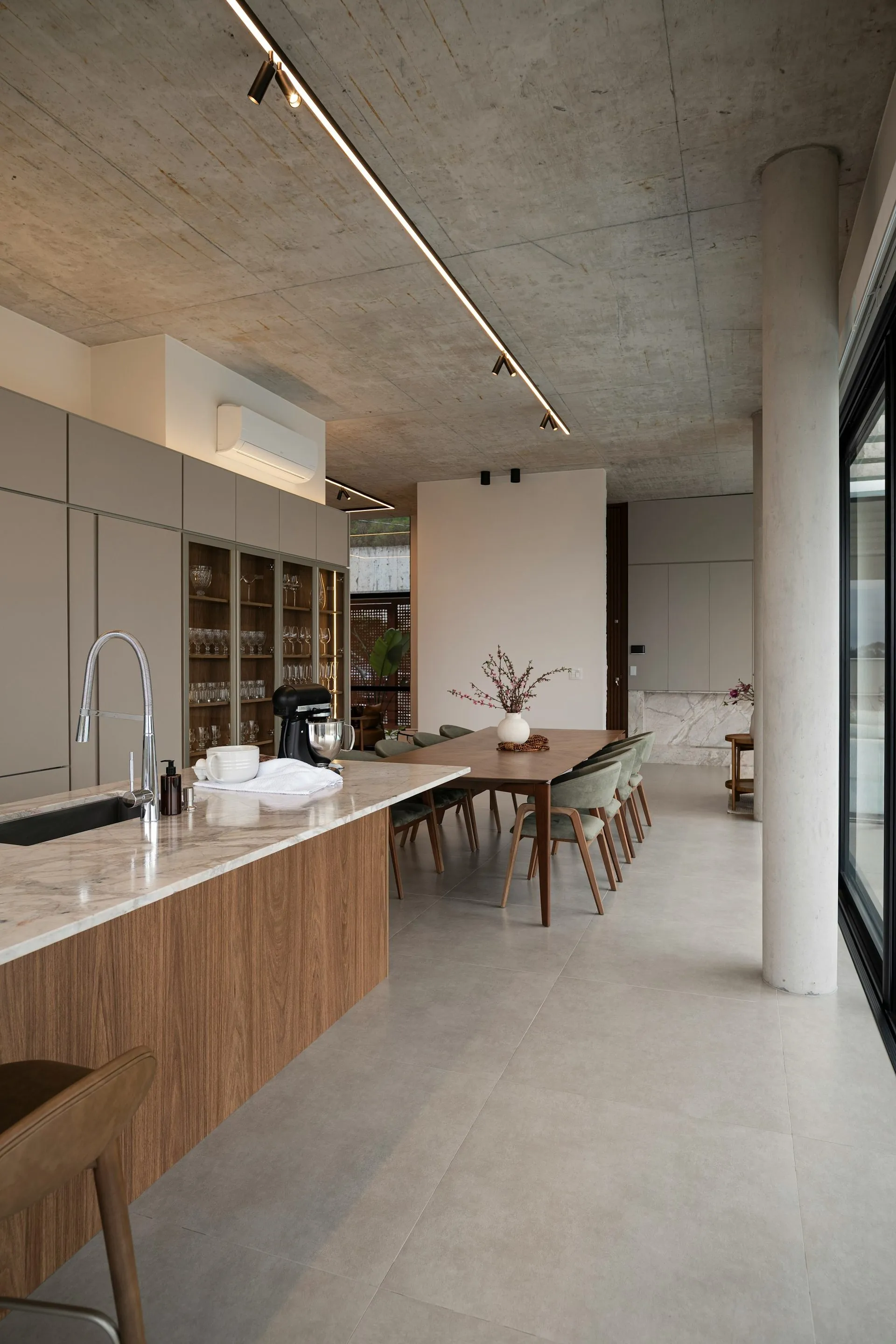
Timber island, stone top
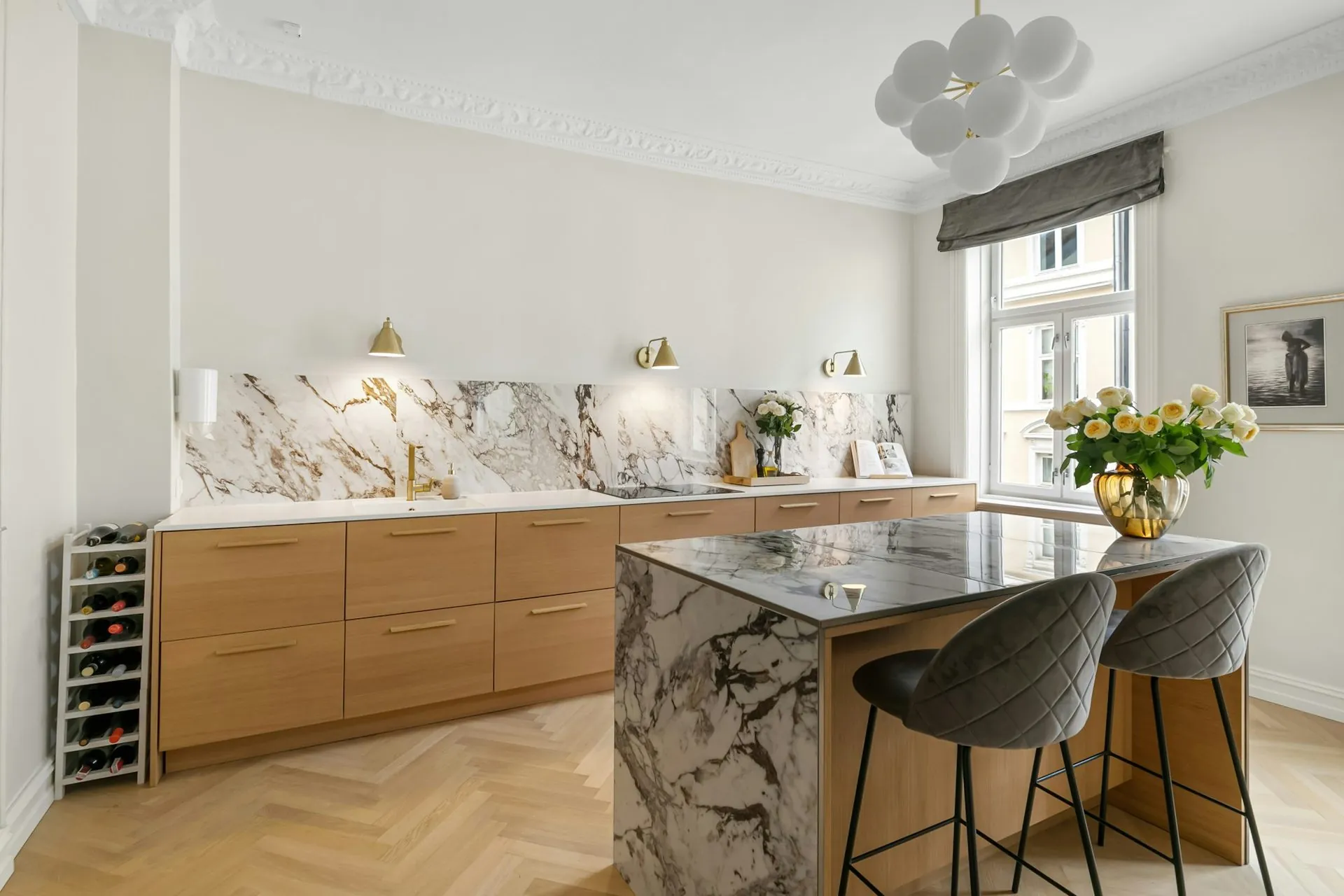
American oak and stone
Your style
Send us the dimensions.
We will draw it your way.
A fixed, itemised quote drawn to your room in the style you want, flat packed or delivered assembled.