Shaker kitchens,
and what the frame costs.
The most requested style in Australia, and the one most often done badly. The difference is entirely in the door.
The short answer
A Shaker kitchen is defined by its door: a flat centre panel inside a square-edged frame, with no moulding or ornament. It came from nineteenth-century Shaker furniture, where the plainness was a religious principle rather than a design choice. In a kitchen it reads as timeless rather than trendy, which is why it survives fashion cycles. It costs more than a flat door because the frame is a separate construction, and the cheap versions fake it with a routed groove in a single board.
How the door is actually made
A true Shaker door is five pieces: four frame rails and a centre panel sitting in a groove. That construction is why it costs more and why it stays flat — the panel can move with humidity without distorting the frame. A routed Shaker door is one board with a rectangle machined into it to imitate the shadow line. It is cheaper, it looks close from a distance, and it has none of the movement tolerance. Ask which you are being quoted.
Why it suits Australian houses
It sits comfortably in a Queenslander, a federation cottage, a beach house and a new build, which almost no other style does. The frame gives shadow and depth that a flat door cannot, so it reads as considered in a plain room, while staying quiet enough not to date. In a period house it is usually the correct answer; in a very modern one it can read as fussy.
Where people get it wrong
Handles. A Shaker door with a sleek modern pull fights itself. Knobs or simple bar pulls in an unlacquered finish suit it. The second mistake is pairing it with a high-gloss benchtop, which undoes the matte restraint the style depends on. Honed or matte stone is the better partner.
What it costs here
Shaker doors sit in our Maison range and above, because of the frame construction. The carcasses, hardware and edging behind them are identical to every other collection — the cost page sets out what the collections run per linear metre, and the door choice is what moves you between them.
Kitchen styles
More in this series: Hamptons style kitchen guide · Modern farmhouse kitchen guide · Japandi kitchen design guide · Coastal kitchen design guide · Industrial style kitchen guide · Scandinavian kitchen design guide · Two-tone · Contemporary · Country · French provincial · Classic · Federation · Victorian · Art Deco · Mediterranean · Cottage · Transitional.
Frequently asked
Common questions
If your question is not here, call the studio. We would rather talk it through than have you guess.
Ask us directly →What is a Shaker kitchen?
One with doors made of a flat centre panel inside a square-edged frame, with no moulding. The plainness is the style.
Is Shaker out of date?
It has outlasted every kitchen trend since the 1990s, largely because it has no ornament to date. It is the safest choice if you intend to stay in the house.
Why do Shaker doors cost more?
A real one is five pieces of construction rather than a single flat panel. A routed imitation costs less and does not move with humidity the same way.
What handles suit a Shaker kitchen?
Knobs or simple bar pulls. Sleek modern pulls fight the frame; so does a high-gloss benchtop.
Delivered assembled
The assembly is done
before it arrives.
Carcasses built square on a bench, Blum hardware fitted, doors hung and adjusted to even gaps. On site you are fixing finished cabinets to a wall, not building them on the floor. Our own team fits it in Central Queensland; your installer fits it anywhere else in Australia. Prefer to build it yourself? The same kitchen ships flat pack.
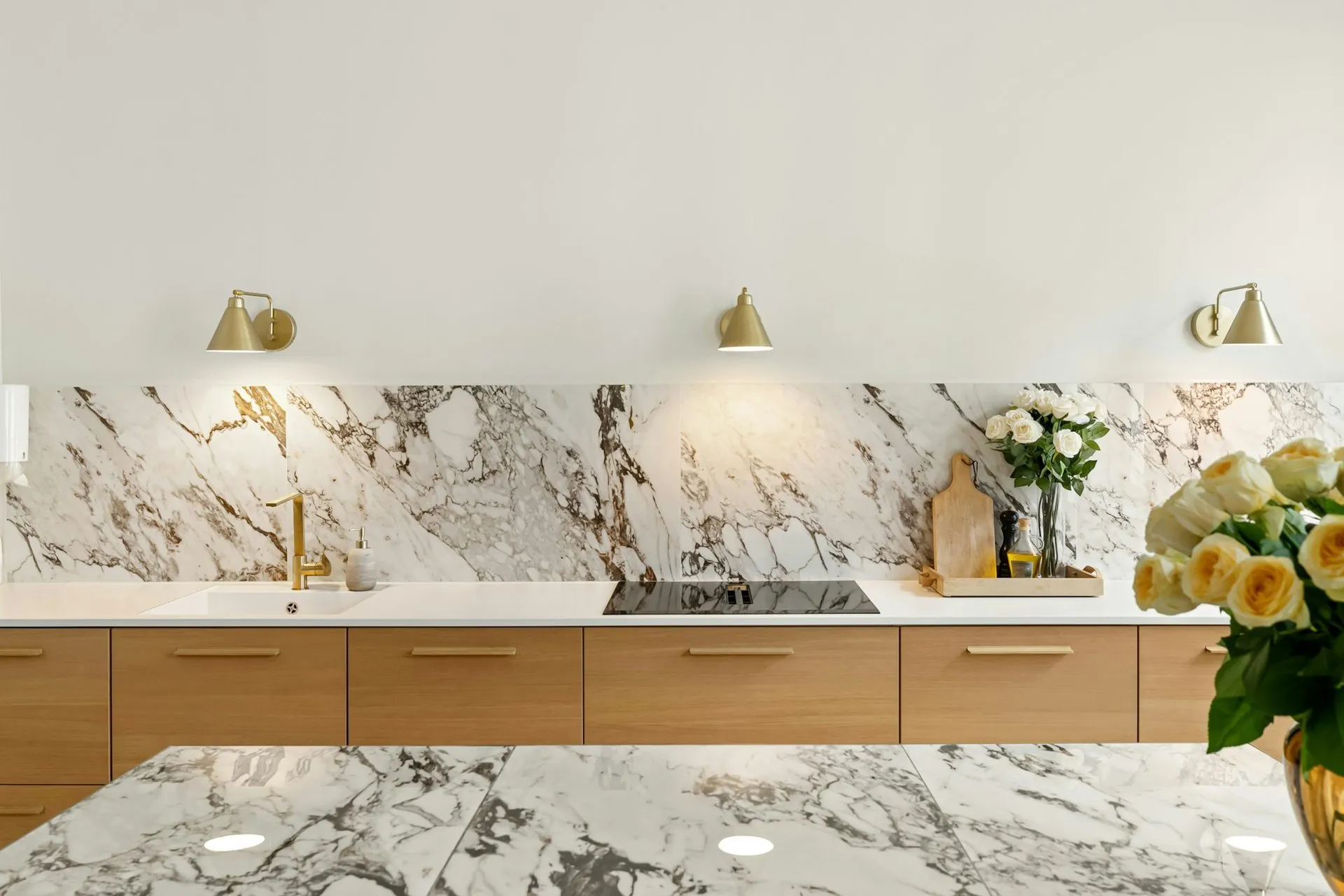
Handleless rail on an assembled run
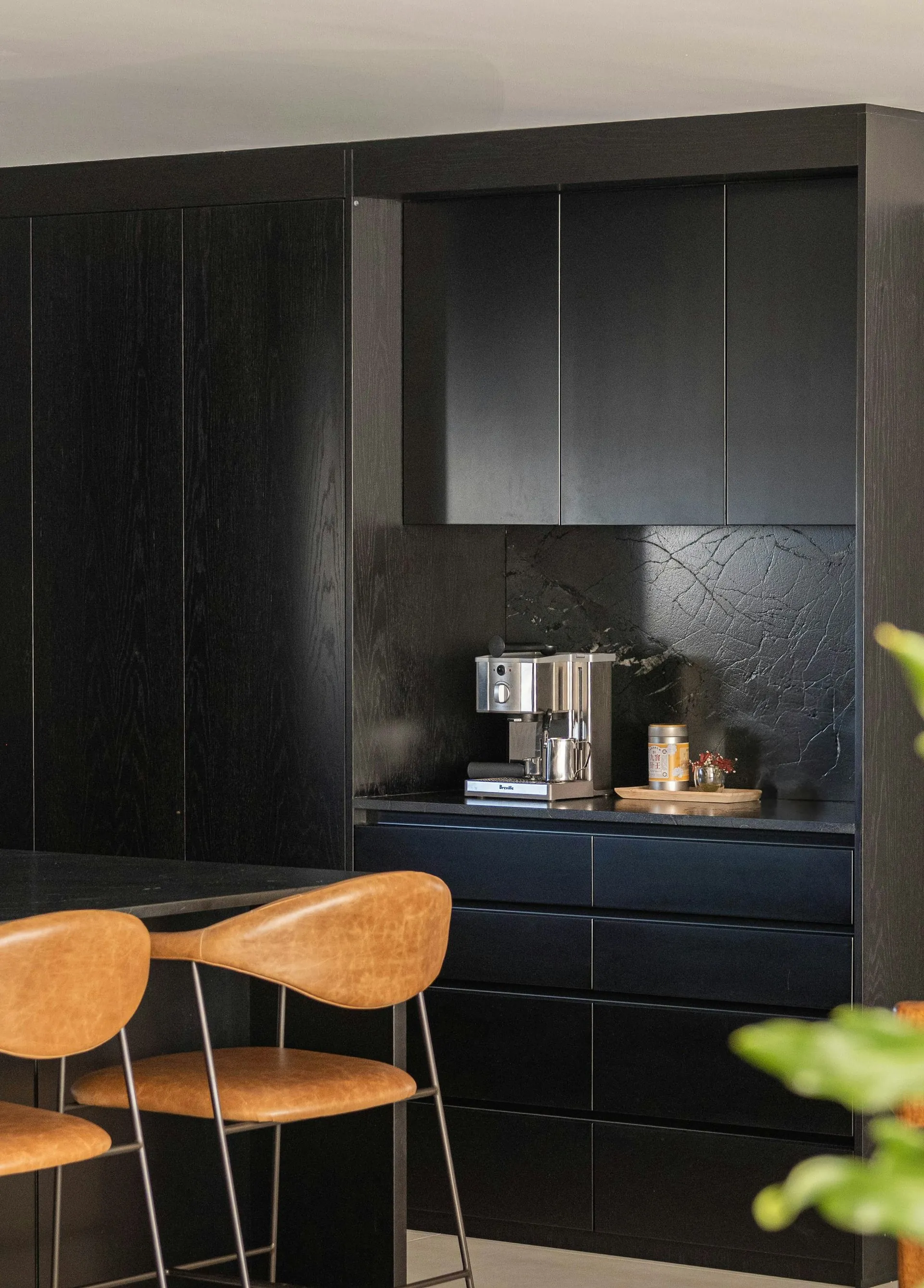
Appliance garage, hardware fitted before delivery
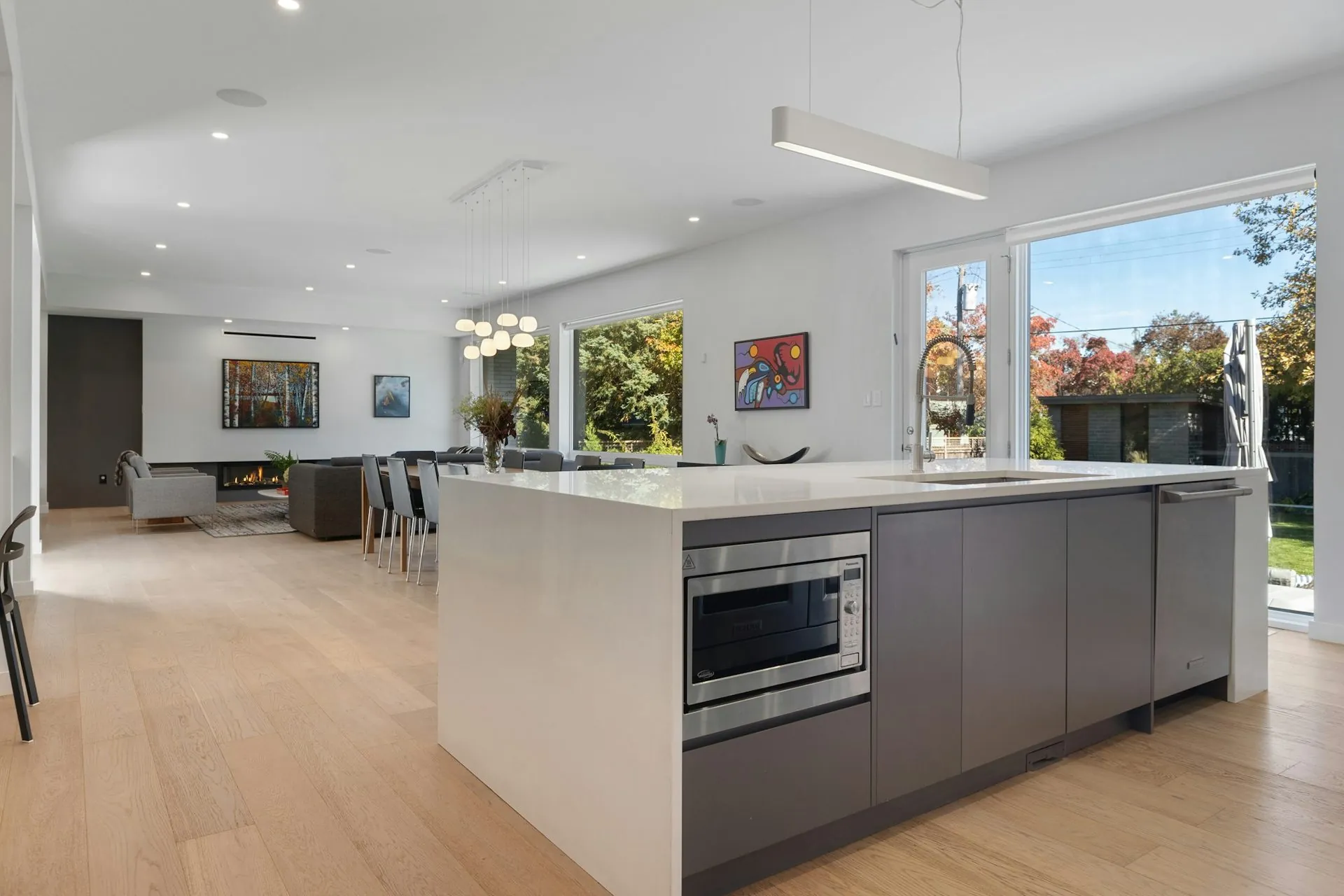
A long run arrives as numbered assembled units
Your style
Send us the dimensions.
We will draw it your way.
A fixed, itemised quote drawn to your room in the style you want, flat packed or delivered assembled.