The Hamptons kitchen,
without the cliché.
Everyone can name the look. Almost nobody can name the four decisions that actually create it.
The short answer
A Hamptons kitchen is built on four decisions: a painted or off-white Shaker-profile door with a recessed panel, a light natural stone or stone-look benchtop, brushed brass or nickel hardware rather than chrome, and a full-height splashback in stone or a simple metro-adjacent tile. Get those four right and the rest of the room can be relatively plain; get them wrong and no amount of styling fixes it.
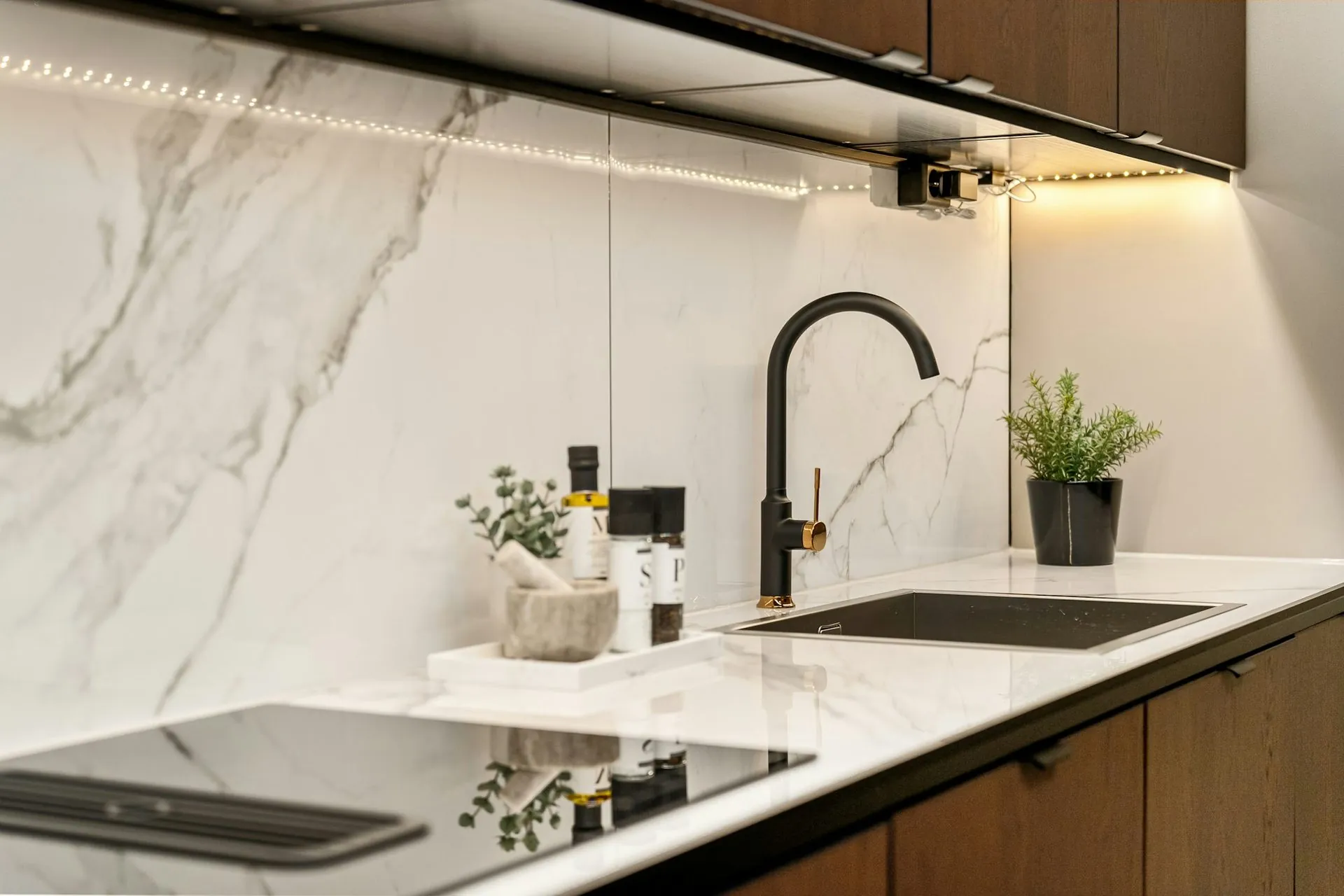
The door profile is doing most of the work
A Shaker door — a flat centre panel inside a simple recessed frame — is the single most recognisable Hamptons signal, almost always painted rather than a timber veneer or laminate print. Off-white, soft grey and pale sage are the palette that reads as considered rather than dated; a bright white can tip into a builder-grade look if the rest of the room does not support it.
Stone, not stone-look-of-everything
A genuine engineered stone or natural marble benchtop with visible veining is what separates a real Hamptons kitchen from an imitation. A flat, pattern-free benchtop under a Shaker door reads as a different, plainer style entirely — the veining is not decoration, it is doing structural work in the overall look.
Brass or nickel, never chrome
Warm metals — brushed brass, aged brass or a warm nickel — are what age this palette well. Chrome or bright polished finishes read as a different, colder era of kitchen entirely, even against an otherwise correct Shaker-and-stone base.
Where people overdo it
Shiplap on every wall, a farmhouse sink that is oversized for the room, and navy on every second cabinet are the three most common ways a Hamptons kitchen tips into pastiche. One strong navy or dark element — an island, most often — reads as intentional; navy everywhere reads as a theme rather than a kitchen.
Kitchen styles
More in this series: Modern farmhouse kitchen guide · Japandi kitchen design guide · Coastal kitchen design guide · Industrial style kitchen guide · Scandinavian kitchen design guide.
Frequently asked
Common questions
If your question is not here, call the studio. We would rather talk it through than have you guess.
Ask us directly →What makes a kitchen "Hamptons style"?
Four elements together: a painted Shaker-profile door, a light natural or stone-look benchtop with visible veining, brushed brass or nickel hardware, and a full-height stone or simple tiled splashback.
Does a Hamptons kitchen have to be white?
No — soft grey, pale sage and warm off-whites all read correctly. What matters more than the exact shade is that the door is painted rather than a timber or laminate finish.
Is a Hamptons kitchen more expensive than a standard kitchen?
Not inherently — the palette sits comfortably inside our Maison collection. What adds cost is a genuine stone benchtop over a laminate one, which the look depends on more than most other style decisions.
Delivered assembled
The assembly is done
before it arrives.
Carcasses built square on a bench, Blum hardware fitted, doors hung and adjusted to even gaps. On site you are fixing finished cabinets to a wall, not building them on the floor. Our own team fits it in Central Queensland; your installer fits it anywhere else in Australia. Prefer to build it yourself? The same kitchen ships flat pack.
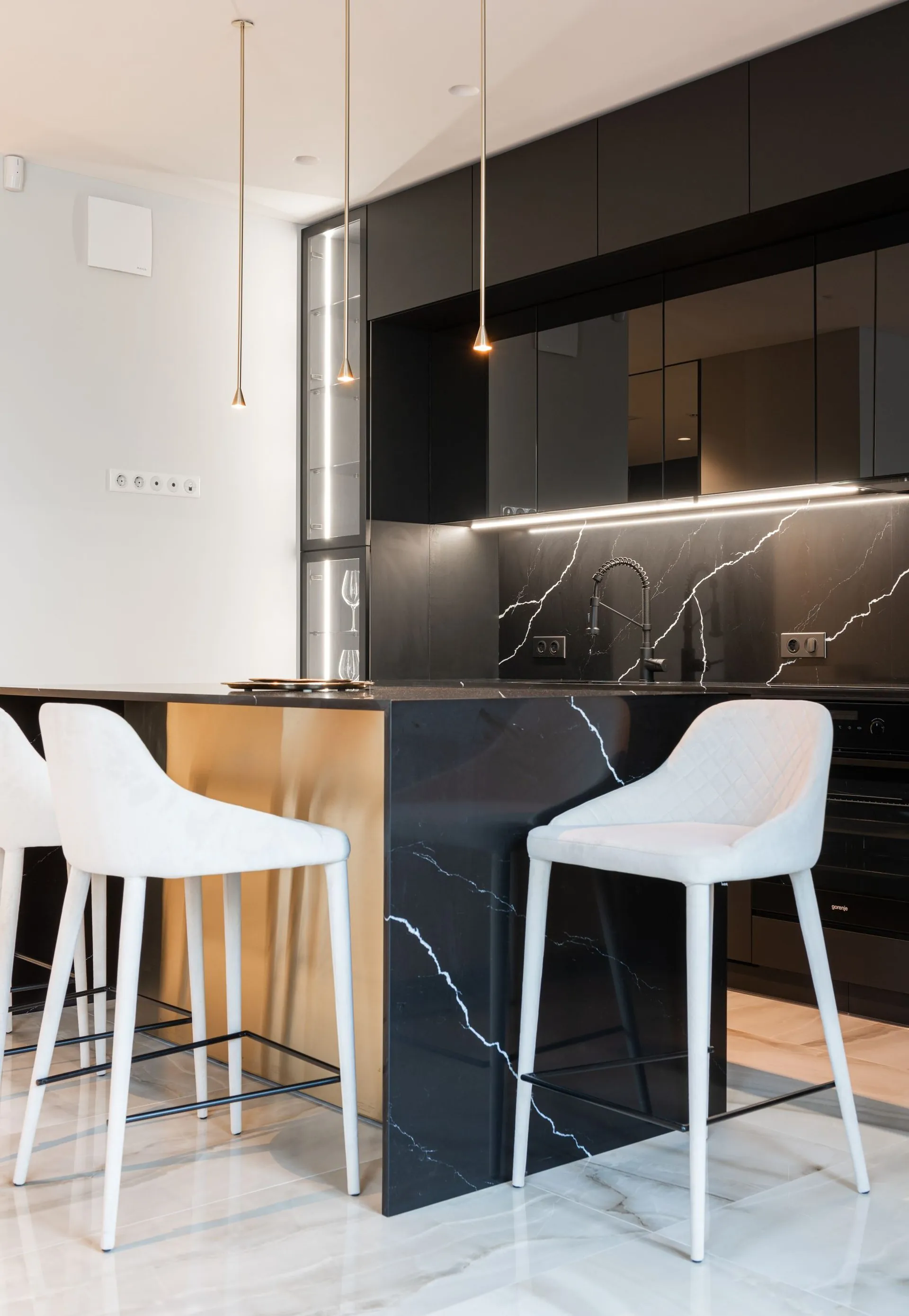
Black joinery, marble bar
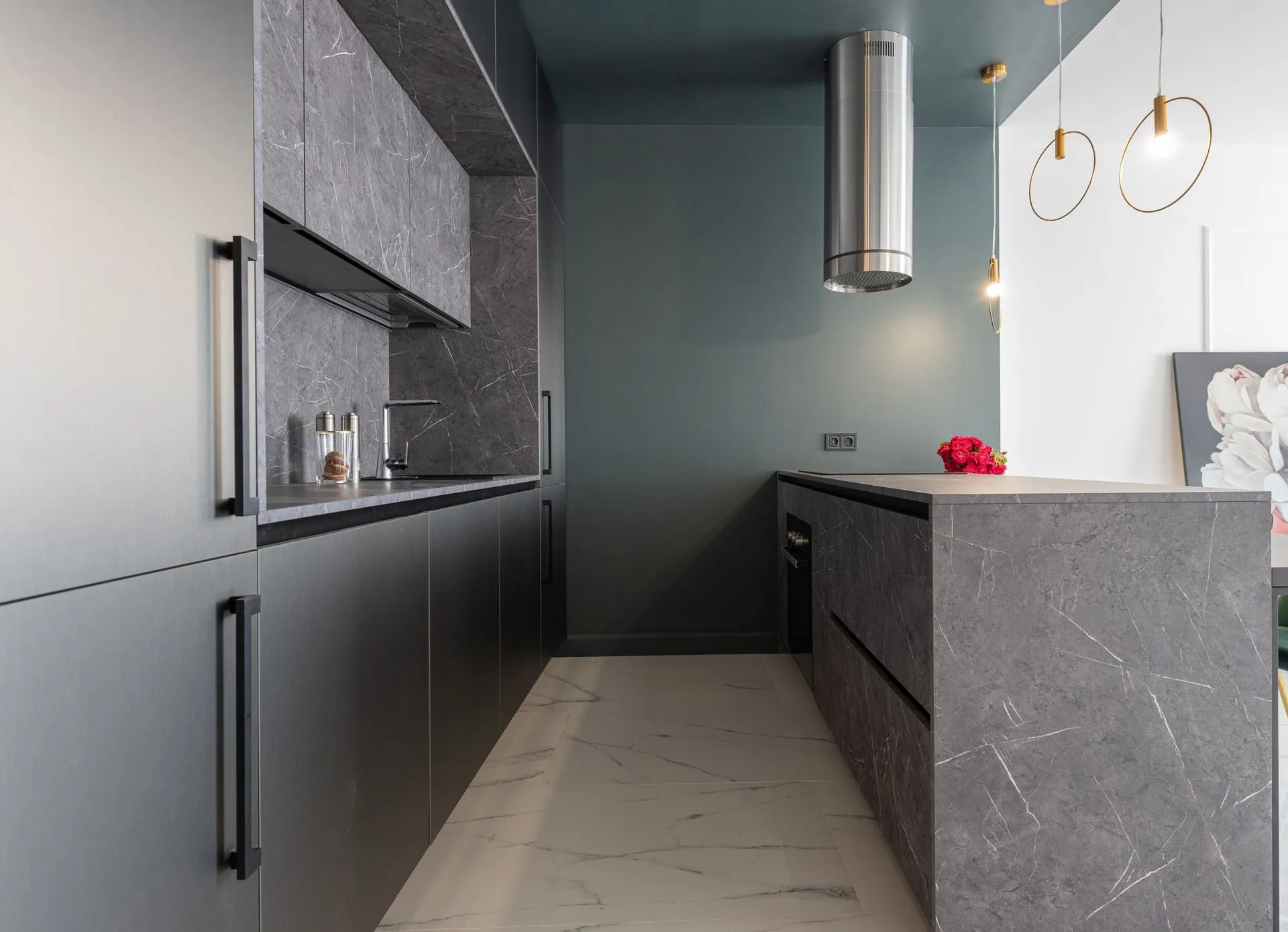
Galley layout for a narrow room
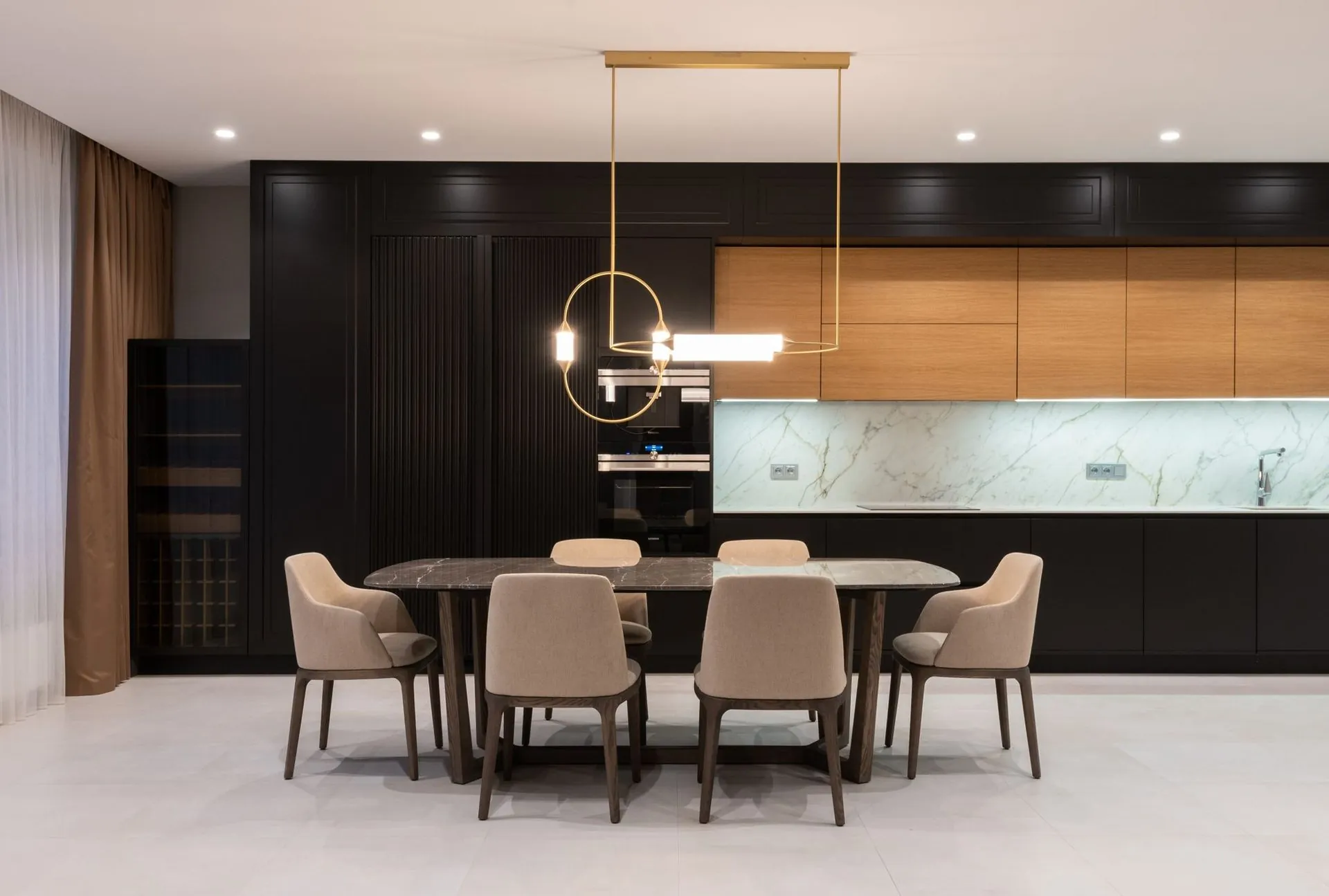
Kitchen into dining, one palette
Hamptons, done properly
Four decisions,
drawn to your room.
Send your measurements and we will show you what the palette looks like in your actual kitchen, not a display home.