Art Deco kitchens,
geometry, not costume.
A style defined by curves and geometry rather than ornament, which makes it one of the easier periods to reference without reproducing.
The short answer
An Art Deco kitchen draws on Australian houses built roughly between 1925 and 1940: curved corners, stepped geometry, strong horizontal banding, and a palette of deep colour with brass or chrome. It is a surprisingly workable style in a modern kitchen because the defining moves — a curved end to a run, a banded splashback, a bold two-tone split — are structural rather than decorative. You can reference it with three decisions and no ornament at all.
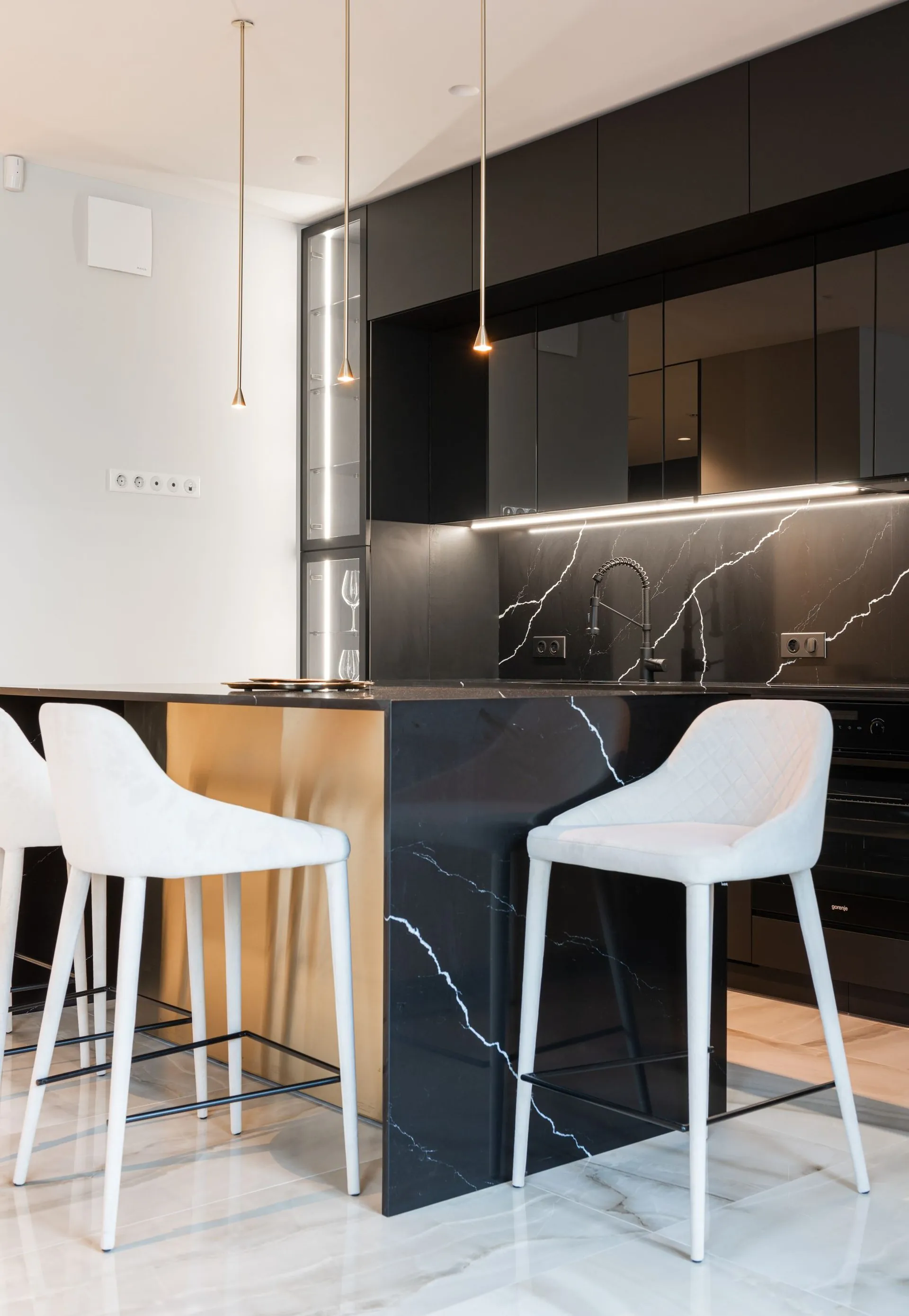
Curves are the signature
The single most Art Deco move available in cabinetry is a curved end panel on a run or an island. It costs more than a square end because it is a different piece of construction, and it does more for the style than any other decision. One curve in a kitchen is enough. Two is a lot. Three is a theme.
Banding and geometry
The second move is horizontal emphasis: a banded splashback, a contrasting plinth and cornice, or a benchtop detailed with a stepped edge. Deco is about repeating geometry, not applied ornament, which is why a two-tone split reads Deco when the colours are strong and the line is deliberate.
Palette and metal
Deep green, oxblood, black and cream, with brass or polished chrome. This is one of the few styles where a dark kitchen is historically correct rather than a current fashion, and where unlacquered brass sits naturally. Avoid matte black hardware, which reads contemporary and flattens the period reference immediately.
What it costs
Curved panels and specialist finishes sit in our Atelier range. The geometry alone — banding, two-tone, a strong palette — can be done in any collection. The cost page sets out what each runs.
Kitchen styles
More in this series: Hamptons style kitchen guide · Modern farmhouse kitchen guide · Japandi kitchen design guide · Coastal kitchen design guide · Industrial style kitchen guide · Scandinavian kitchen design guide · Shaker · Two-tone · Contemporary · Country · French provincial · Classic · Federation · Victorian · Mediterranean · Cottage · Transitional.
Frequently asked
Common questions
If your question is not here, call the studio. We would rather talk it through than have you guess.
Ask us directly →What is an Art Deco kitchen?
One drawing on 1925 to 1940 design: curved corners, stepped geometry, strong horizontal banding, deep colour, and brass or chrome.
How do I make a kitchen Art Deco without it looking themed?
Three decisions, not ten. A curved end panel, a banded or two-tone split, and a deep palette with brass is enough.
Are curved cabinets expensive?
A curved end panel is a different piece of construction from a square one, so yes, it costs more. One curve in a kitchen is usually the right number.
What hardware suits Art Deco?
Brass or polished chrome. Matte black reads contemporary and undoes the period reference.
Delivered assembled
The assembly is done
before it arrives.
Carcasses built square on a bench, Blum hardware fitted, doors hung and adjusted to even gaps. On site you are fixing finished cabinets to a wall, not building them on the floor. Our own team fits it in Central Queensland; your installer fits it anywhere else in Australia. Prefer to build it yourself? The same kitchen ships flat pack.
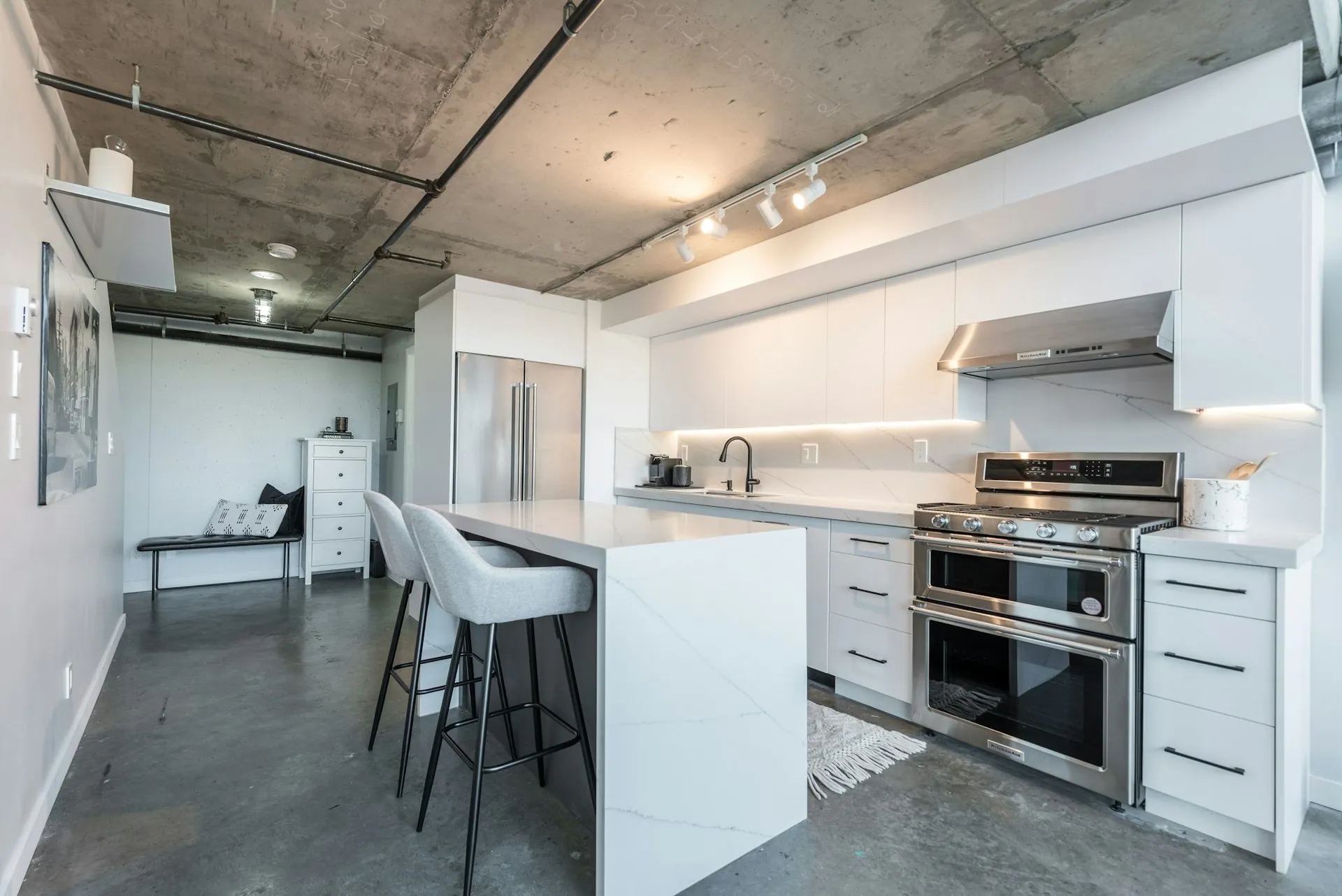
Concrete-look doors, matte black hardware
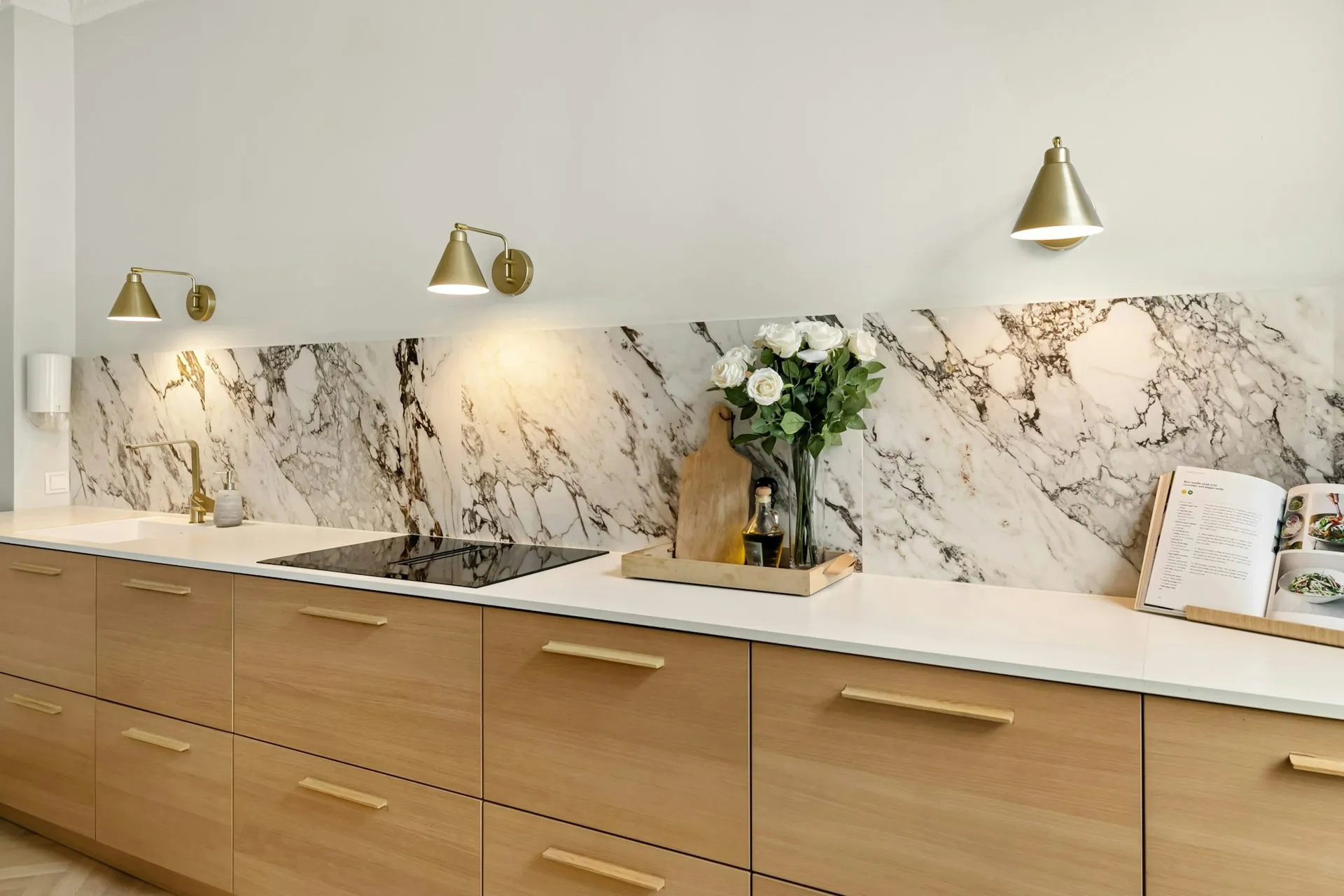
Oak run, doors hung and adjusted before delivery
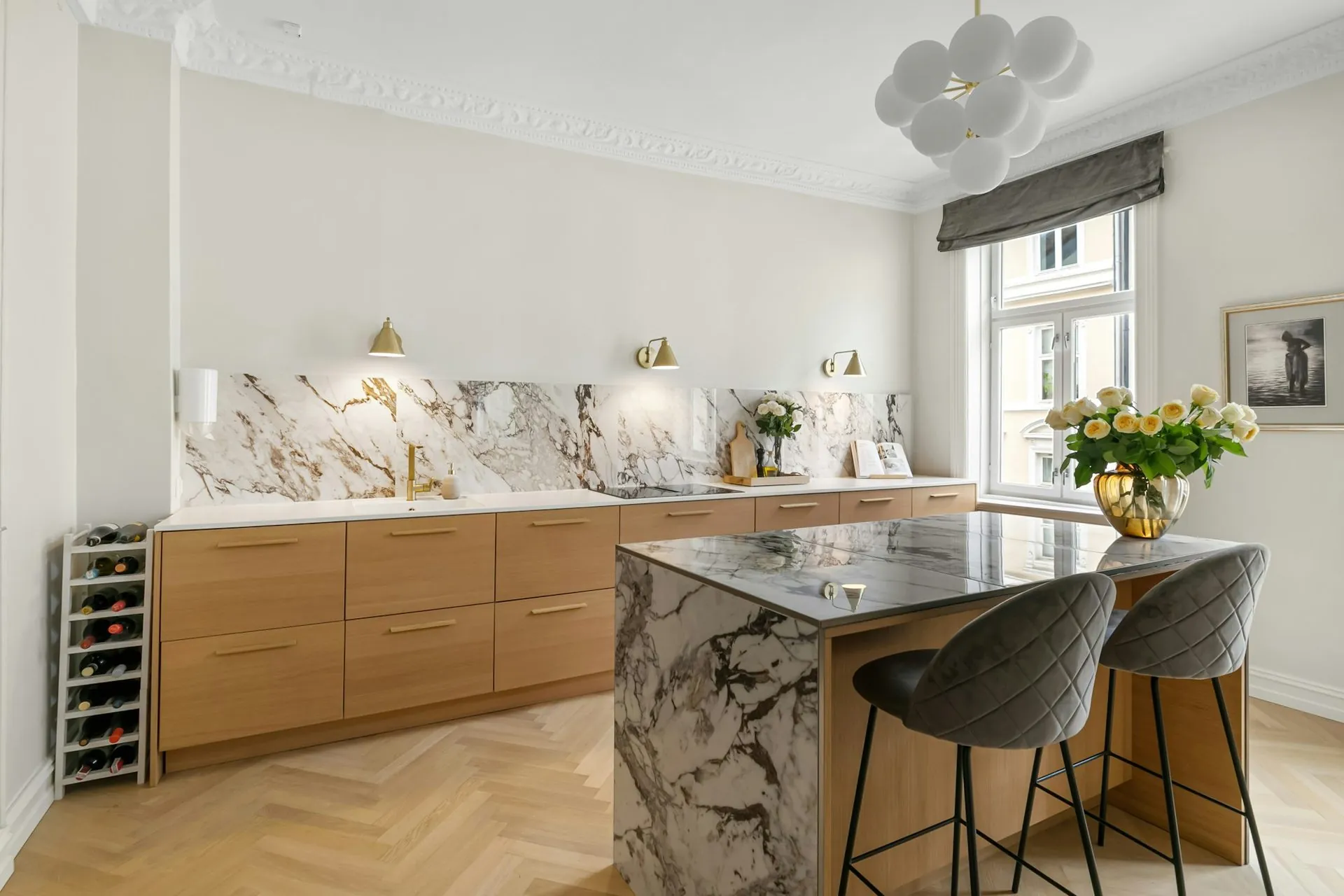
American oak and stone
Your style
Send us the dimensions.
We will draw it your way.
A fixed, itemised quote drawn to your room in the style you want, flat packed or delivered assembled.