Contemporary kitchens,
where the detail is the design.
A style with nowhere to hide. Strip out the ornament and every gap, join and alignment becomes the thing people see.
The short answer
A contemporary kitchen is flat-fronted, handleless or near it, with long uninterrupted runs and minimal visual breaks. There is no moulding, no frame, no feature to draw the eye away from the cabinetry itself. That is what makes it demanding: with nothing to look at but the surfaces, the quality of the gaps between doors is the design. It needs square carcasses and adjustable hinges more than any other style.
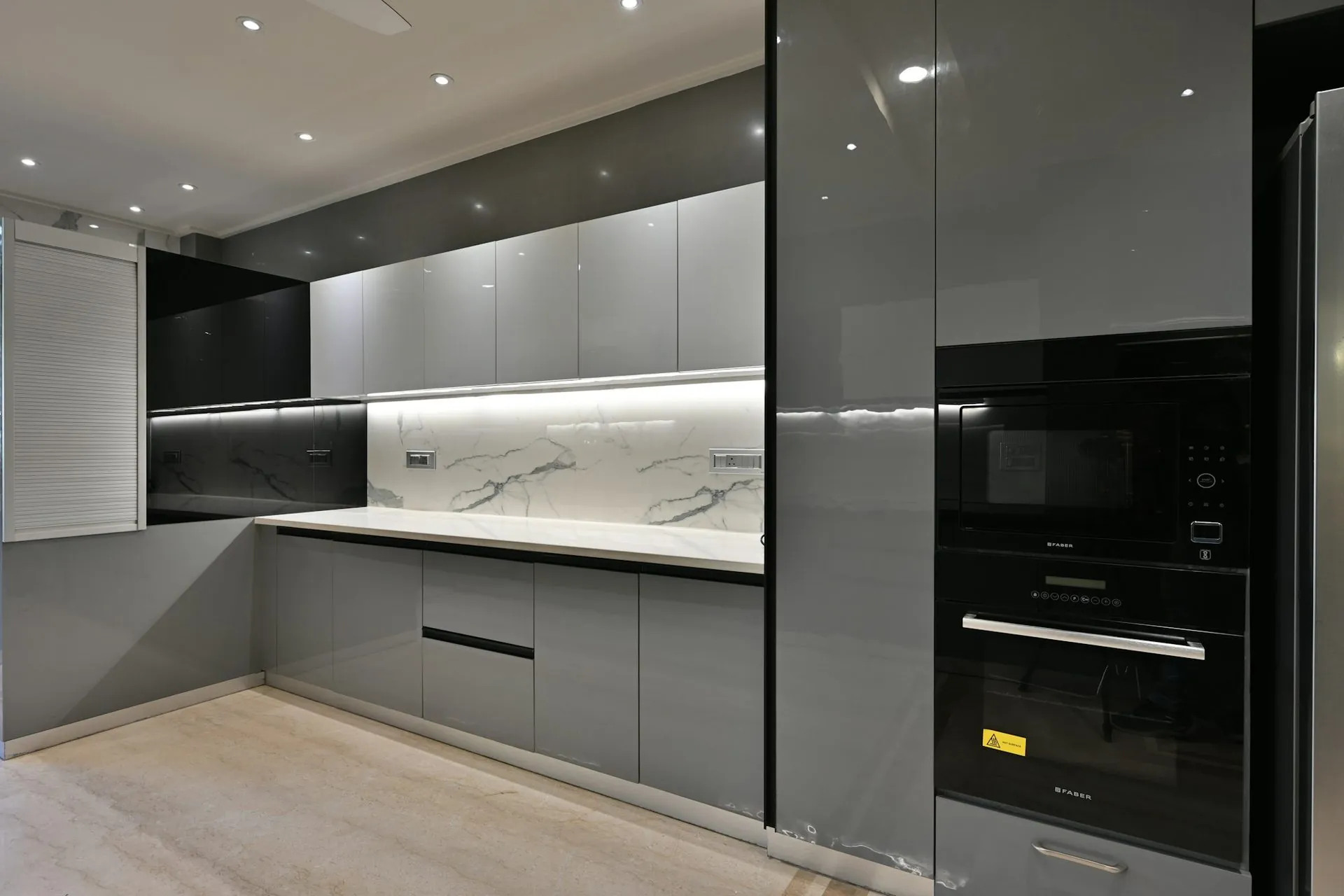
Contemporary is not the same as modern
Modern, strictly, means mid-century — a specific period with timber, tapered legs and warmth. Contemporary means now: flat fronts, handleless or shadowline, long horizontal lines, restrained colour. The words are used interchangeably in showrooms, which is why people end up with something other than what they pictured. Describe the detail you want rather than naming a style.
Why alignment becomes everything
A run of flat handleless doors shows every inconsistency. A gap that varies by a millimetre along a four metre run is visible, where the same variation beside a Shaker frame is not. This is the style where full overlay hinges and three-way adjustment stop being a specification detail and become the whole look.
Choosing the opening method
Three ways to open a handleless door: a shadowline recess, a J-pull profiled into the door, or push to open. Each gives a different line. The shadowline is the most architectural; the J-pull the most practical; push to open the cleanest and the one with the most to go wrong. Soft close versus push to open covers why combining them costs more.
What it costs
A contemporary kitchen is not inherently dearer — a flat door is simpler than a framed one. What costs is the finish and the opening method. Our Essence collection is flat-fronted and starts the range; the cost page shows what each collection runs per linear metre.
Kitchen styles
More in this series: Hamptons style kitchen guide · Modern farmhouse kitchen guide · Japandi kitchen design guide · Coastal kitchen design guide · Industrial style kitchen guide · Scandinavian kitchen design guide · Shaker · Two-tone · Country · French provincial · Classic · Federation · Victorian · Art Deco · Mediterranean · Cottage · Transitional.
Frequently asked
Common questions
If your question is not here, call the studio. We would rather talk it through than have you guess.
Ask us directly →What is a contemporary kitchen?
Flat-fronted, handleless or near it, with long uninterrupted runs and no moulding or ornament.
What is the difference between modern and contemporary?
Modern strictly means mid-century, with timber and warmth. Contemporary means current: flat, restrained, handleless. Showrooms use the words interchangeably.
Do contemporary kitchens cost more?
Not inherently. A flat door is simpler than a framed one. The cost is in the finish and the opening method, not the style.
Why do the gaps matter so much?
With no ornament to look at, the gaps between doors are what the eye reads. A variation that would be invisible on a Shaker kitchen is obvious on a flat run.
Delivered assembled
The assembly is done
before it arrives.
Carcasses built square on a bench, Blum hardware fitted, doors hung and adjusted to even gaps. On site you are fixing finished cabinets to a wall, not building them on the floor. Our own team fits it in Central Queensland; your installer fits it anywhere else in Australia. Prefer to build it yourself? The same kitchen ships flat pack.
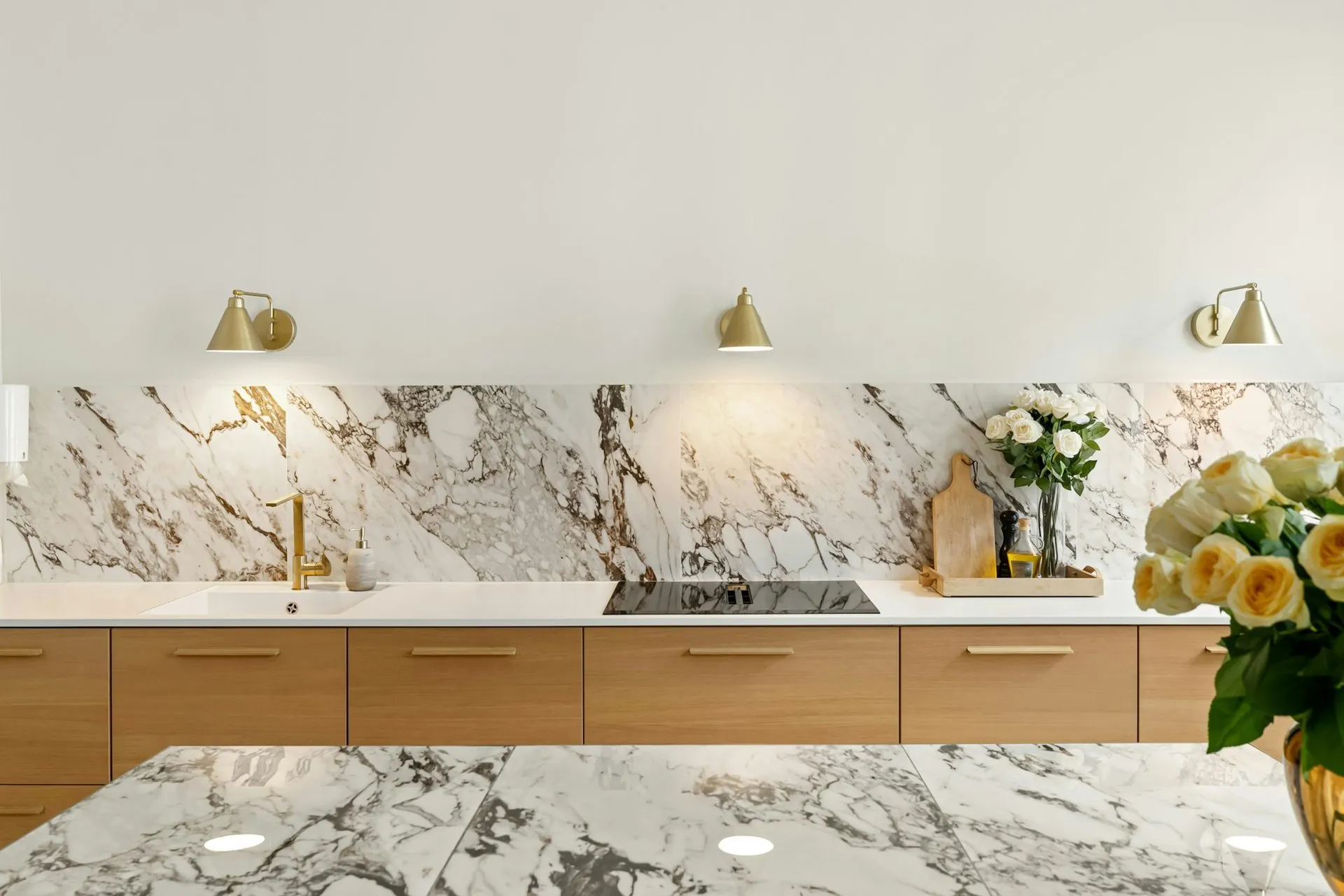
Handleless rail on an assembled run
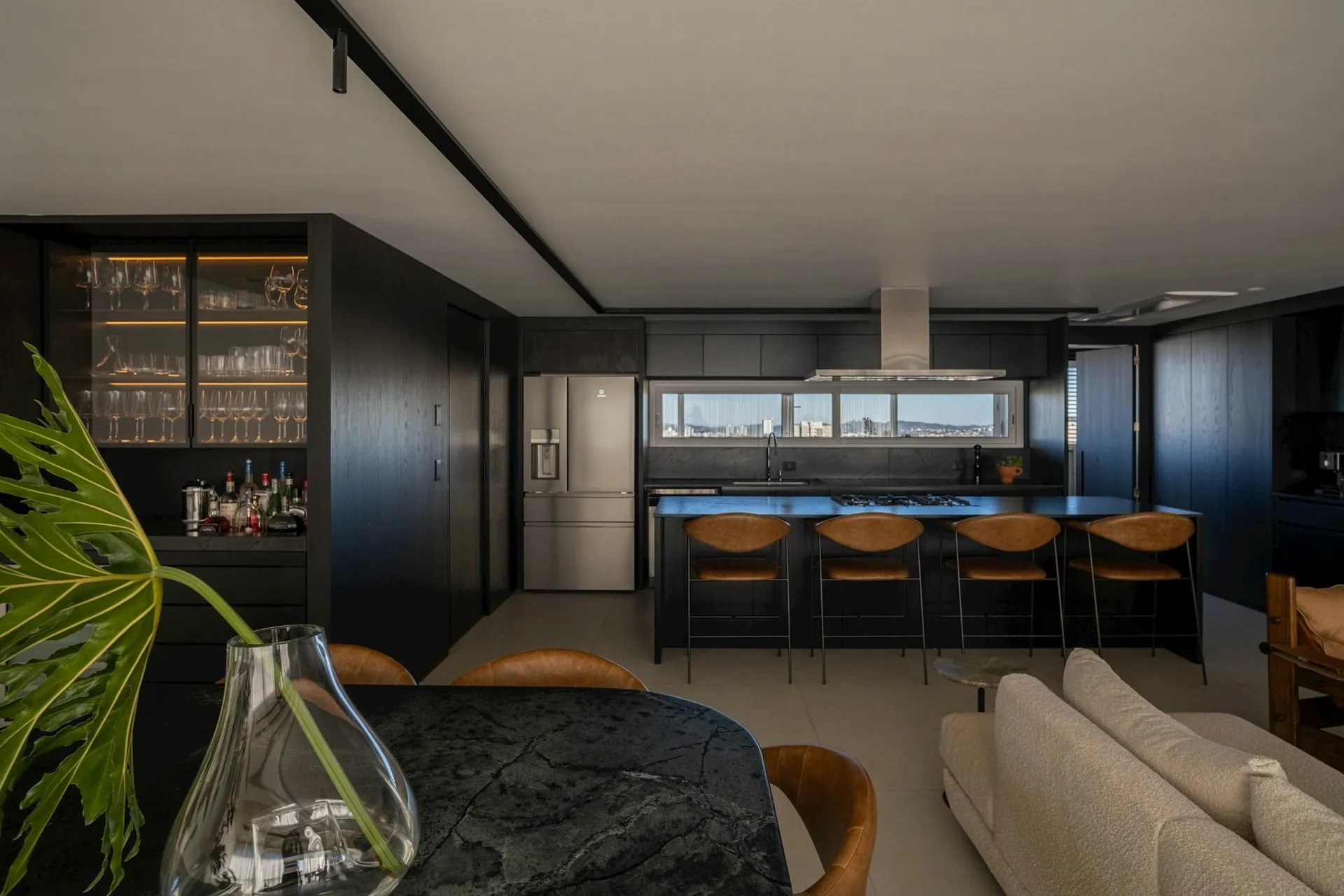
Navy cabinetry, open-plan island
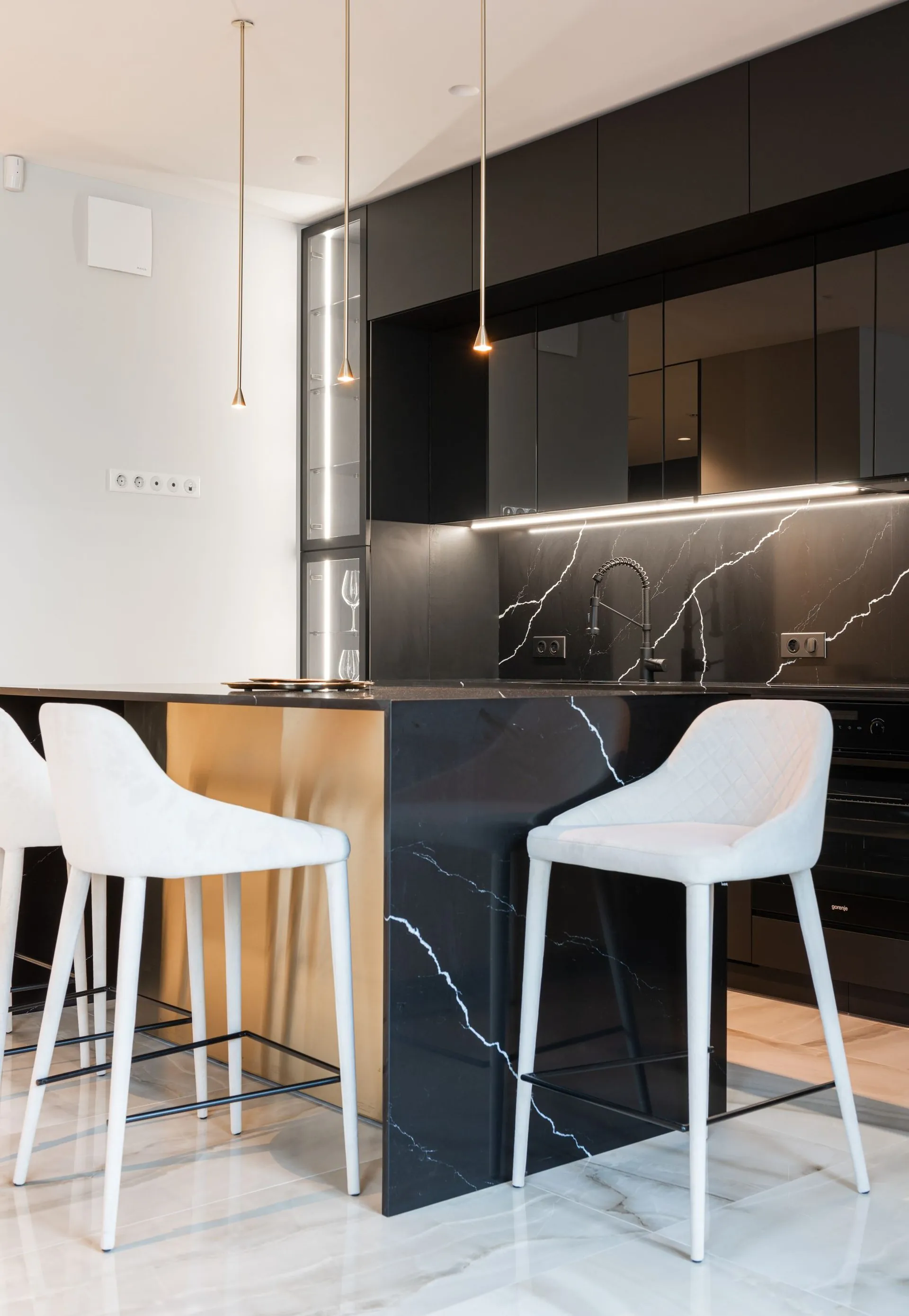
Black joinery, marble bar
Your style
Send us the dimensions.
We will draw it your way.
A fixed, itemised quote drawn to your room in the style you want, flat packed or delivered assembled.