Full, half and inset:
hinge overlay explained.
Overlay describes how much of the cabinet side a door covers. It sounds like a detail and it decides how the finished kitchen looks, because it sets the gaps between doors.
The short answer
Overlay is how far a door sits over the cabinet side next to it. Full overlay covers the whole side, which is what gives a modern kitchen its continuous run of doors with narrow even gaps. Half overlay covers half, used where two doors share a middle panel. Inset sits the door flush inside the frame, which is a traditional look and the least forgiving of any movement in the cabinet.
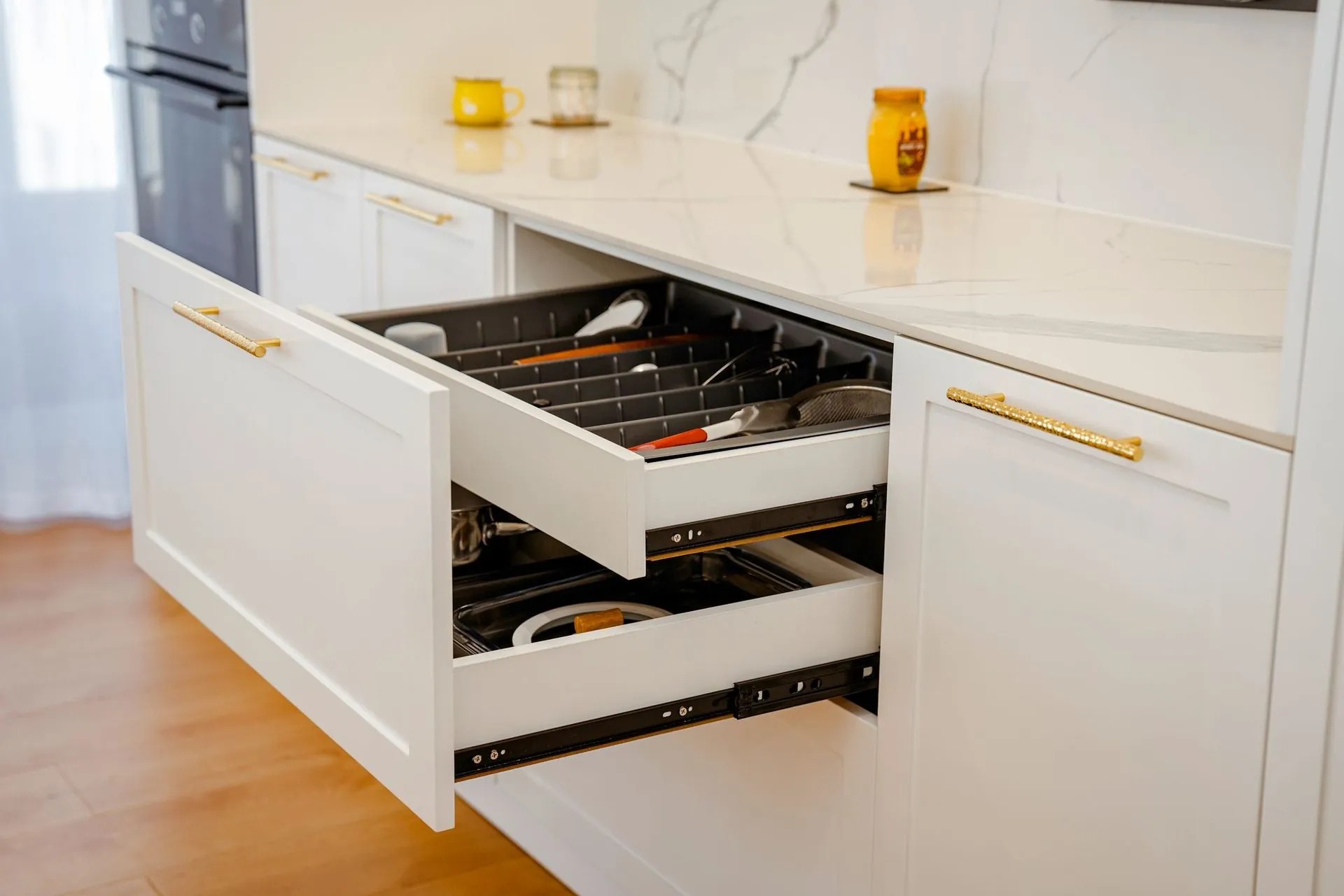
Full overlay
The standard for contemporary kitchens. The door covers the cabinet side almost entirely, and adjacent doors are separated by a gap of a few millimetres. It hides the carcass completely, which means the carcass material matters less visually @EM@ and it makes even gaps essential, because a run of full-overlay doors shows any misalignment immediately.
Half overlay
Used where two cabinets share a side and each door covers half of it. You see it in older kitchens and in some flat pack systems. It is not a worse choice, but it produces a wider line between doors, which reads as more traditional.
Inset
The door sits inside the cabinet opening, flush with the frame. It is the hardest to execute because the gap around the door is visible on all four sides, so any movement in the carcass or the house shows. It suits Shaker and period kitchens and it demands a carcass that stays square.
What we use
Full overlay as standard, on Blum hinges with three-way adjustment so the gaps can be brought true on site and kept true. If you want an inset look we will quote it, and we will be honest that it is less tolerant of an old house that moves. Cabinets arrive with doors already hung and adjusted when you order delivered assembled.
Sizes, hardware and services
More in this series: Standard cabinet sizes · Bench height · Benchtop thickness · Drawers vs cupboards · Appliance cut-outs · Undermount vs topmount · Under-cabinet lighting · Soft close vs push to open · Runner load ratings · The work triangle · Power point placement.
Frequently asked
Common questions
If your question is not here, call the studio. We would rather talk it through than have you guess.
Ask us directly →What does full overlay mean?
The door covers almost the whole cabinet side, leaving only a few millimetres of gap to the next door. It is the standard for modern kitchens.
What is the difference between overlay and inset?
Overlay doors sit on top of the cabinet frame. Inset doors sit inside it, flush with the front. Inset is a traditional look and shows any misalignment on all four sides.
Which overlay should I choose?
Full overlay for a contemporary kitchen, which is what most people want. Inset if you are after a period or Shaker look and accept the tighter tolerances.
Can hinges be adjusted after fitting?
Blum hinges adjust in three directions, so doors can be brought back into line without removing anything. That is most of why we specify them.
Delivered assembled
The assembly is done
before it arrives.
Carcasses built square on a bench, Blum hardware fitted, doors hung and adjusted to even gaps. On site you are fixing finished cabinets to a wall, not building them on the floor. Our own team fits it in Central Queensland; your installer fits it anywhere else in Australia. Prefer to build it yourself? The same kitchen ships flat pack.
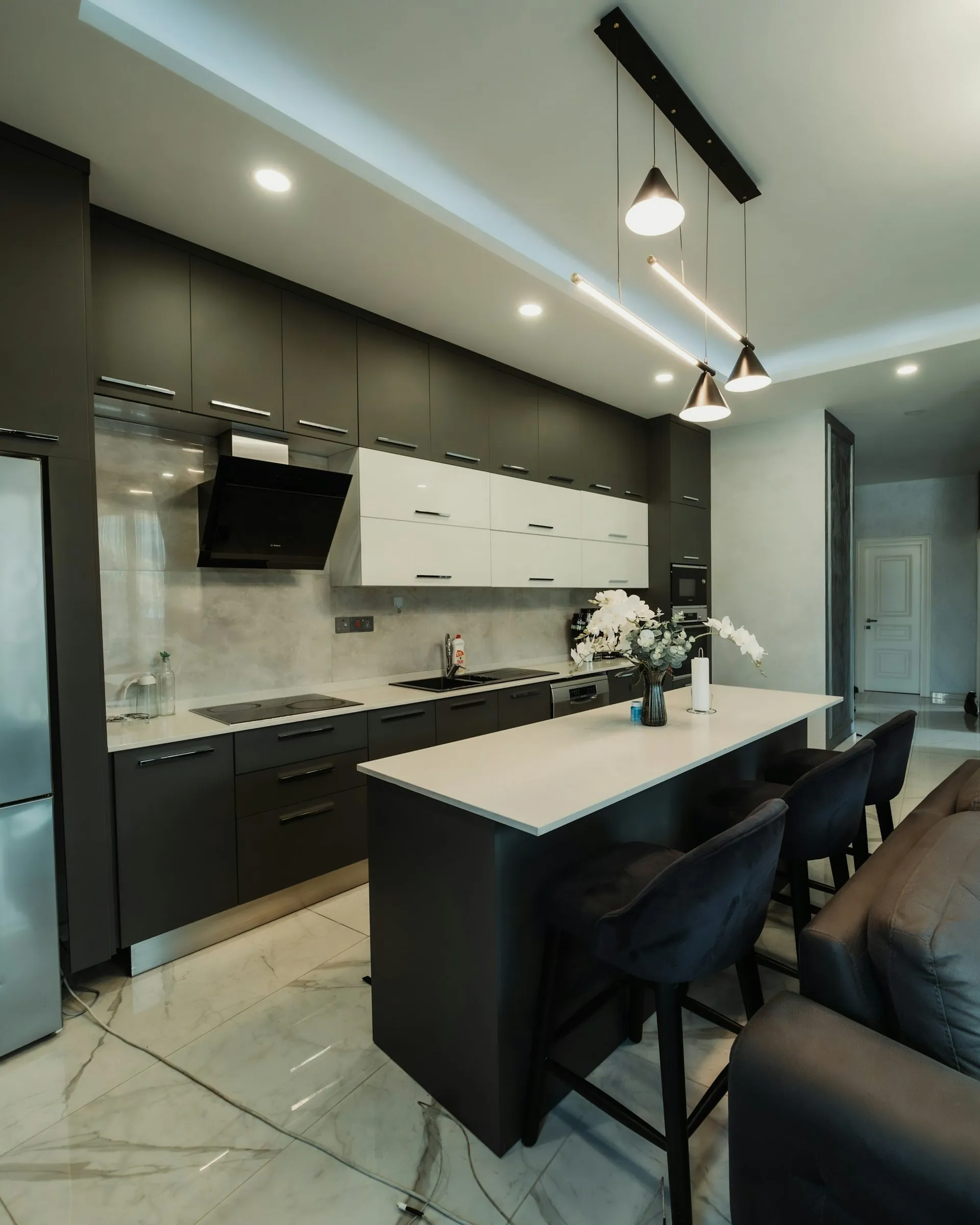
Long island, one delivery
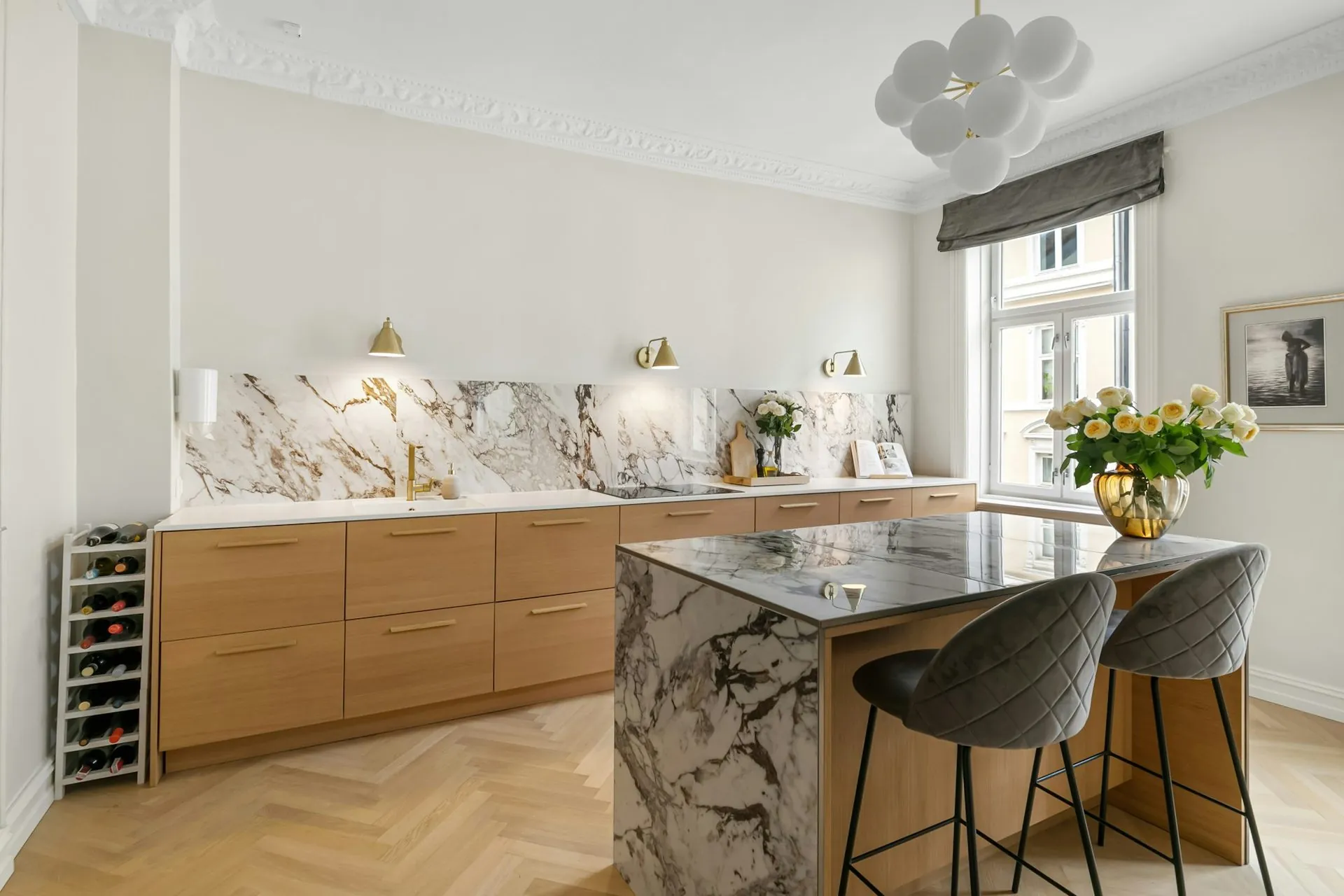
American oak and stone
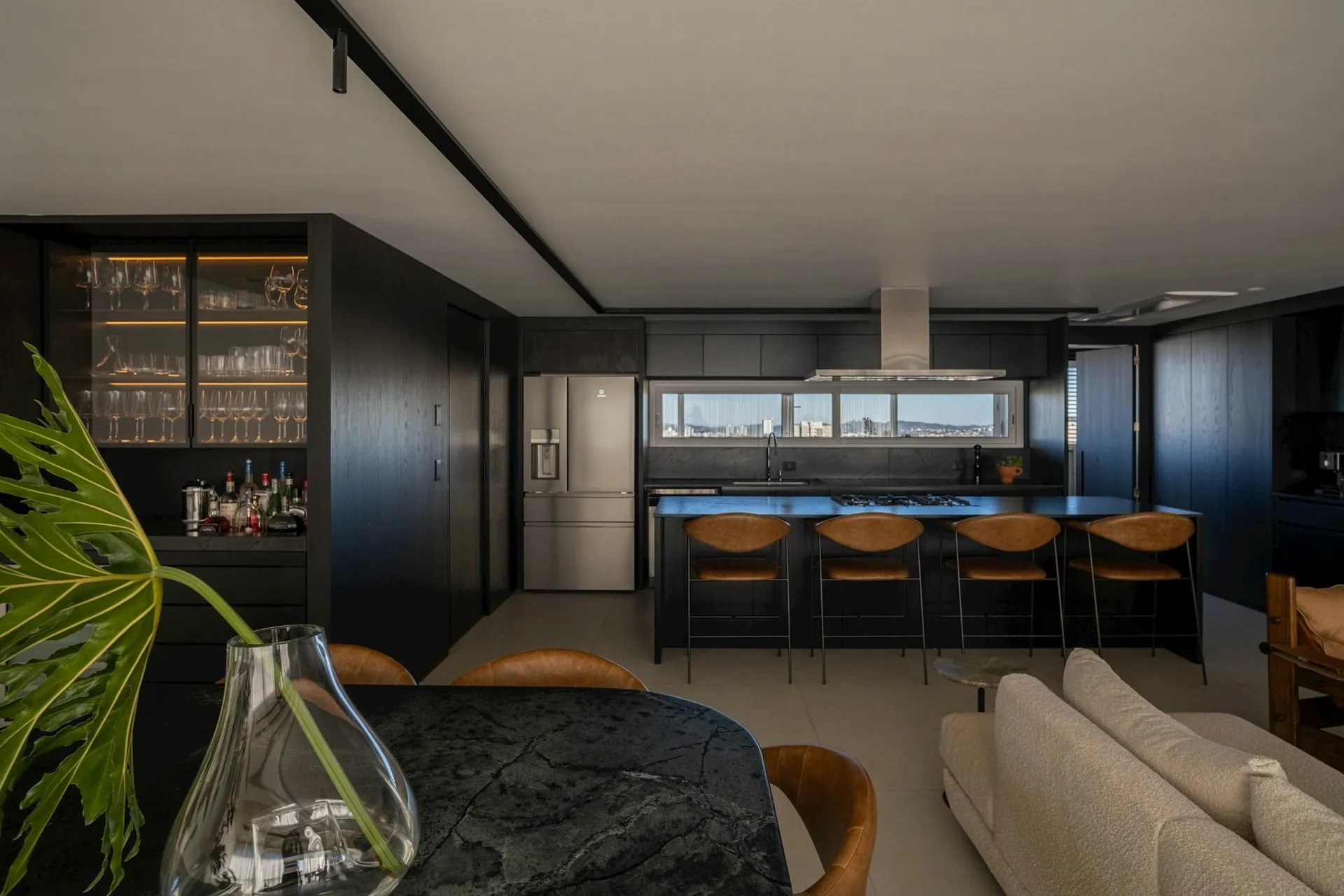
Navy cabinetry, open-plan island

Specification
The same three answers,
on every quote.
Board thickness and moisture rating, edging method, hardware brand. Ours are printed on the quote so you can hold them against anything else you are offered.