What is a
mitred join?
Two pieces of stone, cut at an angle, trying to convince you they are one.
The short answer
A mitred join is a diagonal cut, usually at 45 degrees, made where two pieces of benchtop meet so the pattern or veining continues across the seam as if it were a single piece rather than a visible butt join. It is most often seen on a waterfall benchtop edge, where the horizontal top meets the vertical drop, and on wide island benches assembled from more than one slab.
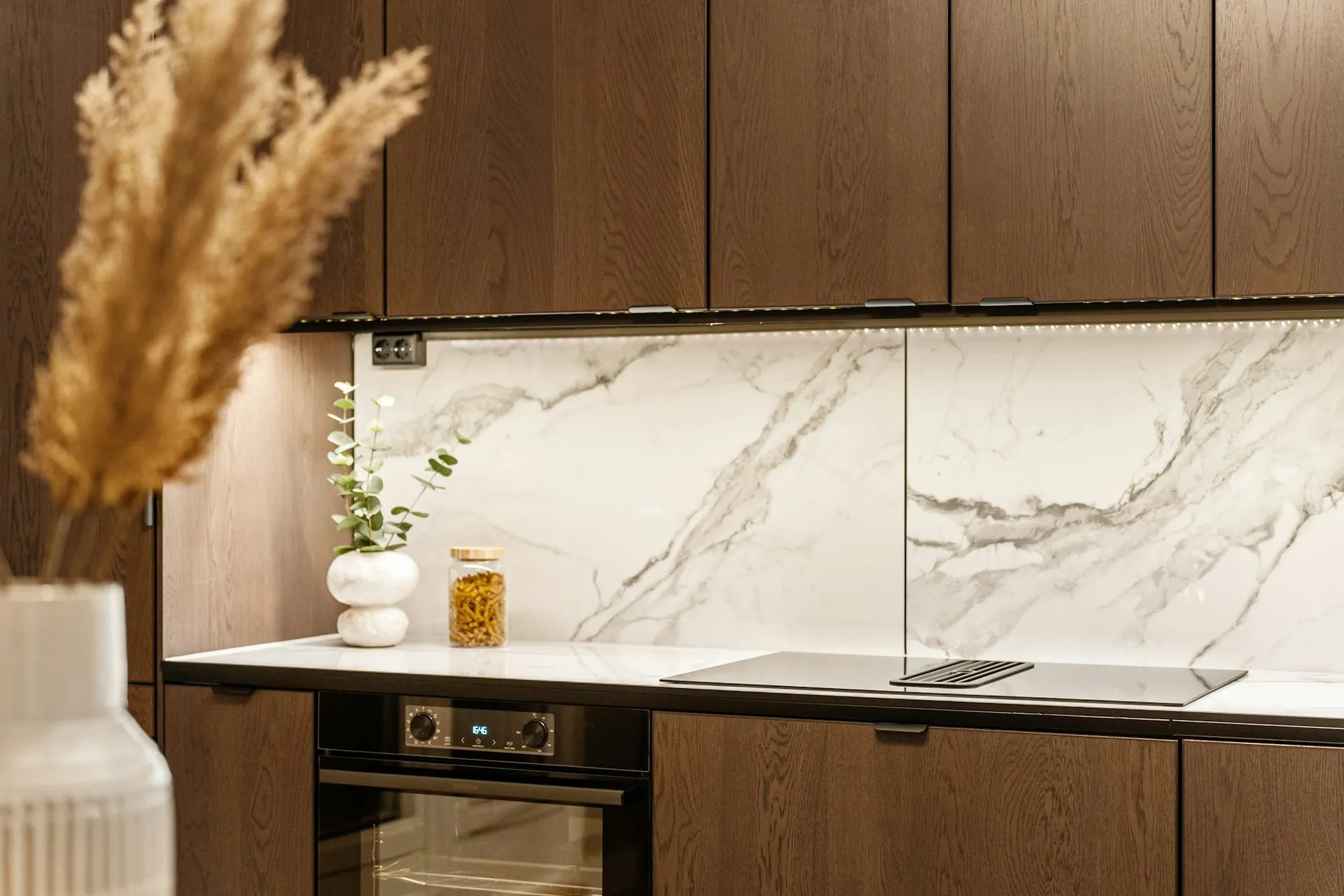
Why it is harder than it looks
Getting a mitred join to disappear requires the veining or pattern in a natural or engineered stone to be matched across the cut before it is even made, then the two faces polished and fitted with a seam gap measured in fractions of a millimetre. Rush the template or the fabrication and the join sits as a visible line rather than a continuation.
What to check before you accept one
Stand at the actual viewing angle you will use the kitchen from — most often standing at the island rather than crouched at bench height — and look along the join in good light. A well-done mitre is very hard to find even looking for it; a rushed one is obvious the moment you know where to look.
Kitchen & cabinetry glossary
More in this series: What is a cabinet carcass? · What is a kickboard? · What is a scribe piece? · What is edge banding? · What is a full-extension runner? · Soft-close hinges explained · What is a handleless kitchen? · What is a waterfall benchtop edge? · What is a kitchen splashback? · What is a service drawing? · What does "supply only" mean? · What is a tall pantry unit? · What is a corner carousel? · What is a blind corner cabinet? · Push-to-open hardware explained · What is moisture-resistant board? · What is an overhead cabinet?.
Frequently asked
Common questions
If your question is not here, call the studio. We would rather talk it through than have you guess.
Ask us directly →Is a mitred join weaker than a single slab?
Structurally it is adequately supported when fabricated correctly, though a single uninterrupted slab is marginally stronger — the mitre exists for appearance and material efficiency, not structural need.
Can a mitred join be repaired if it opens up?
A fabricator can sometimes re-seal a join that has opened slightly, but a poorly cut mitre that has never sat flush usually needs to be redone rather than patched.
Does every stone benchtop need a mitred join?
No — only where the benchtop is wider or longer than a single slab allows, or where a waterfall edge is specified. A straightforward bench run often needs none at all.
Delivered assembled
The assembly is done
before it arrives.
Carcasses built square on a bench, Blum hardware fitted, doors hung and adjusted to even gaps. On site you are fixing finished cabinets to a wall, not building them on the floor. Our own team fits it in Central Queensland; your installer fits it anywhere else in Australia. Prefer to build it yourself? The same kitchen ships flat pack.
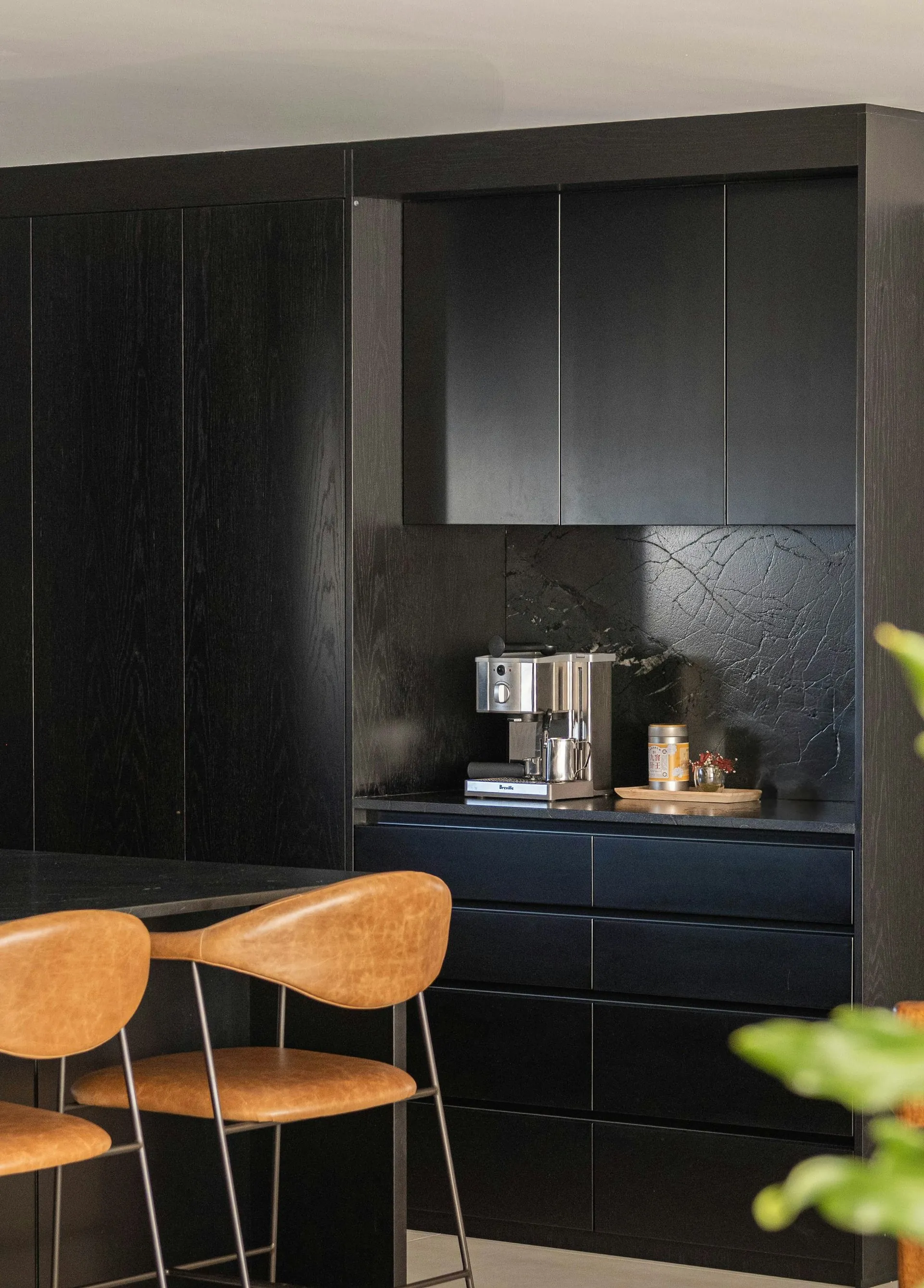
Appliance garage, hardware fitted before delivery
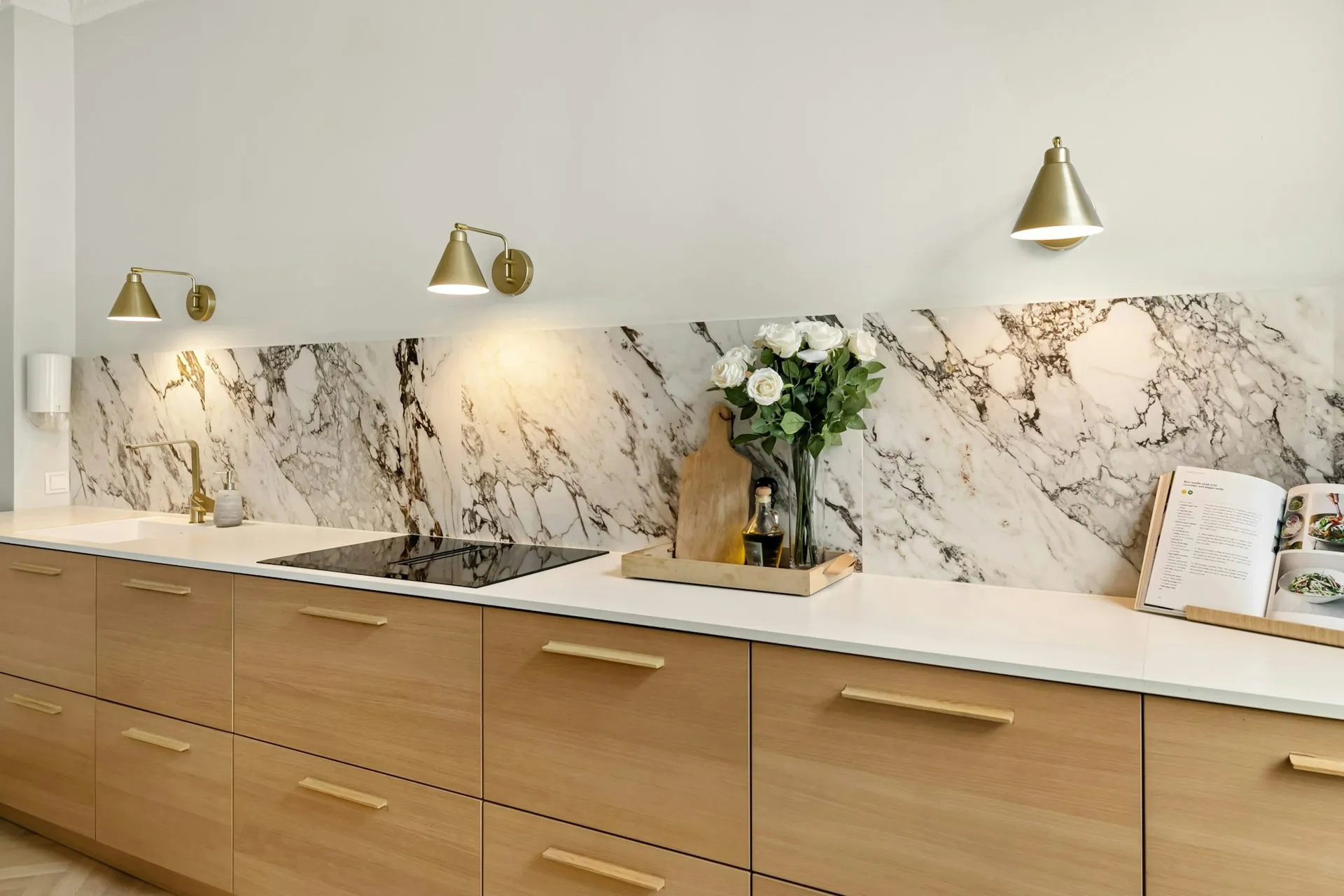
Oak run, doors hung and adjusted before delivery
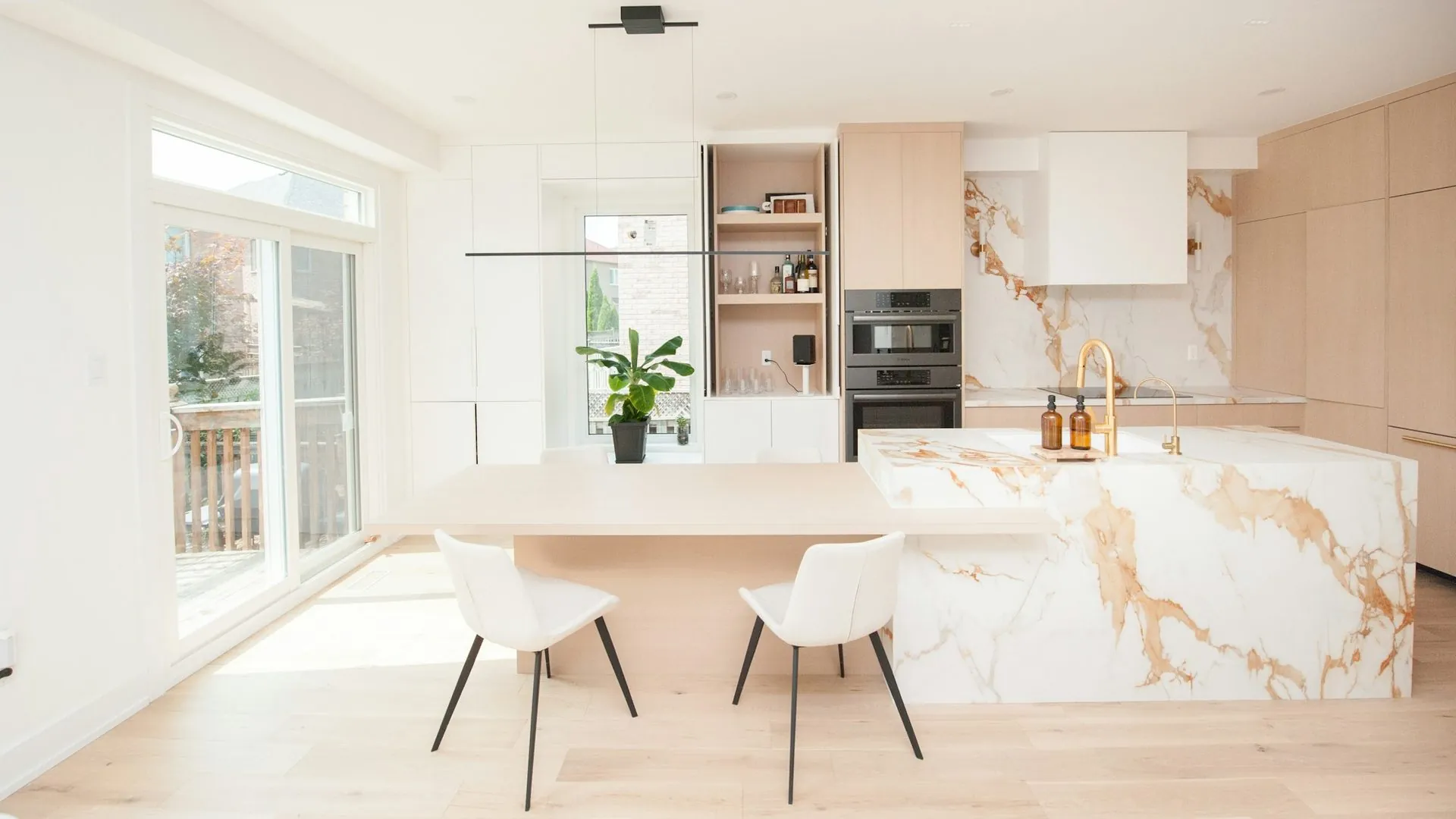
New build, kitchen fitted at fit-off
Put it to use
Reading is one thing.
Your room is another.
Send us your dimensions and we will tell you what actually works in your space — and what it costs. Free, fixed, and yours to keep either way.