What is a
full-extension runner?
The difference between reaching into a drawer and actually seeing what is in the back of it.
The short answer
A full-extension runner lets a drawer slide all the way out of the cabinet so the entire base is visible and reachable — as opposed to a partial-extension runner, which stops the drawer short and leaves the back third or so hidden behind the cabinet face. It matters most on deep drawers and pantry drawers, where "hidden at the back" quietly becomes "forgotten and wasted".
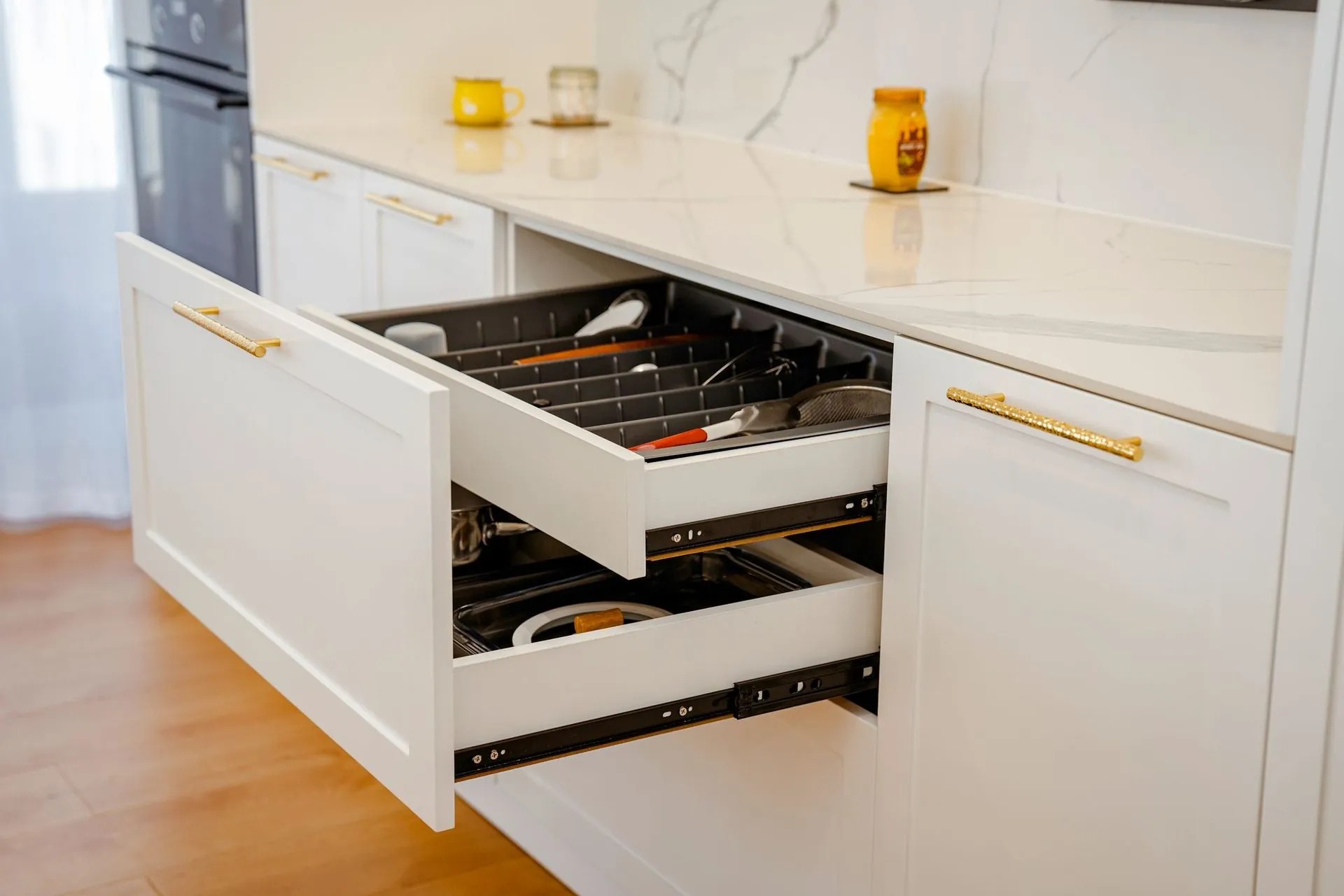
Full versus partial extension
Partial-extension runners are cheaper and were standard in older kitchens; they open a drawer roughly two-thirds of the way and rely on you reaching blind for the rest. Full-extension runners, which we use throughout, open the entire drawer box so nothing at the back goes unused.
Why Blum specifically
Runner quality varies enormously and is invisible until it fails — a cheap runner sags, binds or drops a fully loaded drawer within a few years. Blum runners carry a lifetime mechanical warranty and are rated for repeated heavy loads, which is why they sit under every drawer we build regardless of collection.
Kitchen & cabinetry glossary
More in this series: What is a cabinet carcass? · What is a kickboard? · What is a scribe piece? · What is edge banding? · Soft-close hinges explained · What is a handleless kitchen? · What is a waterfall benchtop edge? · What is a mitred join? · What is a kitchen splashback? · What is a service drawing? · What does "supply only" mean? · What is a tall pantry unit? · What is a corner carousel? · What is a blind corner cabinet? · Push-to-open hardware explained · What is moisture-resistant board? · What is an overhead cabinet?.
Frequently asked
Common questions
If your question is not here, call the studio. We would rather talk it through than have you guess.
Ask us directly →Are full-extension runners worth the extra cost?
Almost always, particularly on pantry, pot and cutlery drawers. The cost difference is small relative to the cabinetry; the difference in how much of the drawer you actually use is not.
What is a soft-close runner?
A runner with a built-in damper that slows the drawer in the last few centimetres so it closes quietly rather than slamming — see soft-close hinges explained for the equivalent on doors.
What weight can a Blum runner hold?
It depends on the specific runner series and drawer size, and is stated on the product specification — ask your supplier for the rated load on any drawer that will carry pots, appliances or a large recycling bin.
Delivered assembled
The assembly is done
before it arrives.
Carcasses built square on a bench, Blum hardware fitted, doors hung and adjusted to even gaps. On site you are fixing finished cabinets to a wall, not building them on the floor. Our own team fits it in Central Queensland; your installer fits it anywhere else in Australia. Prefer to build it yourself? The same kitchen ships flat pack.
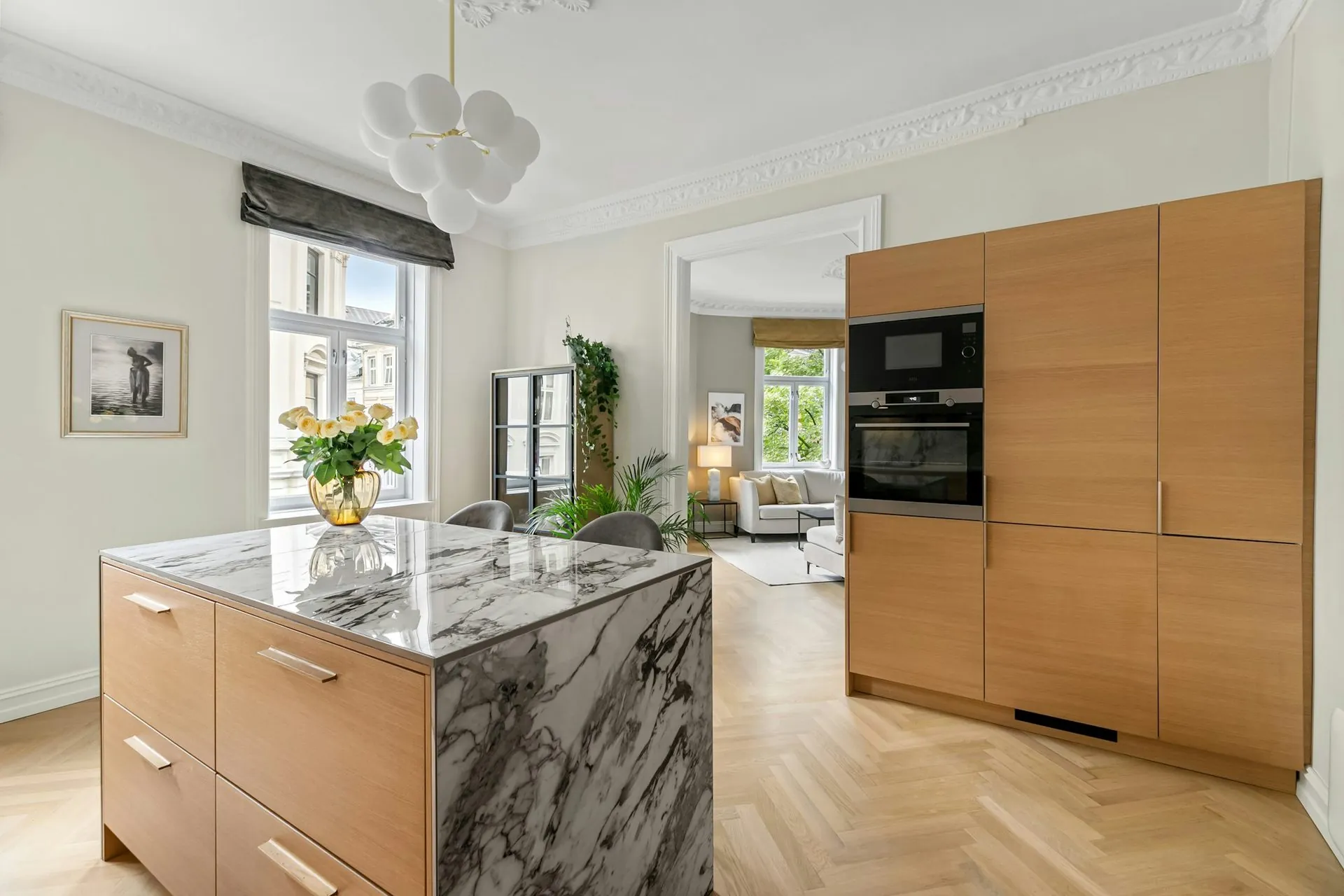
Island with seating overhang
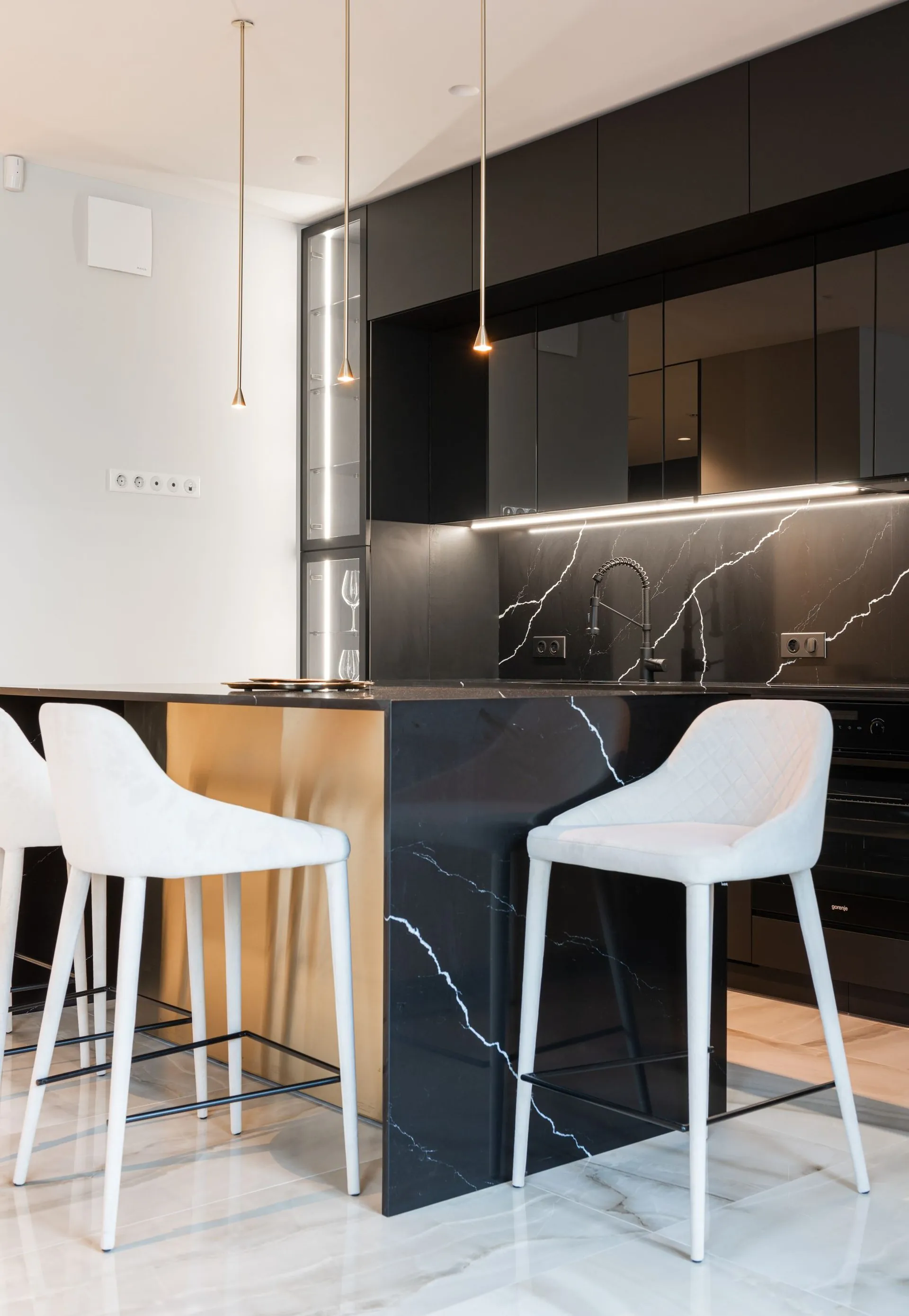
Black joinery, marble bar
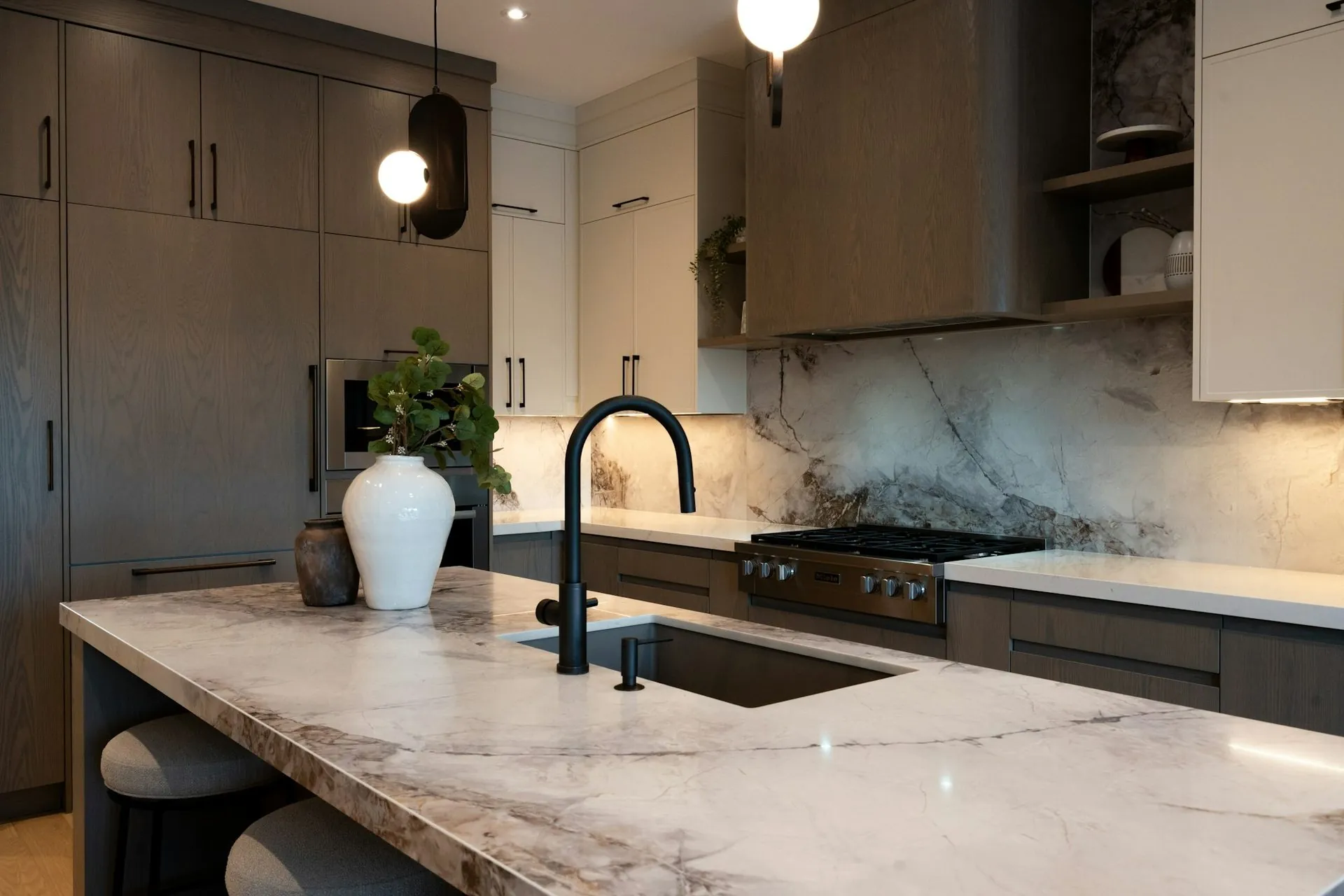
Mitred stone edge over assembled carcasses
Put it to use
Reading is one thing.
Your room is another.
Send us your dimensions and we will tell you what actually works in your space — and what it costs. Free, fixed, and yours to keep either way.