MDF or particleboard?
Different jobs, not a hierarchy.
Neither is automatically the "good" one. Each suits a different part of the kitchen.
The short answer
MDF (medium-density fibreboard) is made from fine wood fibres bonded under heat and pressure, giving a smooth, dense surface that machines and paints cleanly — commonly used for doors, particularly 2-pack painted finishes. Particleboard is made from larger wood chips bonded with resin, offering good strength and screw-holding for carcasses at a lower cost than MDF. Both, in a moisture-resistant grade, perform well in a kitchen when used for the part they suit.
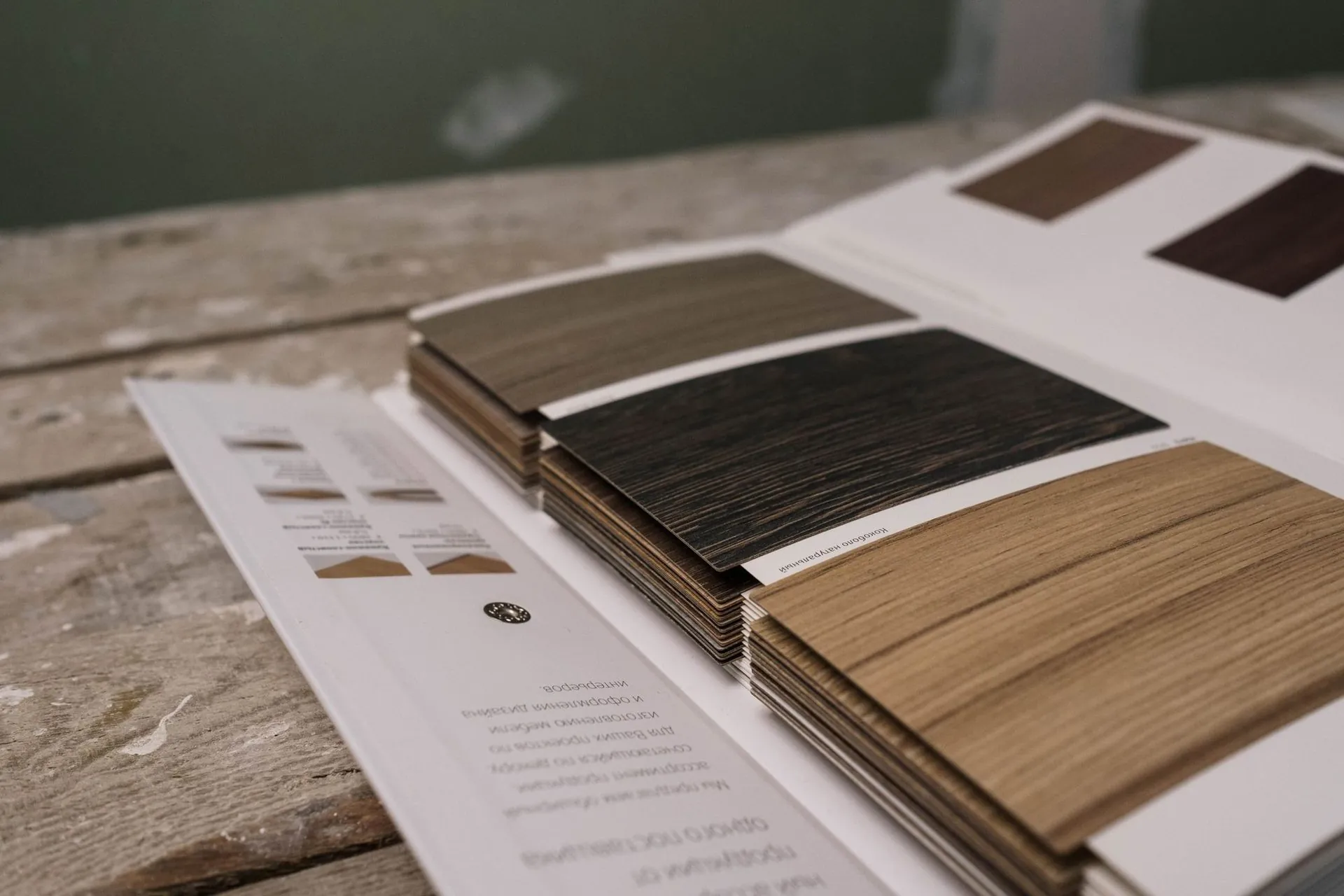
What MDF is best at
Its fine, dense, uniform structure machines and finishes extremely smoothly, which is why it is the common substrate for a 2-pack painted door — see 2-pack vs laminate kitchen doors — where surface quality genuinely matters for the paint finish.
What particleboard is best at
Good strength and screw-holding at a lower cost than MDF makes it a common, sensible choice for cabinet carcasses, where the surface is generally covered by a laminate or melamine finish rather than exposed and painted directly.
Why moisture rating matters more than the base material
Both MDF and particleboard are available in standard and moisture-resistant grades, and the moisture rating affects longevity in a kitchen far more than which of the two base materials is used — see what is moisture-resistant board for why this is the specification question that actually matters.
Materials & hardware guides
More in this series: Engineered stone benchtop care · Is a porcelain benchtop worth it? · Timber benchtop pros and cons · Blum Legrabox explained · Handleless kitchen hardware guide · Brass vs matte black hardware · 2-pack vs laminate kitchen doors · Matte vs gloss kitchen doors · Timber veneer vs laminate doors · 18mm vs 16mm cabinet board · Kitchen sink materials compared · Induction vs gas cooktop · Rangehood types explained.
Frequently asked
Common questions
If your question is not here, call the studio. We would rather talk it through than have you guess.
Ask us directly →Is MDF or particleboard better for kitchen cabinets?
Neither is universally better — MDF suits doors and painted finishes due to its smooth, dense surface; particleboard suits carcasses well at a lower cost. The moisture rating of either matters more than which base material is chosen.
Is particleboard weaker than MDF?
Not necessarily for its intended use — particleboard has good structural strength for carcass construction; MDF is chosen more for its fine, paintable surface than for structural superiority.
Does MDF handle moisture better than particleboard?
Moisture resistance depends on the specific grade of either material rather than which base material it is — always confirm the moisture rating, not just the material name.
What is my kitchen carcass most likely made from?
In Australian kitchens, moisture-resistant particleboard is a very common carcass material, with MDF more commonly used for door faces — confirm the specifics with your supplier.
Delivered assembled
The assembly is done
before it arrives.
Carcasses built square on a bench, Blum hardware fitted, doors hung and adjusted to even gaps. On site you are fixing finished cabinets to a wall, not building them on the floor. Our own team fits it in Central Queensland; your installer fits it anywhere else in Australia. Prefer to build it yourself? The same kitchen ships flat pack.
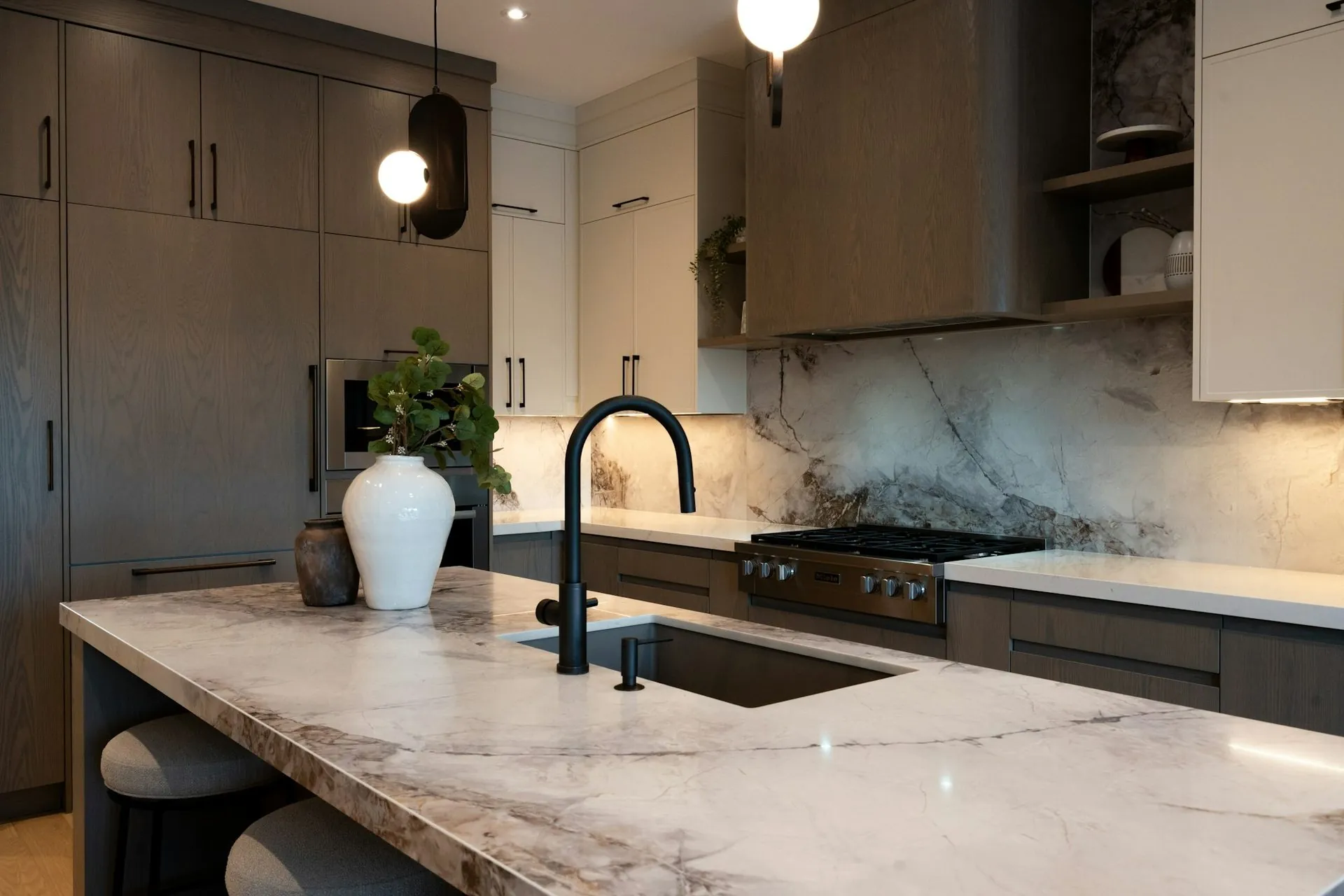
Mitred stone edge over assembled carcasses
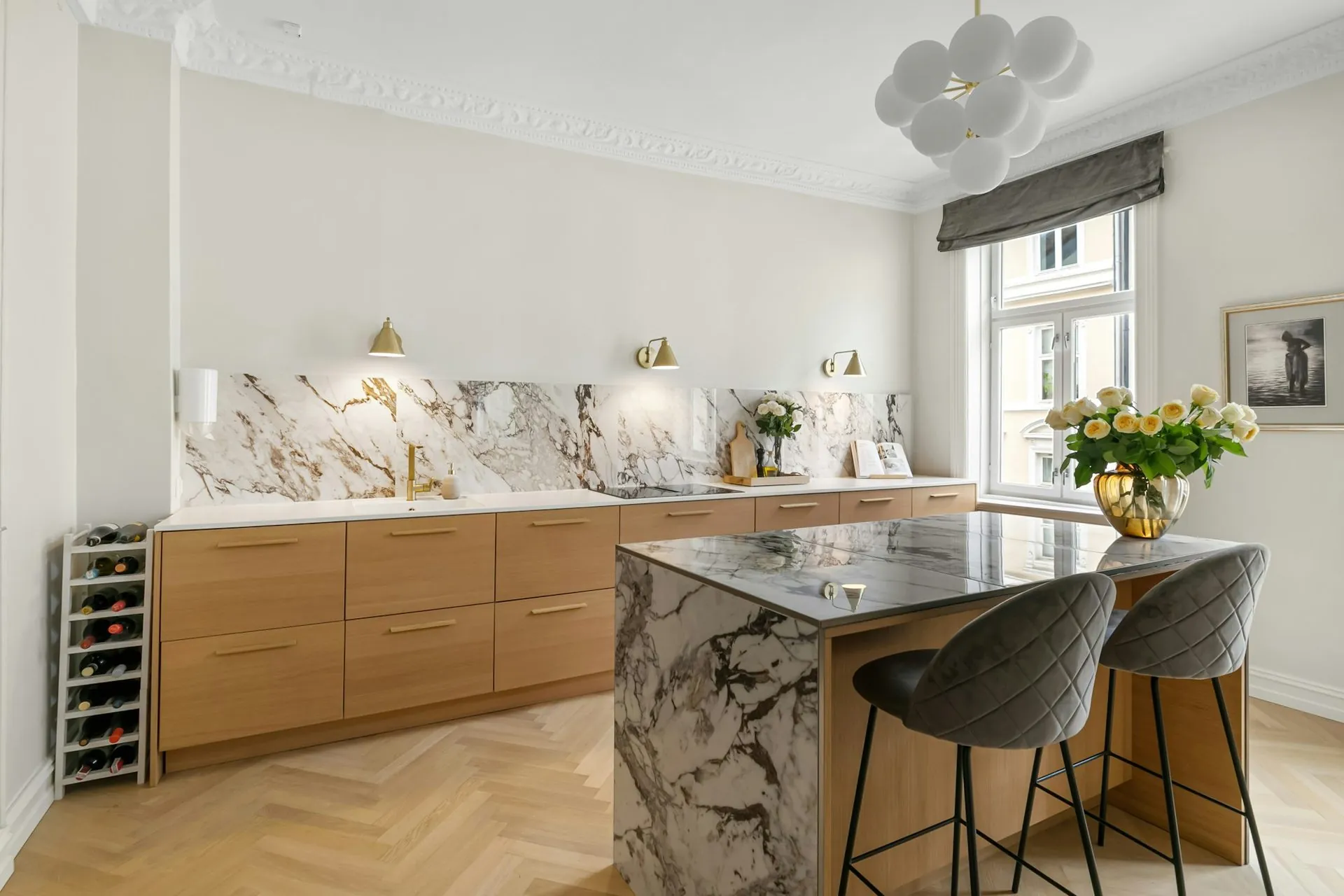
American oak and stone
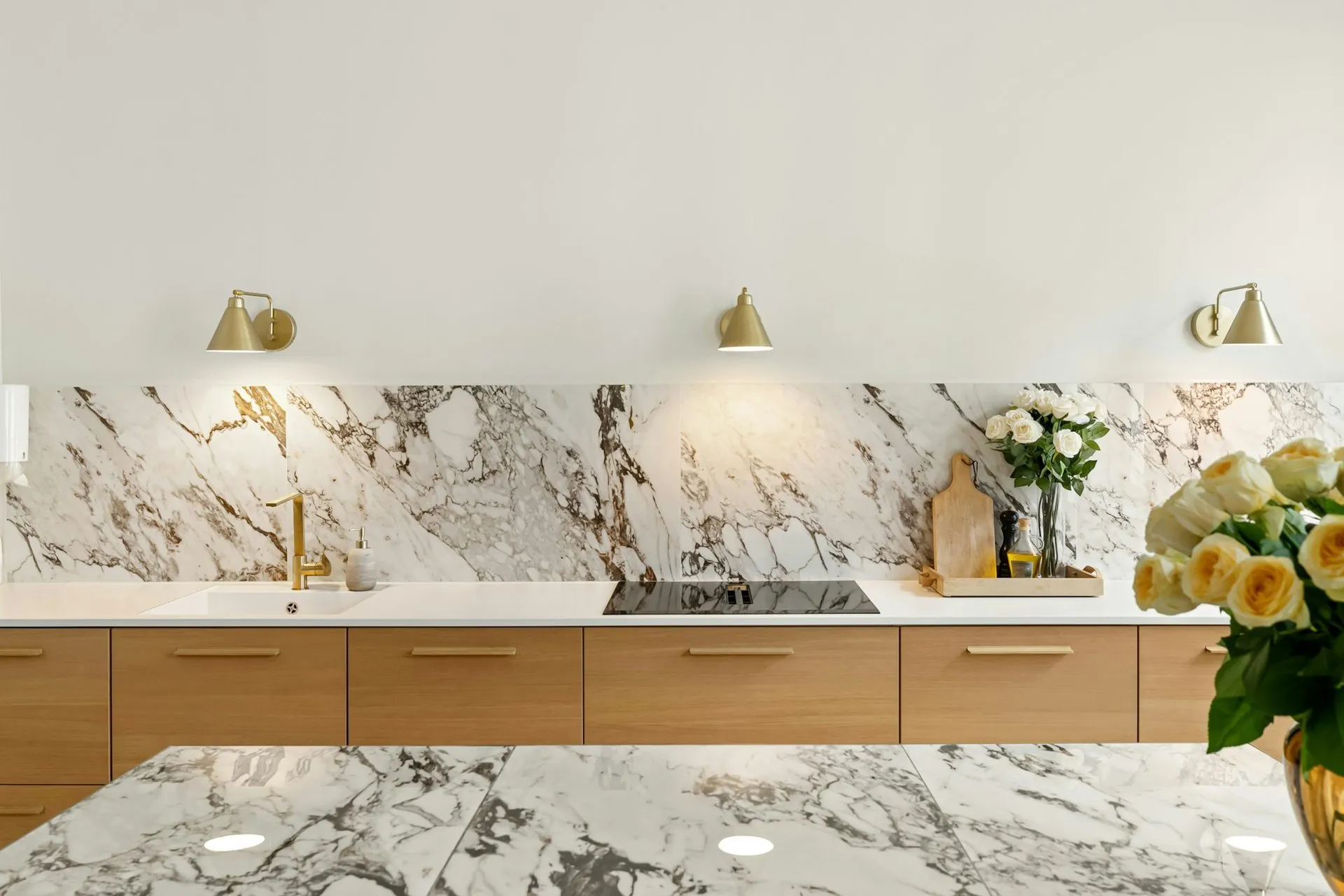
Handleless rail on an assembled run
Put it to use
Reading is one thing.
Your room is another.
Send us your dimensions and we will tell you what actually works in your space — and what it costs. Free, fixed, and yours to keep either way.