Is a porcelain
benchtop worth it?
The most heat- and UV-resistant benchtop material available. Whether that matters to you depends entirely on the room.
The short answer
A porcelain benchtop is worth the cost if the kitchen genuinely needs its specific strengths: exceptional heat resistance, UV stability for a benchtop that gets direct sun, and very high scratch resistance. It is not automatically better than engineered stone for every kitchen — it can be less forgiving to fabricate around tight curves or mitred waterfall edges, and it costs more.
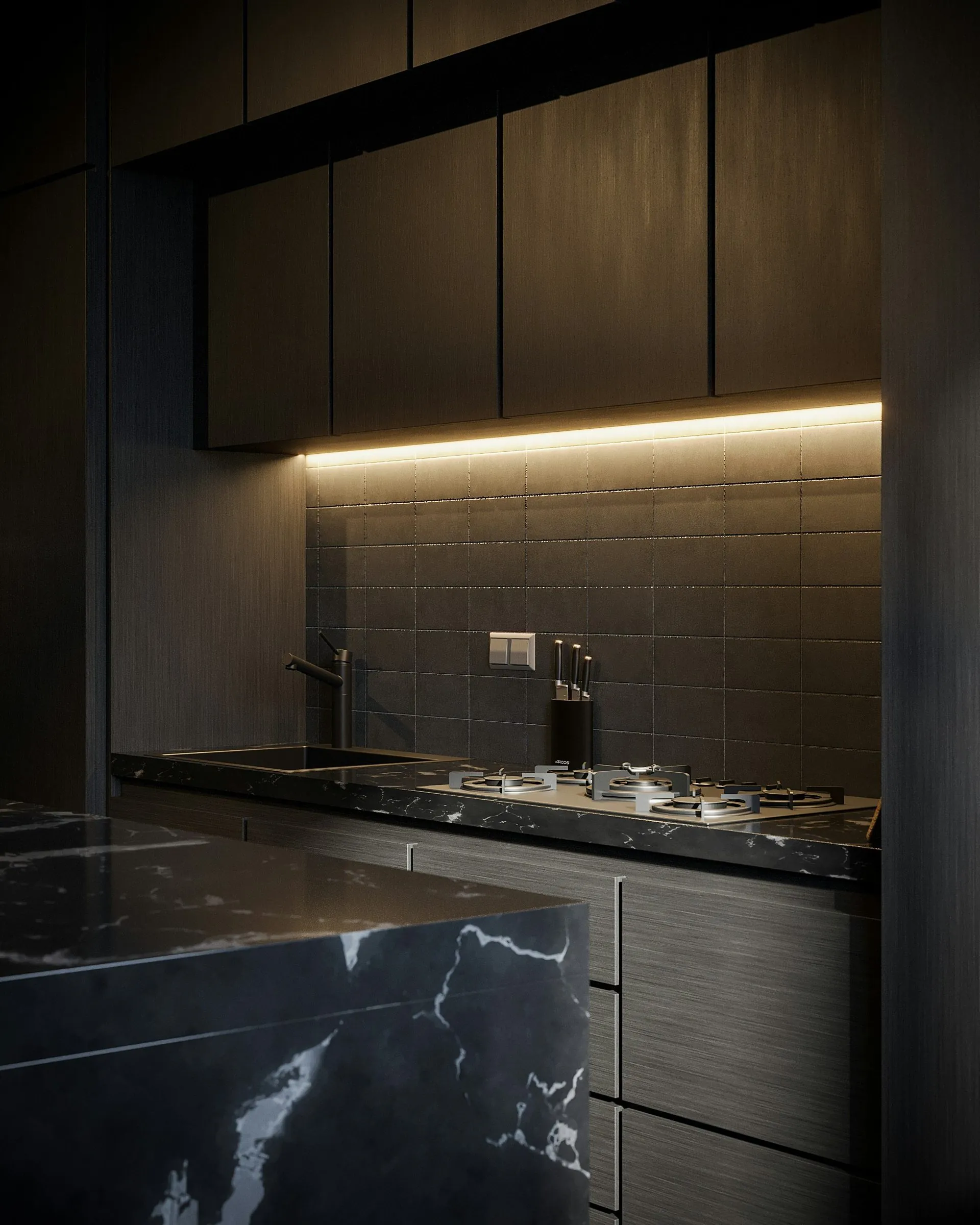
Where porcelain genuinely outperforms
A benchtop in direct sun through a large window, an outdoor kitchen, or a household that regularly puts hot cookware straight onto the bench are the scenarios where porcelain's heat and UV resistance actually gets used. In a standard indoor kitchen away from direct sun, engineered stone performs very similarly for most households' actual daily use.
The trade-offs worth knowing
Porcelain is thinner than most engineered stone slabs and can be less forgiving to fabricate with a seamless mitred waterfall edge — see what is a waterfall benchtop edge — so confirm with your fabricator whether the specific look you want is achievable in porcelain before committing.
Cost versus engineered stone
Porcelain generally costs more than a comparable engineered stone benchtop, for genuinely superior heat and UV performance rather than a purely cosmetic difference — worth it if you will use that performance, a premium for a benefit you may not if you will not.
Materials & hardware guides
More in this series: Engineered stone benchtop care · Timber benchtop pros and cons · Blum Legrabox explained · Handleless kitchen hardware guide · Brass vs matte black hardware · 2-pack vs laminate kitchen doors · Matte vs gloss kitchen doors · Timber veneer vs laminate doors · 18mm vs 16mm cabinet board · MDF vs particleboard cabinets · Kitchen sink materials compared · Induction vs gas cooktop · Rangehood types explained.
Frequently asked
Common questions
If your question is not here, call the studio. We would rather talk it through than have you guess.
Ask us directly →Is porcelain better than engineered stone for a benchtop?
It performs better specifically on heat and UV resistance. For general indoor kitchen use away from direct sun, engineered stone performs very similarly for most households.
Can porcelain benchtops be used outdoors?
Yes, and this is one of its genuine advantages — its UV stability suits an outdoor kitchen or a benchtop in direct sun far better than most other materials.
Is porcelain more expensive than engineered stone?
Generally yes, reflecting its superior heat and UV performance rather than being purely a premium finish.
Can porcelain achieve a waterfall benchtop edge?
Sometimes, but it can be less forgiving than engineered stone for a seamless mitred join given its thinner slab profile — confirm with your fabricator before designing around it.
Delivered assembled
The assembly is done
before it arrives.
Carcasses built square on a bench, Blum hardware fitted, doors hung and adjusted to even gaps. On site you are fixing finished cabinets to a wall, not building them on the floor. Our own team fits it in Central Queensland; your installer fits it anywhere else in Australia. Prefer to build it yourself? The same kitchen ships flat pack.
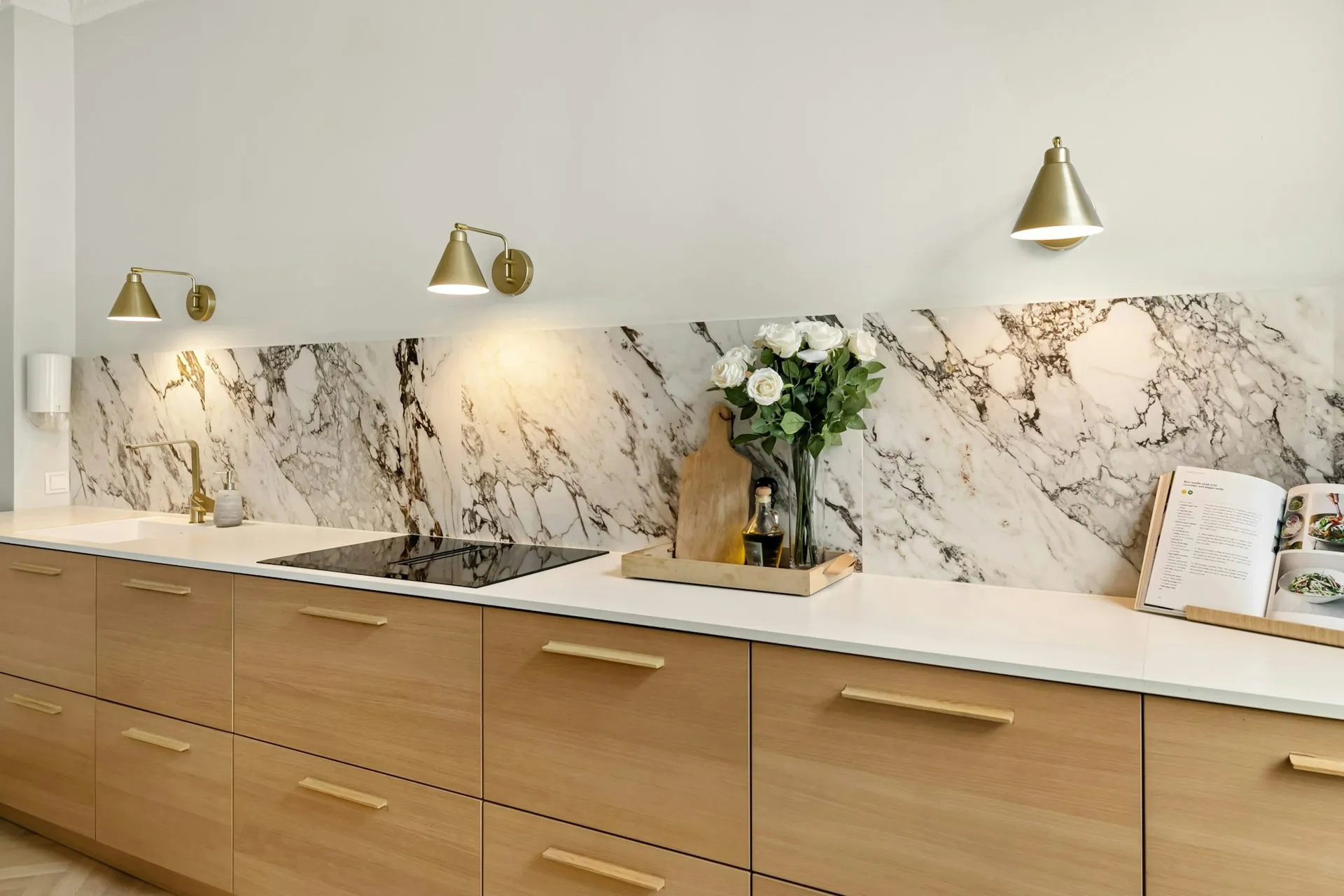
Oak run, doors hung and adjusted before delivery
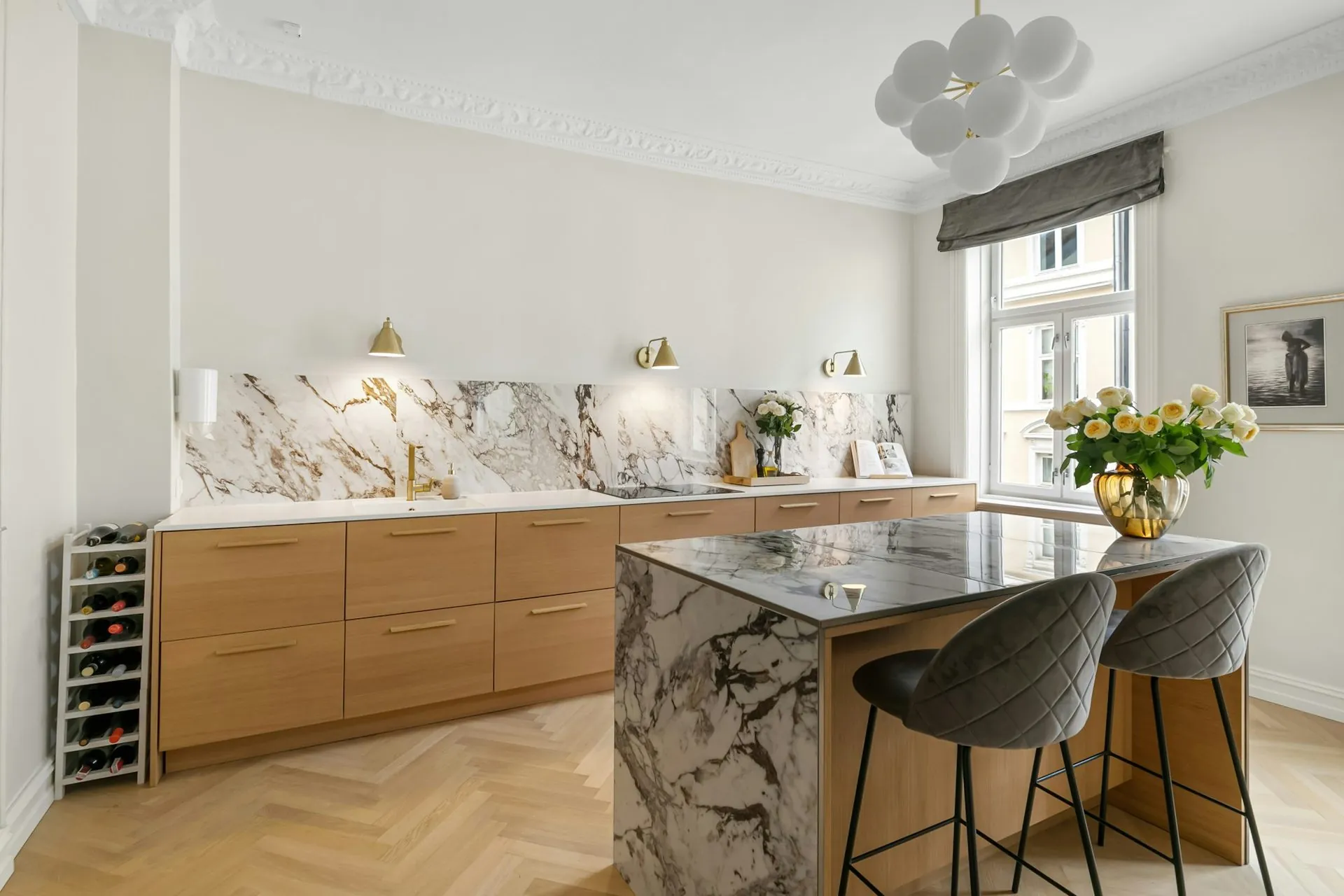
American oak and stone
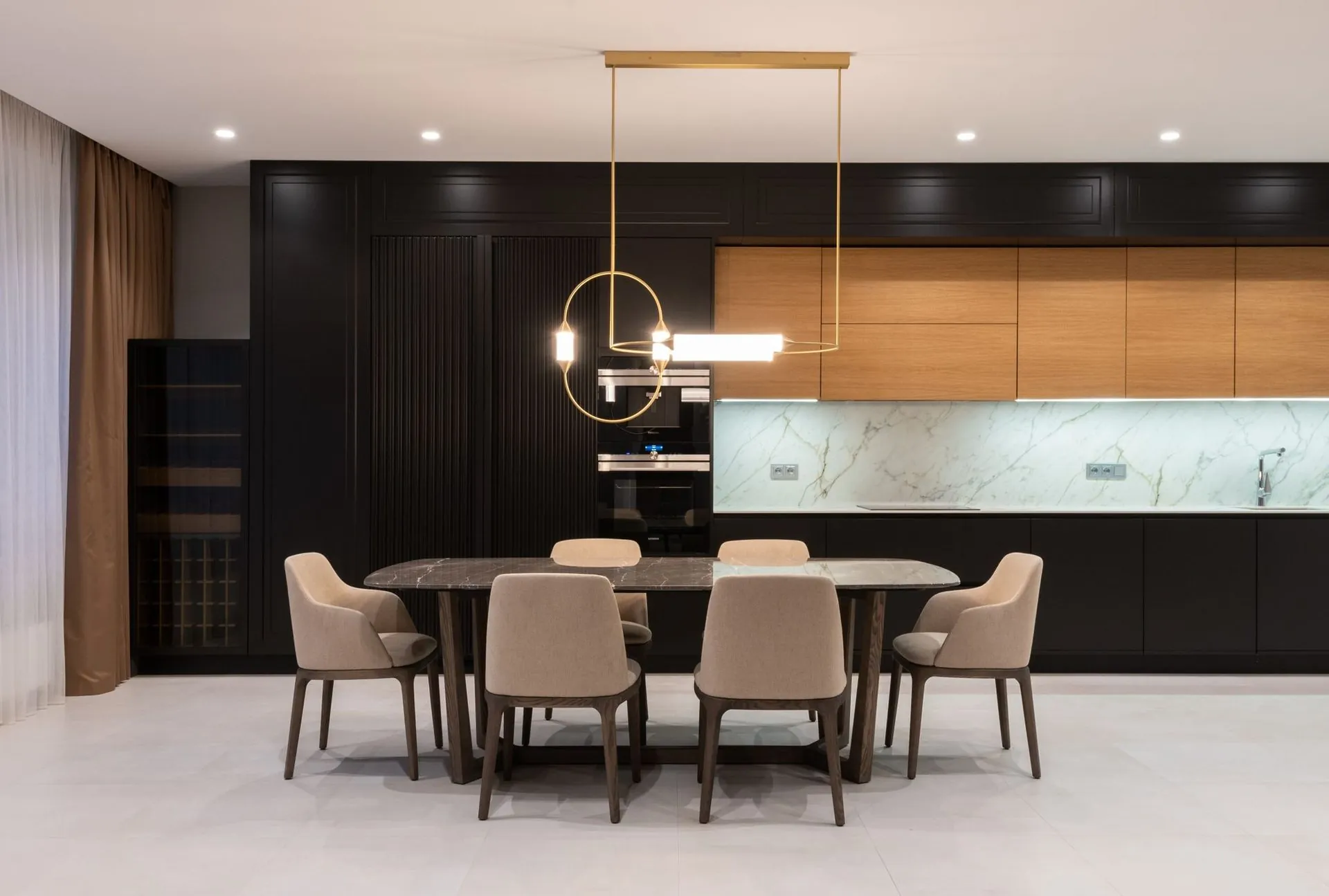
Kitchen into dining, one palette
Put it to use
Reading is one thing.
Your room is another.
Send us your dimensions and we will tell you what actually works in your space — and what it costs. Free, fixed, and yours to keep either way.