Engineered stone,
looked after properly.
Durable does not mean indestructible. A few habits are the difference between a benchtop that looks new at year ten and one that does not.
The short answer
Engineered stone resists staining, scratching and heat far better than laminate, but it is not immune to any of them. Warm soapy water handles daily cleaning; the habits that actually protect it are using a trivet under hot pans, wiping up wine, oil and pigmented liquids reasonably promptly, and avoiding highly acidic or abrasive cleaning products that can dull the surface finish over years of repeated use.
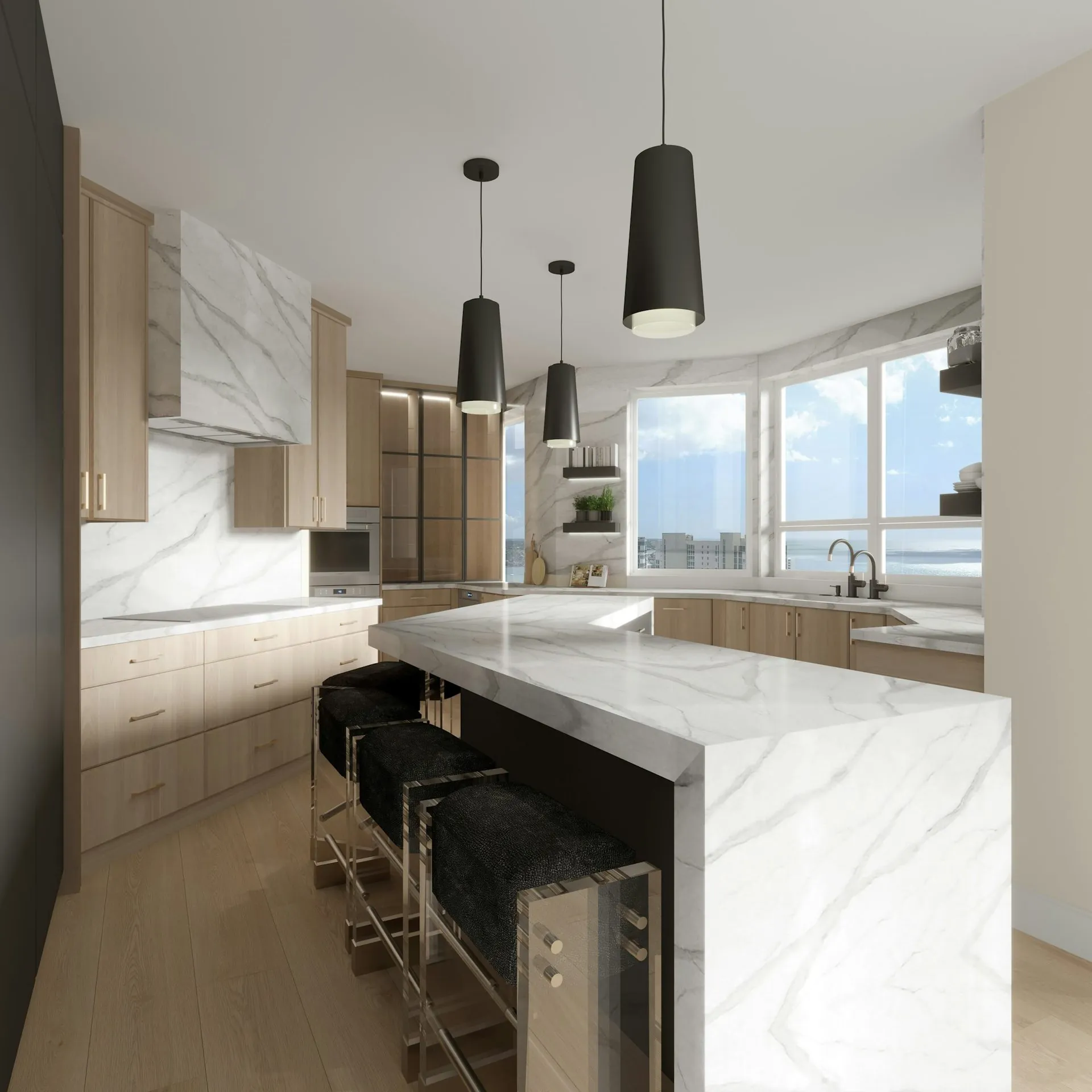
What actually stains it
Engineered stone is far more stain-resistant than natural stone, but strongly pigmented liquids left to sit — red wine, turmeric, some oils — can leave a mark if not wiped up in a reasonable time. It is not instant staining, but it is not indefinite immunity either.
Heat, and where trivets still matter
Engineered stone tolerates everyday cooking heat well, but the resin binder in the material means direct, sustained contact with a very hot pan straight from the stove can still cause localised damage over time. A trivet is a small habit that removes the risk entirely rather than testing the limit.
What to avoid using on it
Bleach-heavy cleaners, abrasive scouring pads and highly acidic products can dull the surface sheen over repeated use. Warm water with a mild dish soap handles the vast majority of daily cleaning without any of that risk.
Materials & hardware guides
More in this series: Is a porcelain benchtop worth it? · Timber benchtop pros and cons · Blum Legrabox explained · Handleless kitchen hardware guide · Brass vs matte black hardware · 2-pack vs laminate kitchen doors · Matte vs gloss kitchen doors · Timber veneer vs laminate doors · 18mm vs 16mm cabinet board · MDF vs particleboard cabinets · Kitchen sink materials compared · Induction vs gas cooktop · Rangehood types explained.
Frequently asked
Common questions
If your question is not here, call the studio. We would rather talk it through than have you guess.
Ask us directly →Can engineered stone stain?
It resists staining far better than laminate or natural stone, but strongly pigmented liquids left sitting for an extended period can still leave a mark — wipe spills up in a reasonable time and it is rarely an issue.
Is engineered stone heatproof?
It tolerates normal cooking heat well but is not designed for direct, sustained contact with very hot cookware — use a trivet for anything straight off the stove or out of the oven.
What should I not clean engineered stone with?
Avoid bleach-heavy products, abrasive scourers and highly acidic cleaners over the long term — warm water and a mild dish soap is sufficient for almost all daily cleaning.
Does engineered stone scratch?
It resists scratching well under normal kitchen use, though cutting directly on it with a knife is still worth avoiding — a chopping board protects both the knife edge and the benchtop.
Delivered assembled
The assembly is done
before it arrives.
Carcasses built square on a bench, Blum hardware fitted, doors hung and adjusted to even gaps. On site you are fixing finished cabinets to a wall, not building them on the floor. Our own team fits it in Central Queensland; your installer fits it anywhere else in Australia. Prefer to build it yourself? The same kitchen ships flat pack.
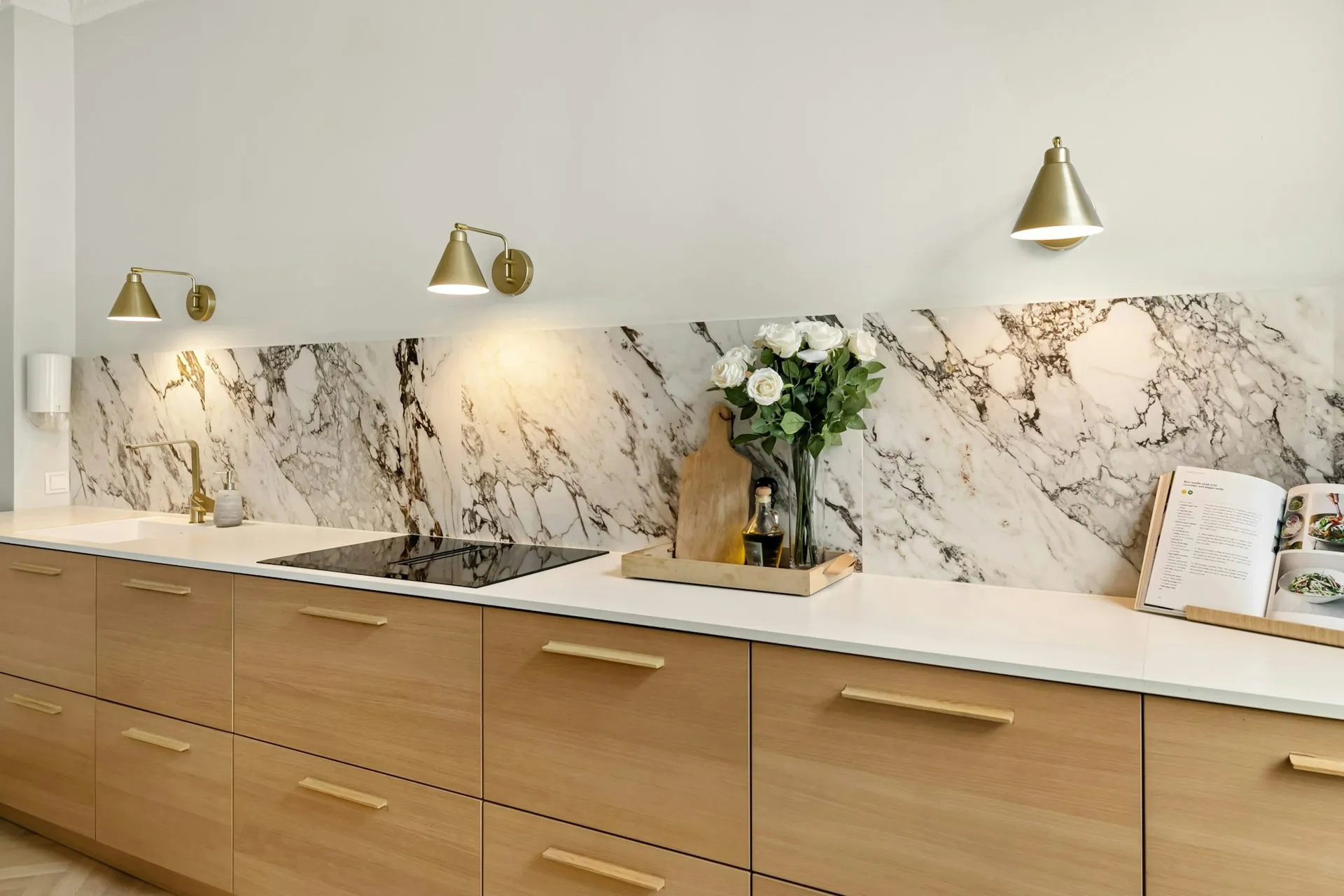
Oak run, doors hung and adjusted before delivery
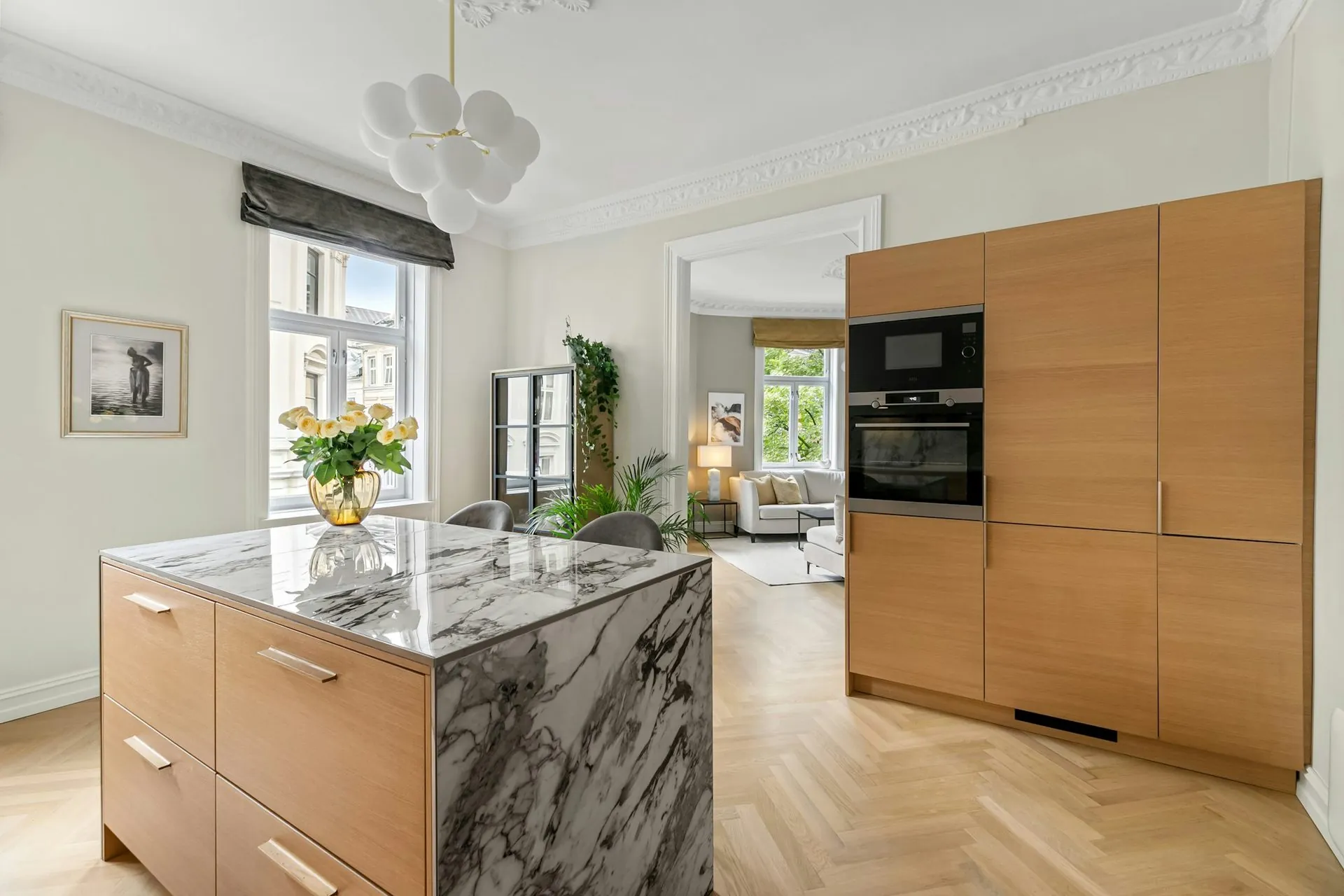
Island with seating overhang
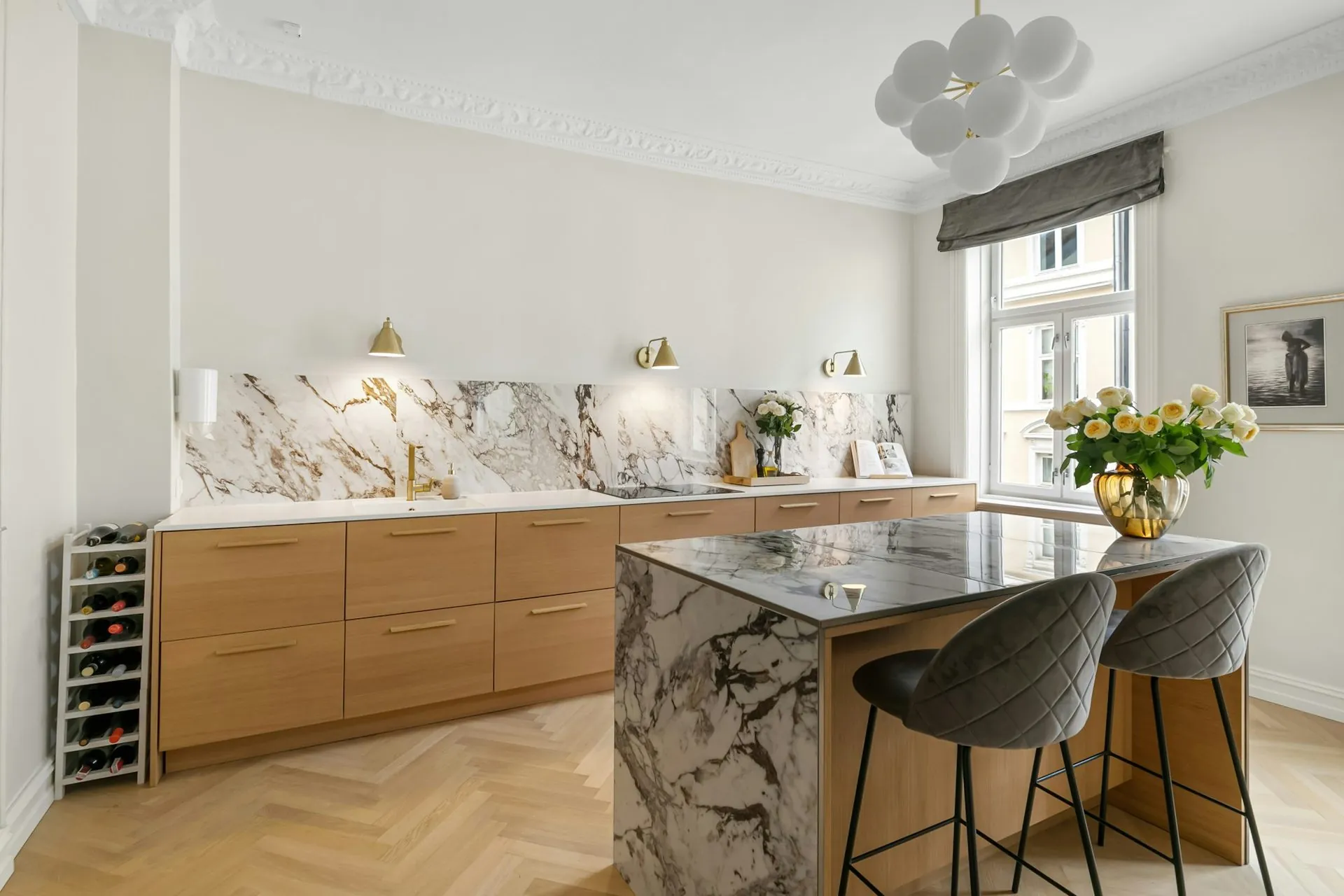
American oak and stone
Put it to use
Reading is one thing.
Your room is another.
Send us your dimensions and we will tell you what actually works in your space — and what it costs. Free, fixed, and yours to keep either way.