Three ways to build
a handleless kitchen.
No handles does not mean one solution. Three genuinely different mechanisms, at three different price points.
The short answer
A handleless kitchen is built one of three ways: a recessed aluminium rail along the cabinet edge, a milled or angled profile cut directly into the door, or push-to-open hardware fitted inside the cabinet. Rail is the most common and most affordable; a milled profile gives the cleanest continuous line at higher cost; push-to-open removes any visible groove entirely but adds a mechanism to every door and drawer — see what is a handleless kitchen for the basic definition and push-to-open hardware explained for that mechanism specifically.
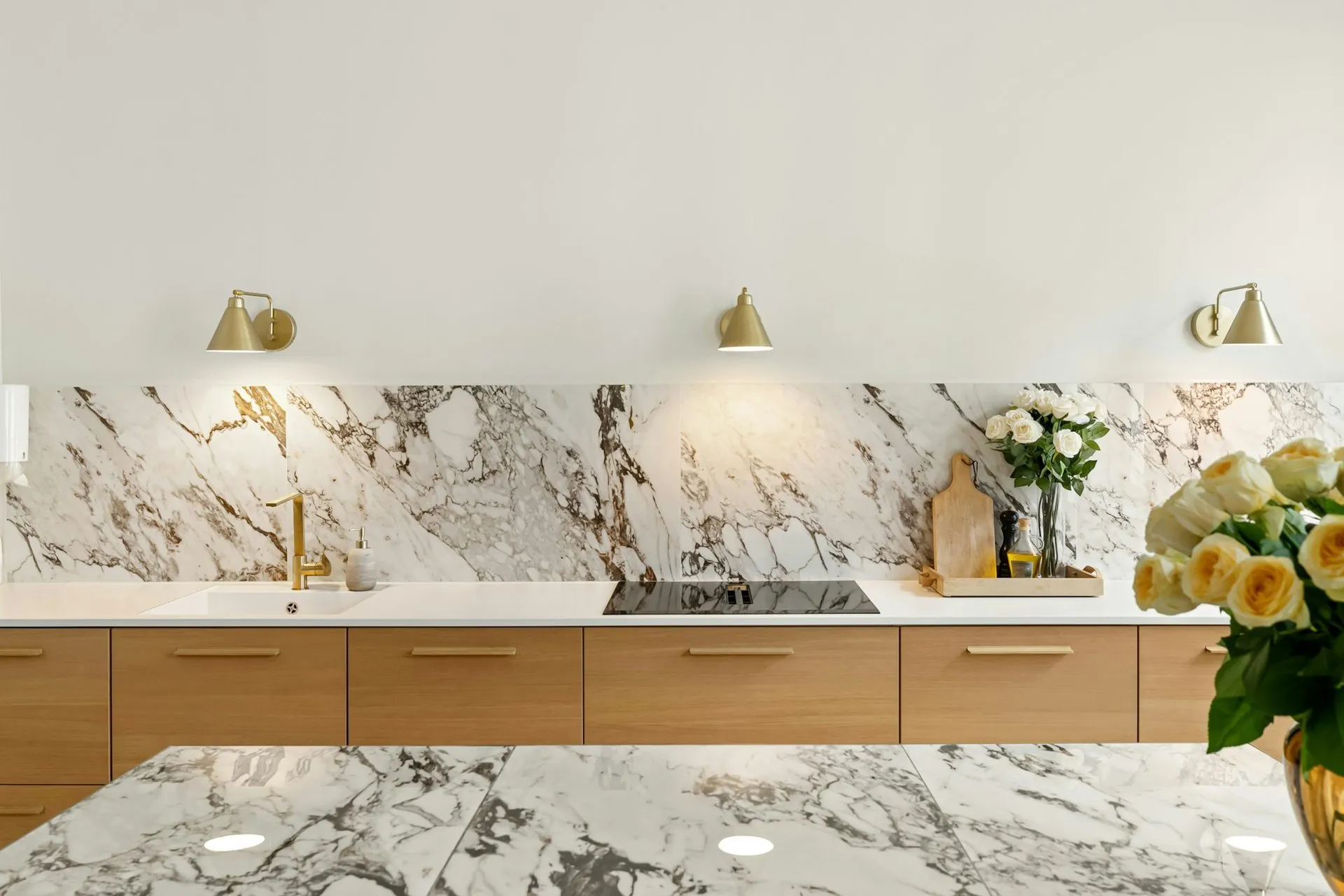
Recessed rail
An aluminium rail runs along the top of base cabinets and bottom of overheads, providing a continuous grip line across a whole run. It is the most affordable route to a handleless look and the easiest to retrofit or repair if damaged, since the rail is a separate component rather than part of the door itself.
Milled or angled profile
The grip is cut directly into the door edge rather than added as a separate rail, giving the cleanest, most continuous line with no visible seam between door and rail. It costs more, since every door needs the profile milled individually, and a damaged door means replacing the whole front rather than a length of rail.
Push-to-open
No visible groove or rail at all — the door releases with a light press via an internal mechanism. It gives the most minimal look of the three but costs the most, since every door and drawer needs its own mechanism, and can feel less immediate to someone unfamiliar with the kitchen.
Materials & hardware guides
More in this series: Engineered stone benchtop care · Is a porcelain benchtop worth it? · Timber benchtop pros and cons · Blum Legrabox explained · Brass vs matte black hardware · 2-pack vs laminate kitchen doors · Matte vs gloss kitchen doors · Timber veneer vs laminate doors · 18mm vs 16mm cabinet board · MDF vs particleboard cabinets · Kitchen sink materials compared · Induction vs gas cooktop · Rangehood types explained.
Frequently asked
Common questions
If your question is not here, call the studio. We would rather talk it through than have you guess.
Ask us directly →What is the cheapest way to get a handleless kitchen?
A recessed aluminium rail is generally the most affordable route, providing a continuous grip line without needing an individual mechanism in every door.
Which handleless hardware is easiest to repair?
A recessed rail, since it is a separate component that can be replaced independently of the doors. A milled profile or push-to-open mechanism generally means addressing the door or cabinet itself if something fails.
Can I mix rail and push-to-open in one kitchen?
Yes — a common approach uses a rail on base cabinets and drawers used constantly, with push-to-open on overheads reached less often, balancing cost against convenience.
Does a milled profile door cost much more than a rail system?
Generally yes, since every door needs the profile machined individually rather than sharing a single continuous rail across a run.
Delivered assembled
The assembly is done
before it arrives.
Carcasses built square on a bench, Blum hardware fitted, doors hung and adjusted to even gaps. On site you are fixing finished cabinets to a wall, not building them on the floor. Our own team fits it in Central Queensland; your installer fits it anywhere else in Australia. Prefer to build it yourself? The same kitchen ships flat pack.
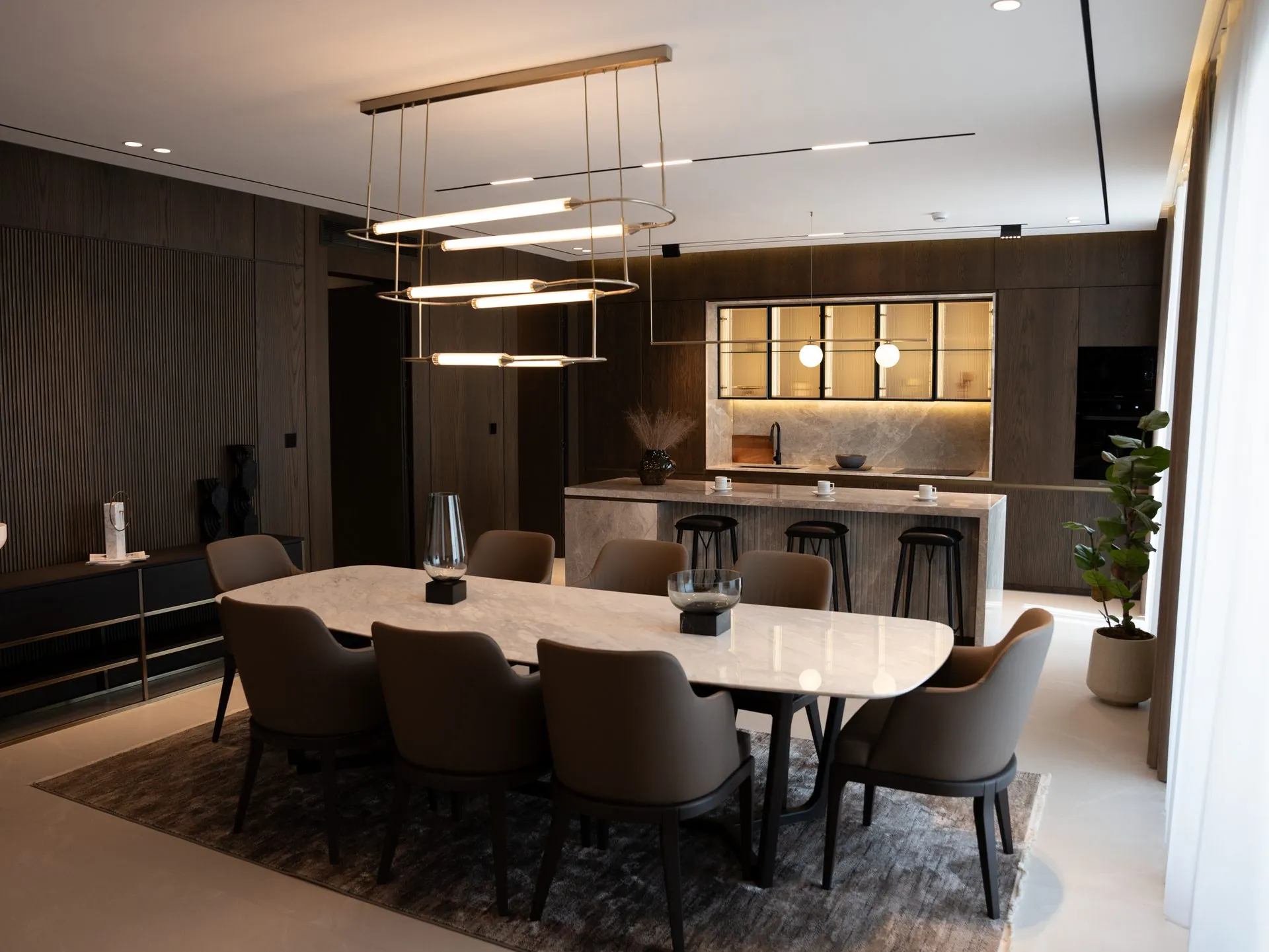
Full-height joinery, fitted in days
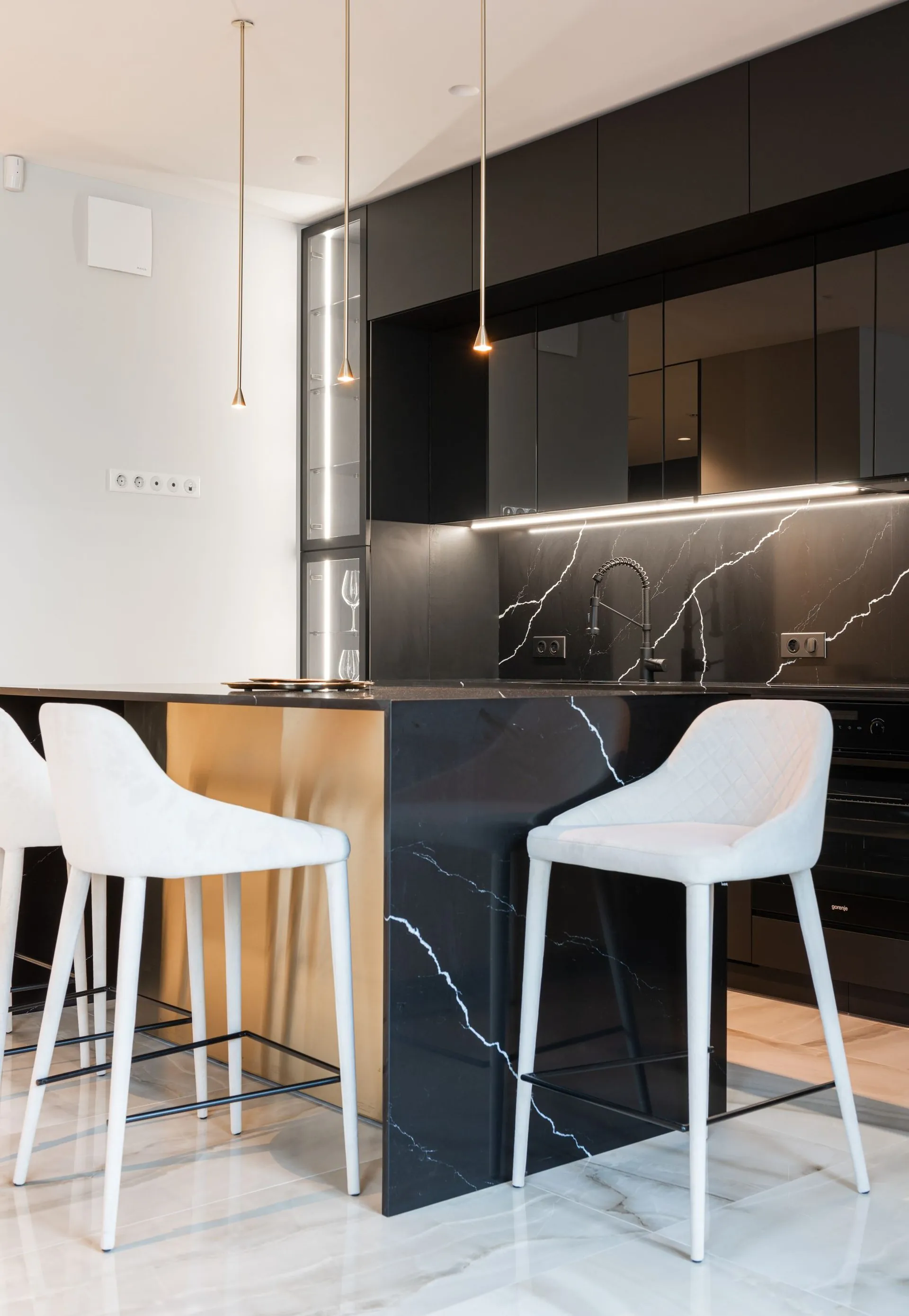
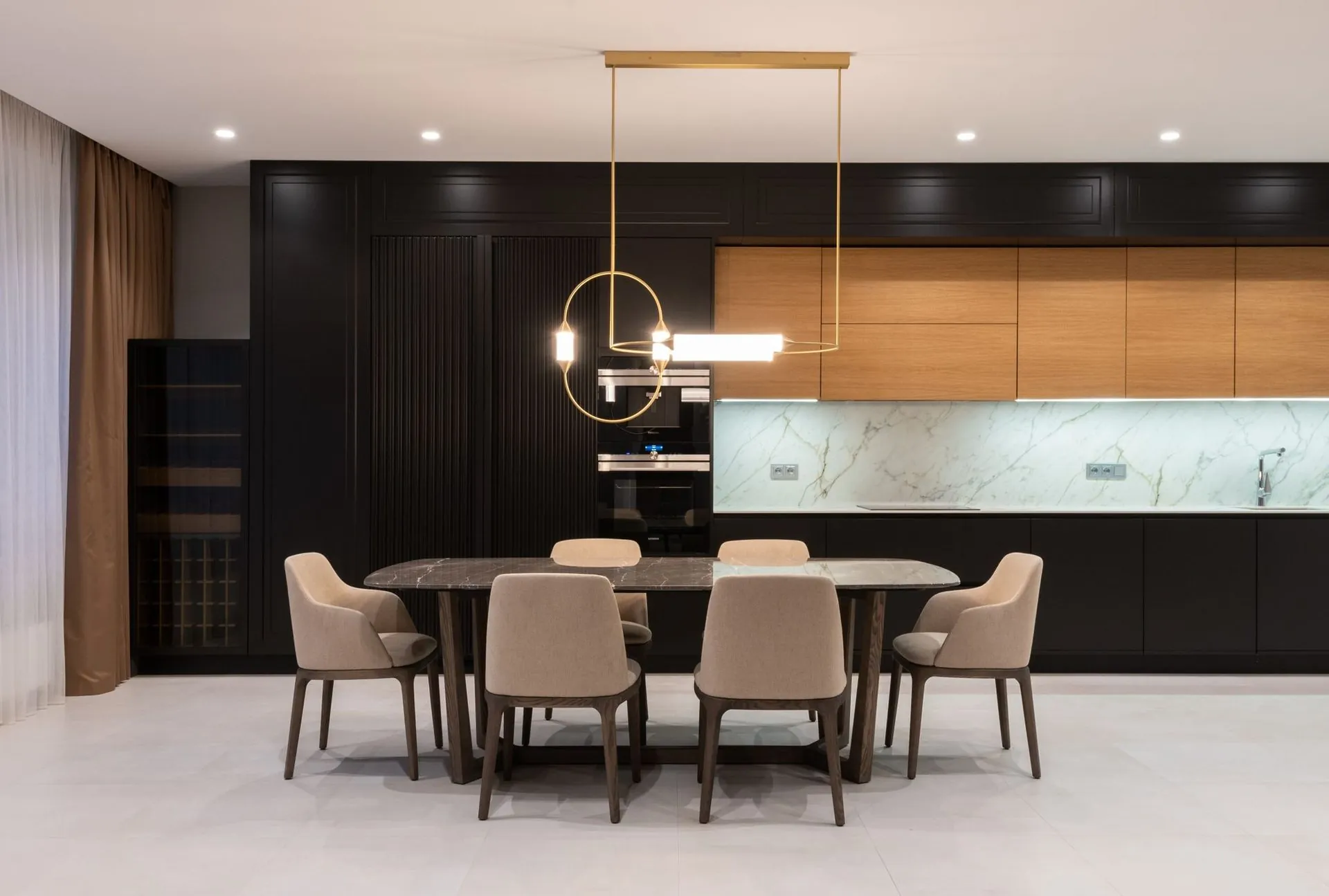
Black joinery, marble bar
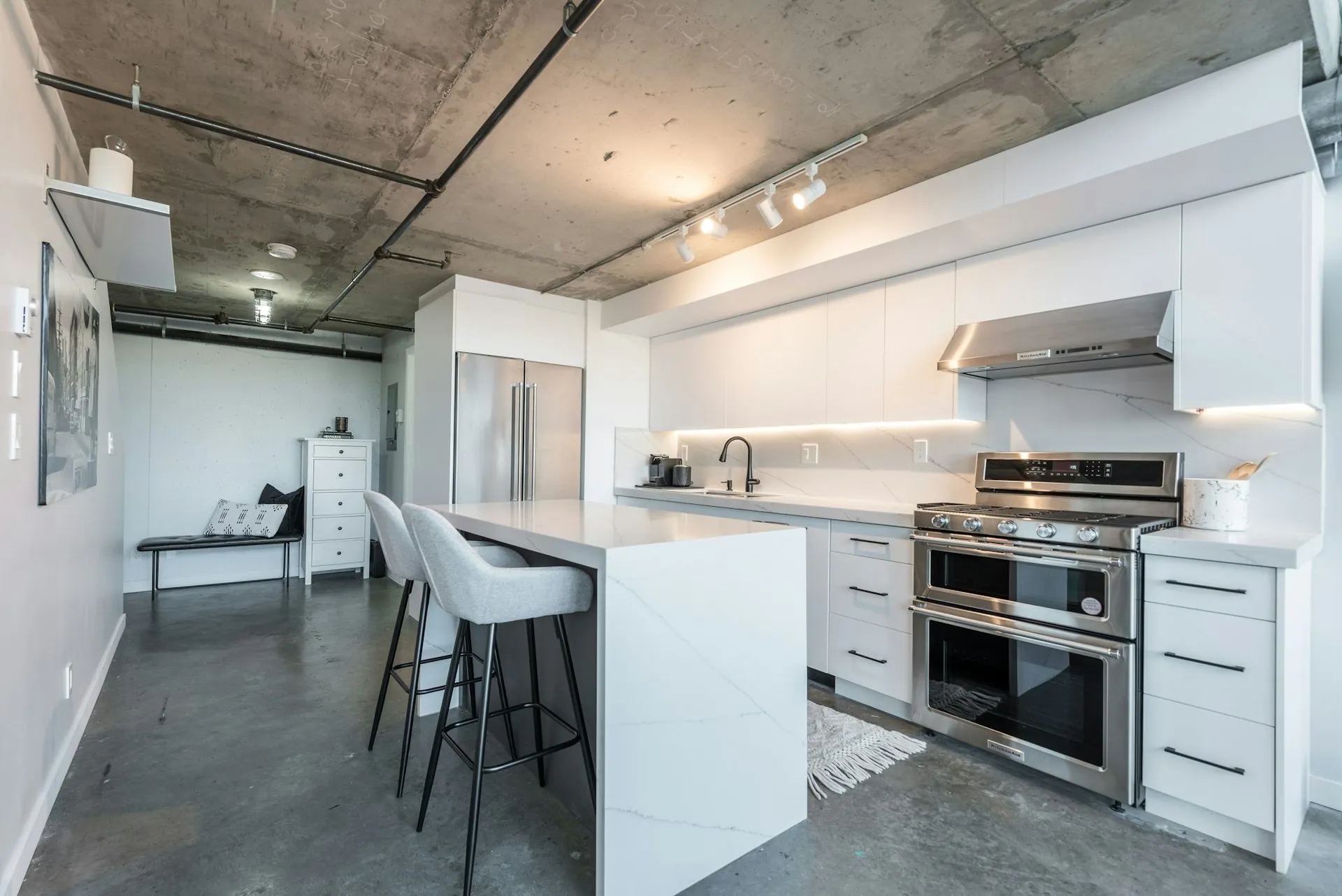
Concrete-look doors, matte black hardware
Put it to use
Reading is one thing.
Your room is another.
Send us your dimensions and we will tell you what actually works in your space — and what it costs. Free, fixed, and yours to keep either way.