Pot drawers
or base cupboards?
Drawers cost more and are almost always worth it below the bench. The exception is the cabinet under the sink, where the plumbing decides for you.
The short answer
A base cupboard with a shelf makes you kneel and reach to the back. A pot drawer brings the whole contents out to you. For anything heavy or deep @EM@ pots, pantry goods, appliances @EM@ drawers are substantially more usable, and full-extension runners mean you reach the back without moving anything at the front. They cost more per cabinet because of the hardware. The one place a cupboard still wins is under the sink, where the trap and the waste take up the space a drawer box would need.
What you actually gain
Access to the back of the cabinet without kneeling. A shelf in a 600mm deep cupboard has roughly a third of its depth effectively unreachable without emptying the front. A full-extension drawer presents everything at once. For a household that cooks, that is the difference between using the whole kitchen and using the front of it.
What it costs
Drawers cost more than doors because a drawer needs a box and a pair of runners, and the runners are the expensive part if they are any good. The difference is per cabinet, so it scales with how many you convert. It is quoted as its own line so you can decide cabinet by cabinet.
Where a cupboard still wins
Under the sink, where the trap, the waste and often a bin take the space. Under a cooktop, where the burner box may intrude. And for a small number of very tall items, where a single full-height space beats three drawers. Everything else below the bench is usually better as a drawer.
What we specify
Blum full-extension runners with soft close as standard on every drawer, rated to carry a loaded pot drawer without sagging. Full-extension runners explains why partial-extension runners are the false economy here. Cabinets arrive with runners fitted when you order delivered assembled.
Sizes, hardware and services
More in this series: Standard cabinet sizes · Bench height · Hinge overlay · Benchtop thickness · Appliance cut-outs · Undermount vs topmount · Under-cabinet lighting · Soft close vs push to open · Runner load ratings · The work triangle · Power point placement.
Frequently asked
Common questions
If your question is not here, call the studio. We would rather talk it through than have you guess.
Ask us directly →Are pot drawers worth the extra cost?
For most households below the bench, yes. You get access to the whole cabinet rather than the front third. The exception is the sink cabinet, where the plumbing takes the space.
How much weight can a pot drawer hold?
That depends on the runner. Quality full-extension runners are rated well beyond what a household loads into them; unbranded ones often are not, and sagging drawers are the usual symptom.
Can I have drawers under the sink?
Sometimes, with a U-shaped drawer box that goes around the trap. It costs more and holds less, so a cupboard is often the sensible answer there.
Should overhead cabinets have drawers?
No. Drawers work below the bench where you look down into them. Above the bench you cannot see into a drawer, so doors and shelves are correct.
Delivered assembled
The assembly is done
before it arrives.
Carcasses built square on a bench, Blum hardware fitted, doors hung and adjusted to even gaps. On site you are fixing finished cabinets to a wall, not building them on the floor. Our own team fits it in Central Queensland; your installer fits it anywhere else in Australia. Prefer to build it yourself? The same kitchen ships flat pack.
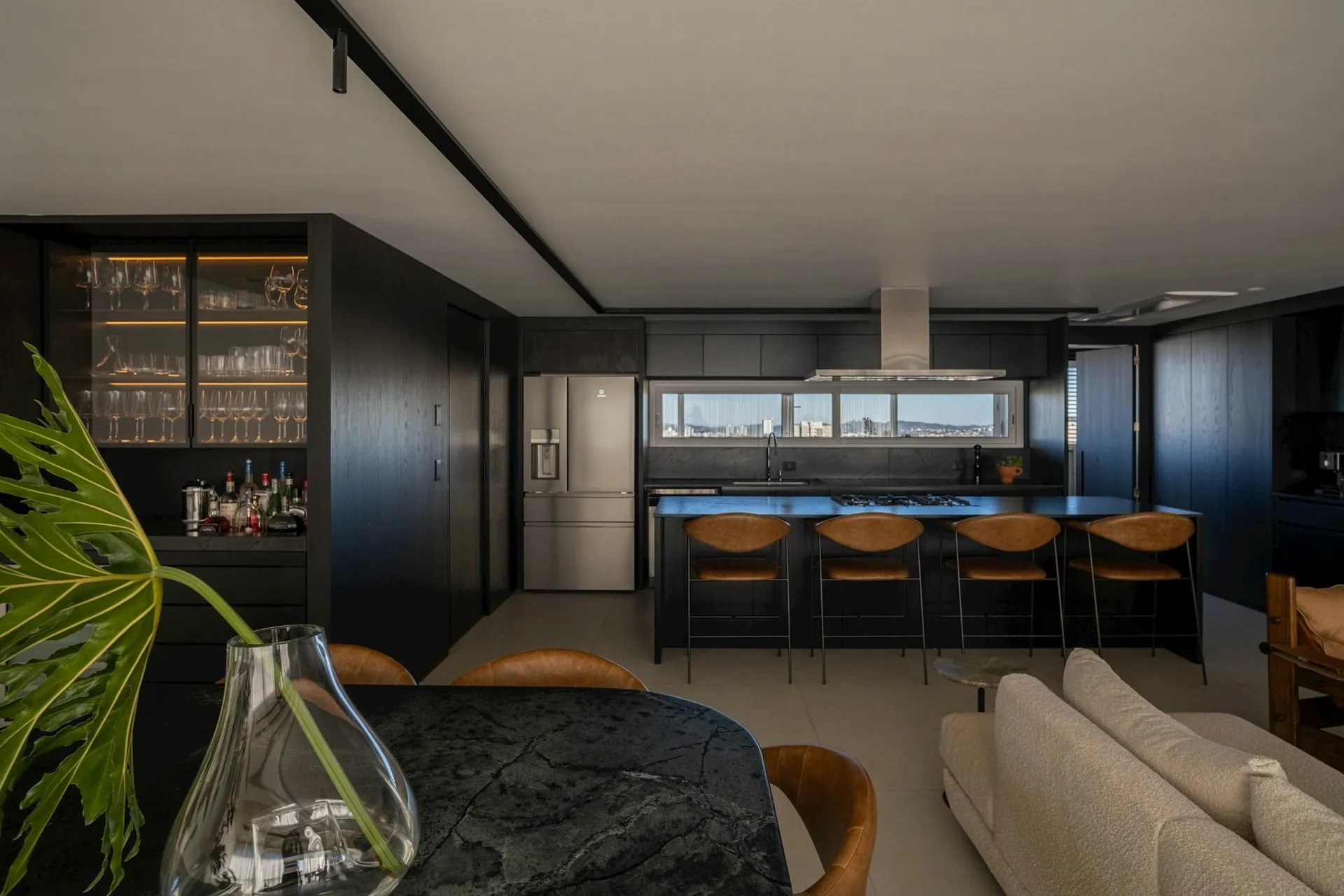
Navy cabinetry, open-plan island
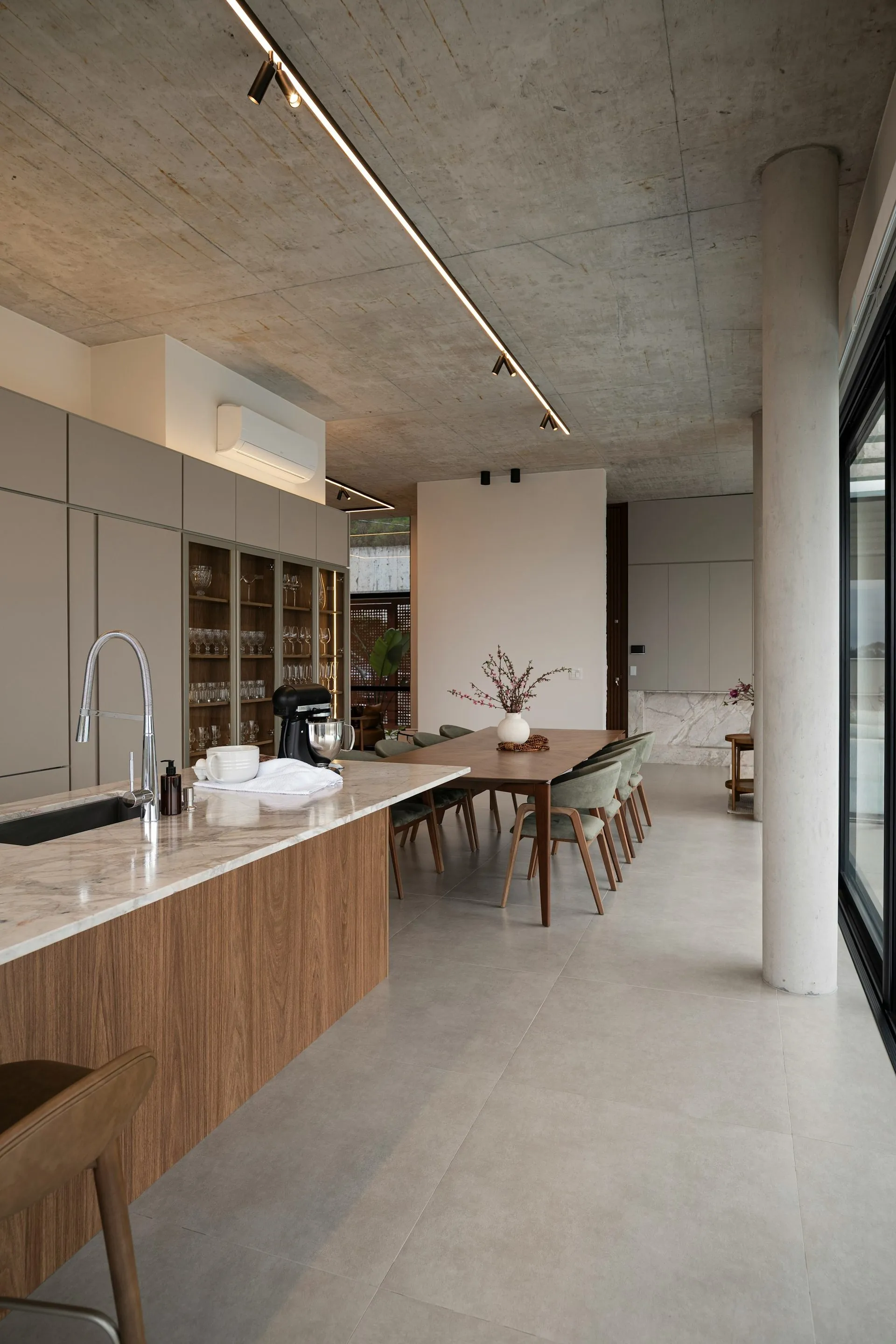
Timber island, stone top
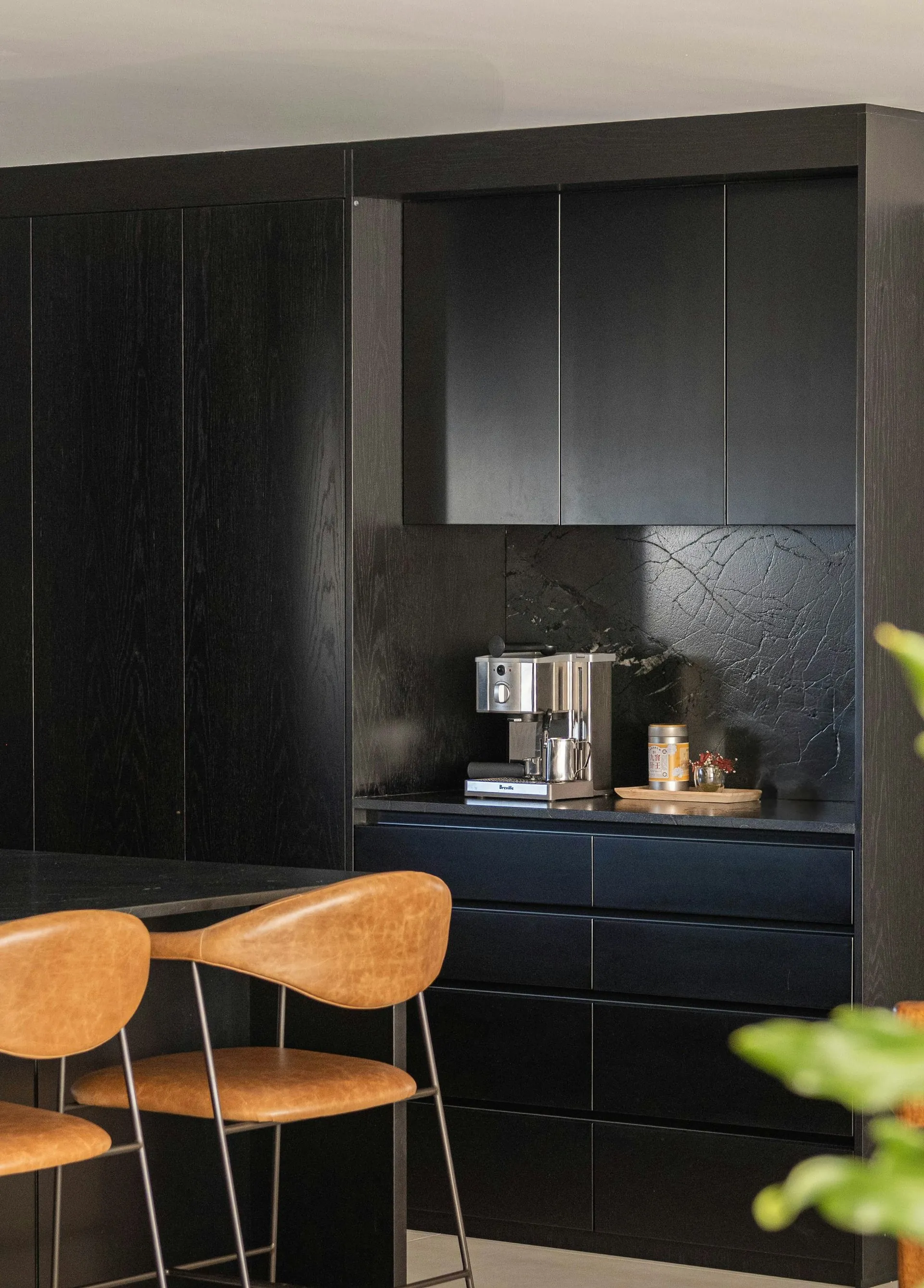
Appliance garage, hardware fitted before delivery
Specification
The same three answers,
on every quote.
Board thickness and moisture rating, edging method, hardware brand. Ours are printed on the quote so you can hold them against anything else you are offered.