How high should
a kitchen bench be?
The standard exists for appliances, not for people. If the people using the kitchen are much taller or shorter than average, the standard is the wrong answer and changing it costs nothing at the drawing stage.
The short answer
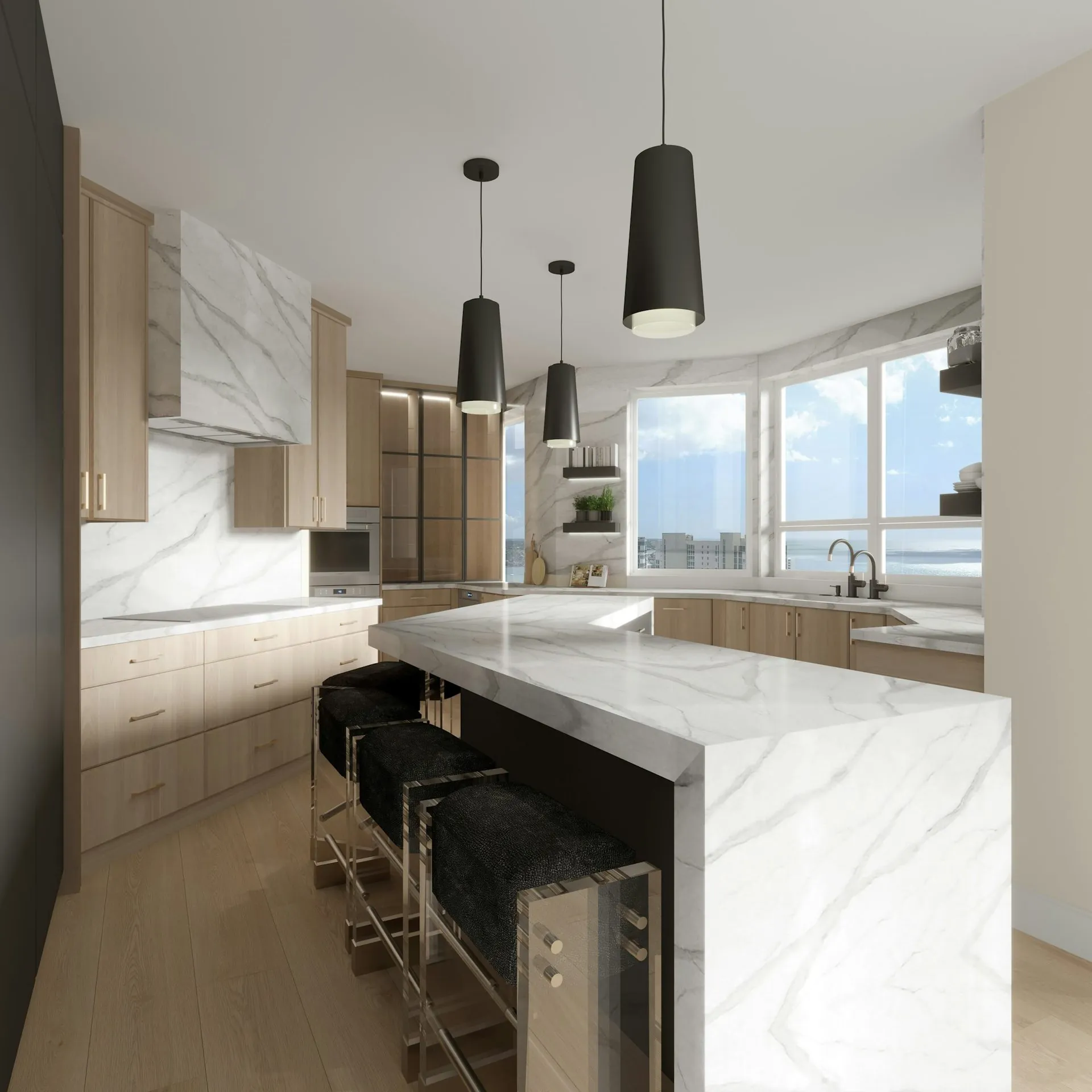
Australian kitchen benches are typically finished at about 900mm from the floor. That comes from a 720mm base cabinet, a kickboard of roughly 150mm and the benchtop on top. The figure is a convention set by appliance heights rather than a rule, and it can be changed. A rough guide for comfort is your elbow height minus about 100 to 150mm; for a tall household that often lands nearer 950mm.
Working it out for your household
Stand at a bench you find comfortable and measure it. Or measure from the floor to your elbow with your arm bent, and take off 100 to 150mm. Chopping and kneading want a lower surface than washing up does, which is why some kitchens run the main bench at one height and an island at another.
What constrains it
An under-bench oven or dishwasher has a fixed height and the bench has to clear it. That is what pins the standard near 900mm. Raising the bench usually means a taller kickboard rather than a taller cabinet, which is straightforward. Lowering it below appliance height means the appliances move elsewhere.
Two heights in one kitchen
Common and often the right answer. A seated user and a standing user need different surfaces, and so do a baker and a tall cook. An island at a different height from the run is the easiest way to do it, and it reads as a design choice rather than a compromise.
Cost
Changing bench height on a kitchen being drawn from scratch costs nothing, because the cabinet is cut to whatever height you specify. Changing it after the cabinets exist means new cabinets. This is a decision to make at the drawing, not on site. send us the dimensions and say the height you want.
Sizes, hardware and services
More in this series: Standard cabinet sizes · Hinge overlay · Benchtop thickness · Drawers vs cupboards · Appliance cut-outs · Undermount vs topmount · Under-cabinet lighting · Soft close vs push to open · Runner load ratings · The work triangle · Power point placement.
Frequently asked
Common questions
If your question is not here, call the studio. We would rather talk it through than have you guess.
Ask us directly →What is the standard kitchen bench height?
Around 900mm in Australia, made up of a 720mm base cabinet, a kickboard and the benchtop.
Should I raise my kitchen bench?
If you are tall and find standard benches uncomfortable, yes. Elbow height minus about 100 to 150mm is a reasonable starting point. It costs nothing to specify at the drawing stage.
Can a kitchen have two bench heights?
Yes, and it is common. An island at a different height from the main run suits households where the people cooking are different heights, or where someone works seated.
Does changing bench height affect appliances?
Raising it is usually fine. Lowering it below the height of an under-bench oven or dishwasher means those appliances have to move.
Delivered assembled
The assembly is done
before it arrives.
Carcasses built square on a bench, Blum hardware fitted, doors hung and adjusted to even gaps. On site you are fixing finished cabinets to a wall, not building them on the floor. Our own team fits it in Central Queensland; your installer fits it anywhere else in Australia. Prefer to build it yourself? The same kitchen ships flat pack.
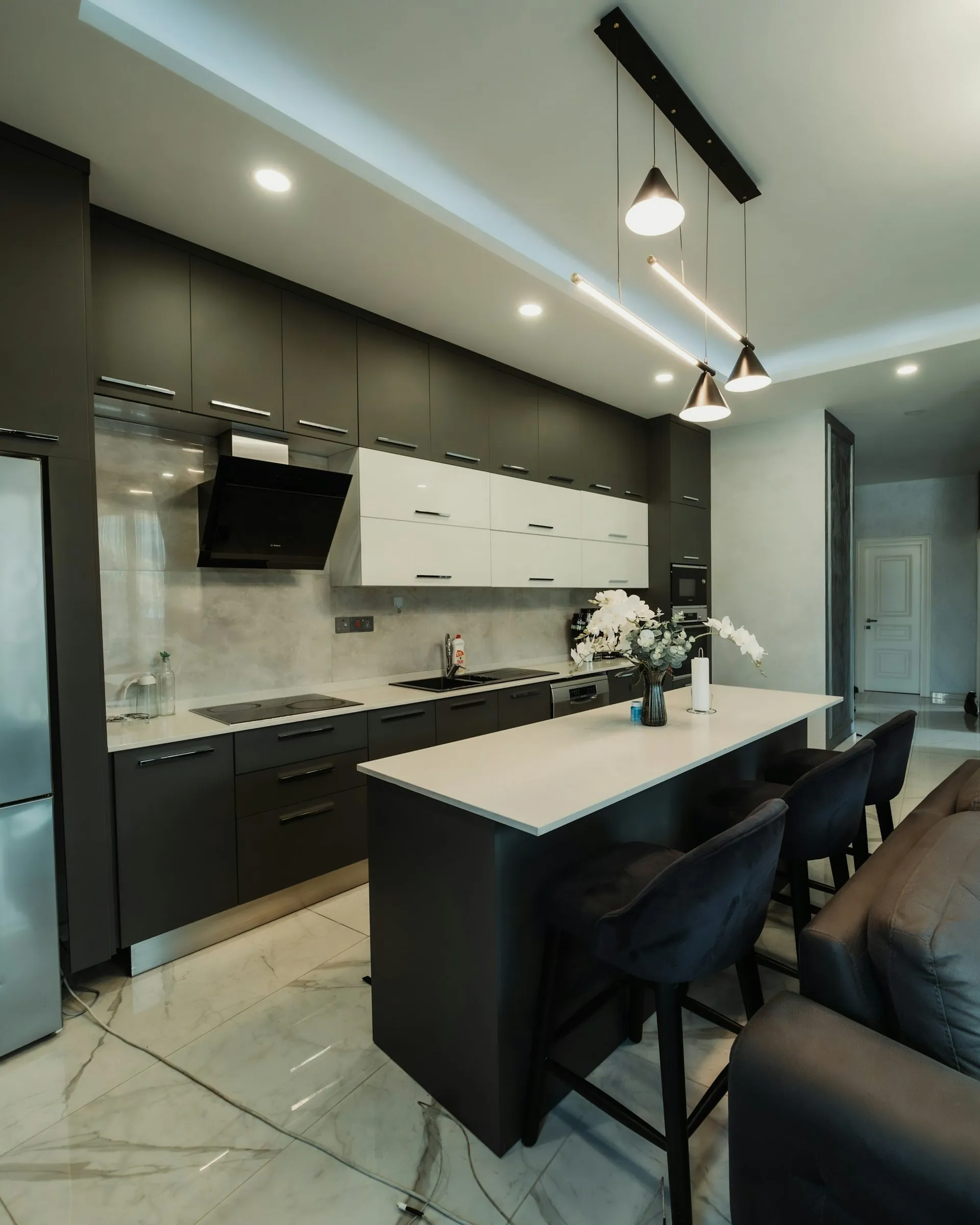
Long island, one delivery
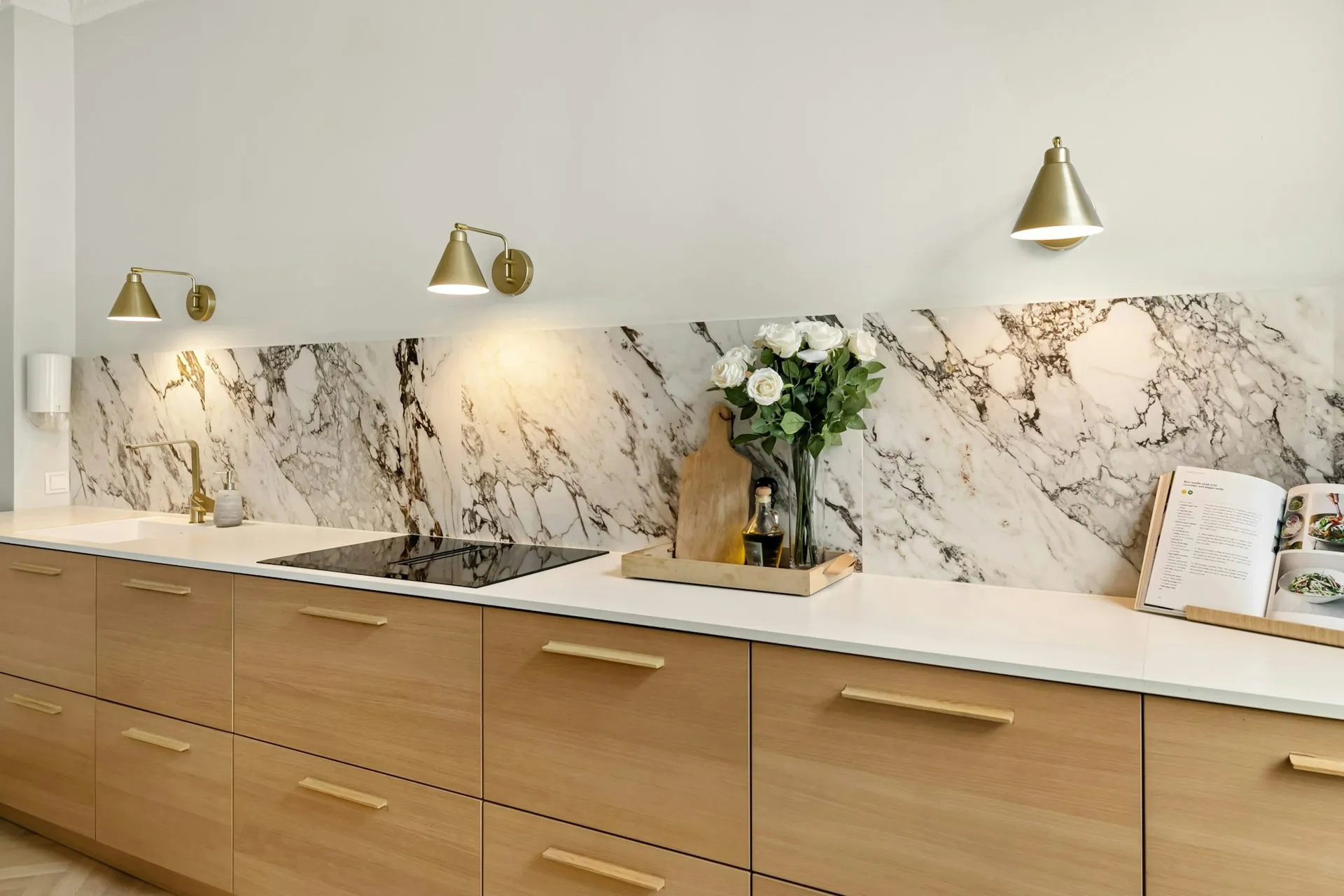
Oak run, doors hung and adjusted before delivery
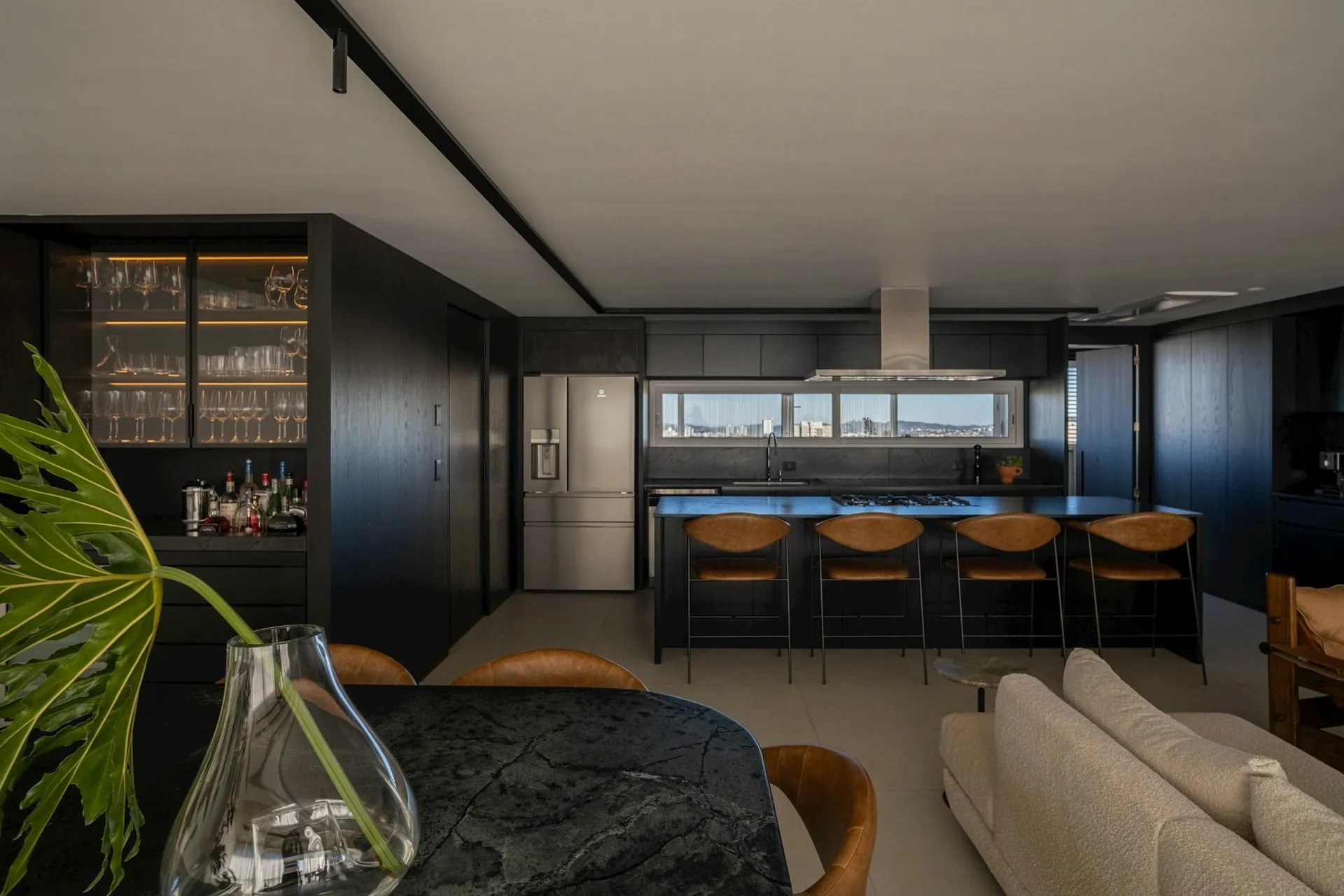
Navy cabinetry, open-plan island
Specification
The same three answers,
on every quote.
Board thickness and moisture rating, edging method, hardware brand. Ours are printed on the quote so you can hold them against anything else you are offered.