Benchtop thickness,
and what it really means.
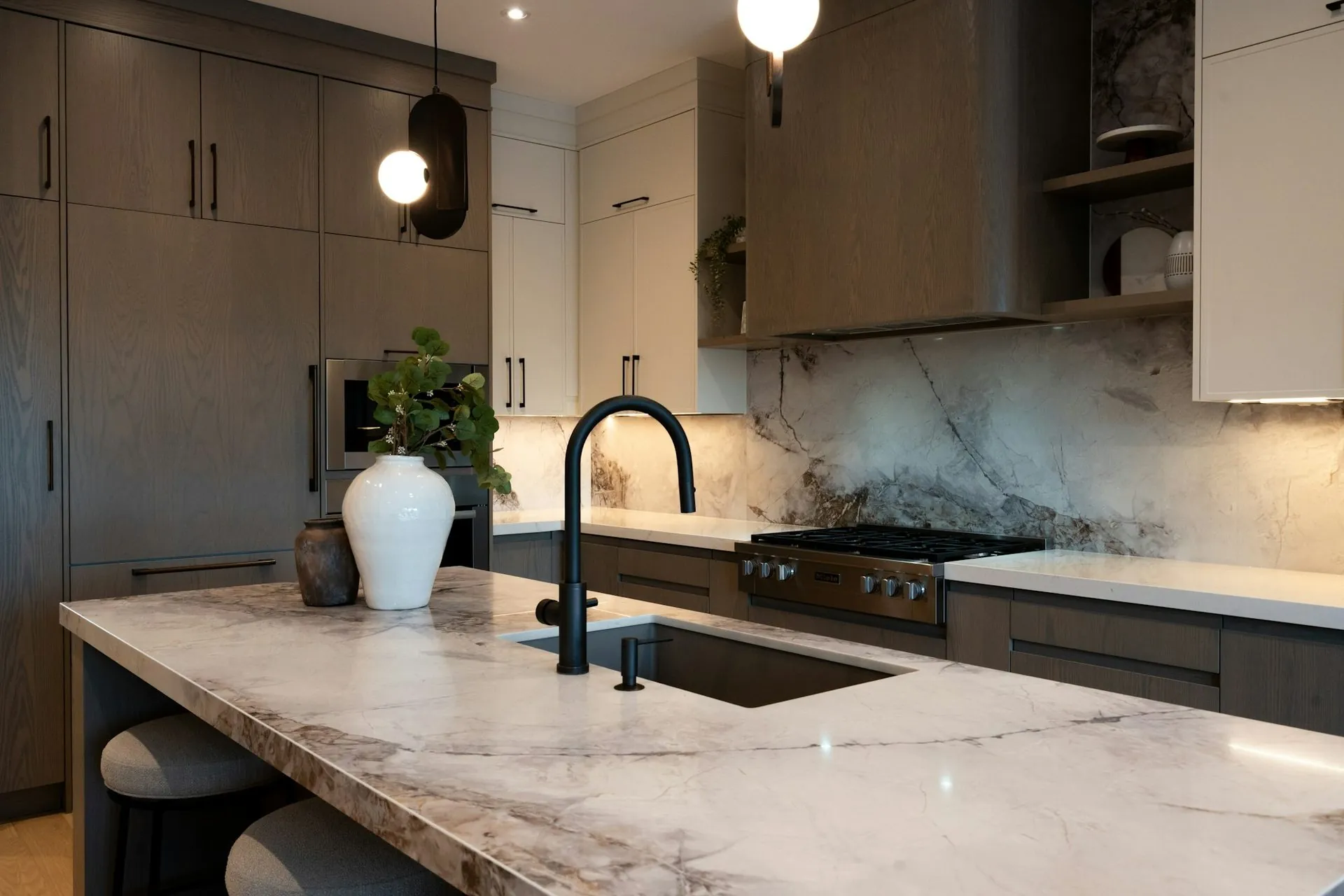
A thicker benchtop is mostly a visual decision, and the thick edge you are looking at is usually not solid material all the way through.
The short answer
Stone and porcelain benchtops are commonly supplied at 20mm and finished with either a 20mm edge or a mitred edge built up to look 40mm thick. A built-up edge uses a strip of the same material mitred at the corner, so the top looks solid without doubling the weight or the cost. Thickness changes the look and the price; it rarely changes durability, because the substrate and the support underneath do that work.
What thickness actually affects
Appearance first. A 20mm top reads light and contemporary; a 40mm edge reads substantial and traditional. Weight second @EM@ a genuinely solid 40mm slab is heavy enough to affect what the cabinets and the floor have to carry. Cost third, and mostly through the extra fabrication a built-up edge needs rather than the material itself.
Mitred versus solid
A mitred edge joins a strip of the same slab at 45 degrees so the pattern runs around the corner and the join is almost invisible when done well. It is the normal way to get a thick look. A genuinely solid 40mm slab exists but costs considerably more and weighs roughly twice as much. Our guide to mitred joins covers how that edge is made.
Laminate is different
Laminate benchtops come in standard thicknesses from the manufacturer, commonly around 33mm, with a postformed or square edge. You are choosing from what is made rather than specifying a thickness, and the decision is really about edge profile and colour.
What we quote
Thickness and edge profile are separate lines on the quote, so you can see what the thicker look costs before committing to it. send us the dimensions and we will price the options side by side.
Sizes, hardware and services
More in this series: Standard cabinet sizes · Bench height · Hinge overlay · Drawers vs cupboards · Appliance cut-outs · Undermount vs topmount · Under-cabinet lighting · Soft close vs push to open · Runner load ratings · The work triangle · Power point placement.
Frequently asked
Common questions
If your question is not here, call the studio. We would rather talk it through than have you guess.
Ask us directly →Is a 40mm benchtop better than 20mm?
Not structurally. It is a visual choice. Durability comes from the material and the support under it, not from the thickness of the edge.
What is a mitred edge?
A strip of the same slab joined at 45 degrees to make a 20mm top look 40mm thick, with the pattern running around the corner.
Does a thicker benchtop cost more?
Usually, mostly through the extra fabrication rather than the material. It is quoted as its own line so you can see the difference.
How thick are laminate benchtops?
Laminate comes in manufacturer standard thicknesses, commonly around 33mm. You choose the edge profile rather than the thickness.
Delivered assembled
The assembly is done
before it arrives.
Carcasses built square on a bench, Blum hardware fitted, doors hung and adjusted to even gaps. On site you are fixing finished cabinets to a wall, not building them on the floor. Our own team fits it in Central Queensland; your installer fits it anywhere else in Australia. Prefer to build it yourself? The same kitchen ships flat pack.
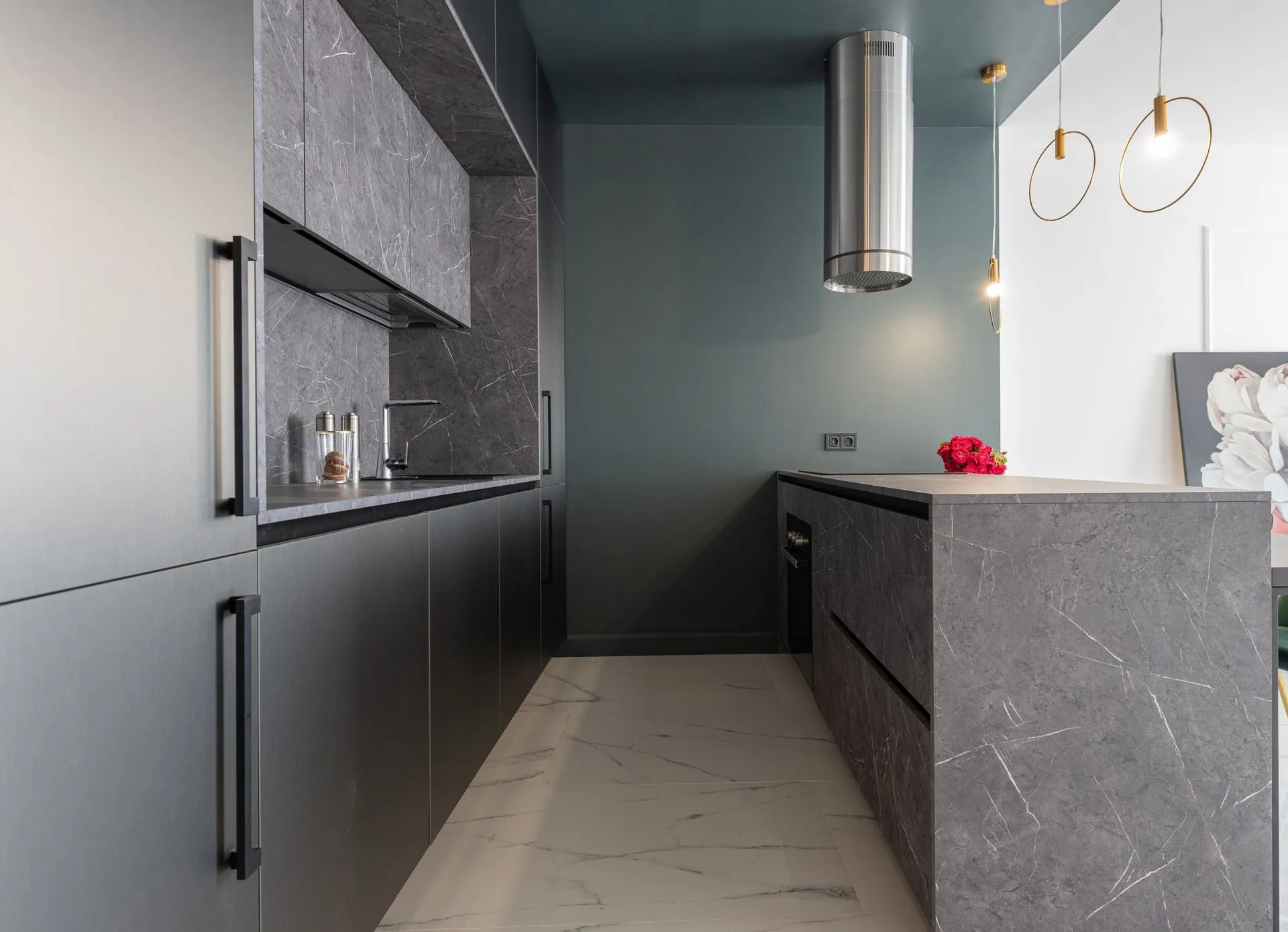
Galley layout for a narrow room
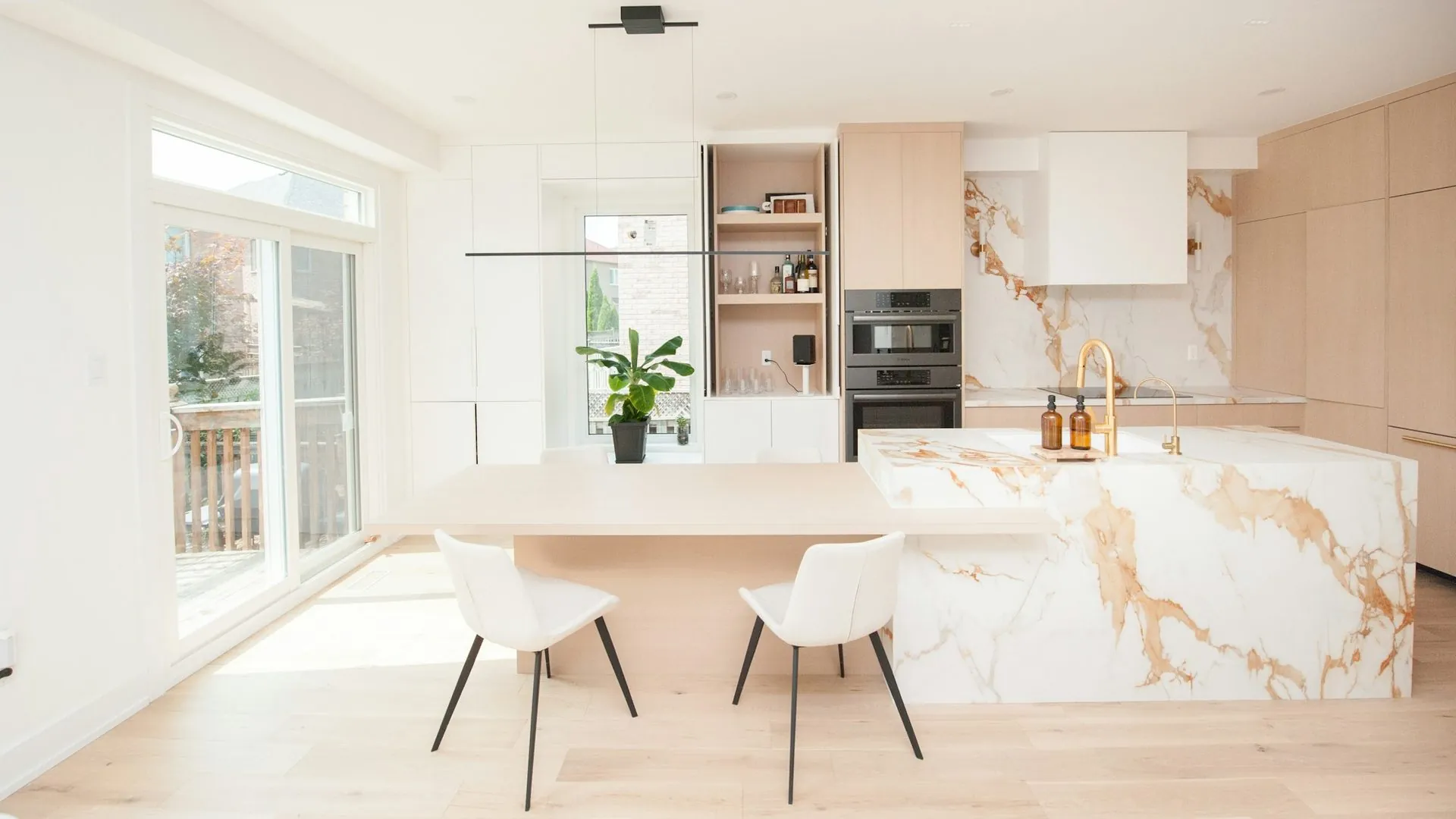
New build, kitchen fitted at fit-off
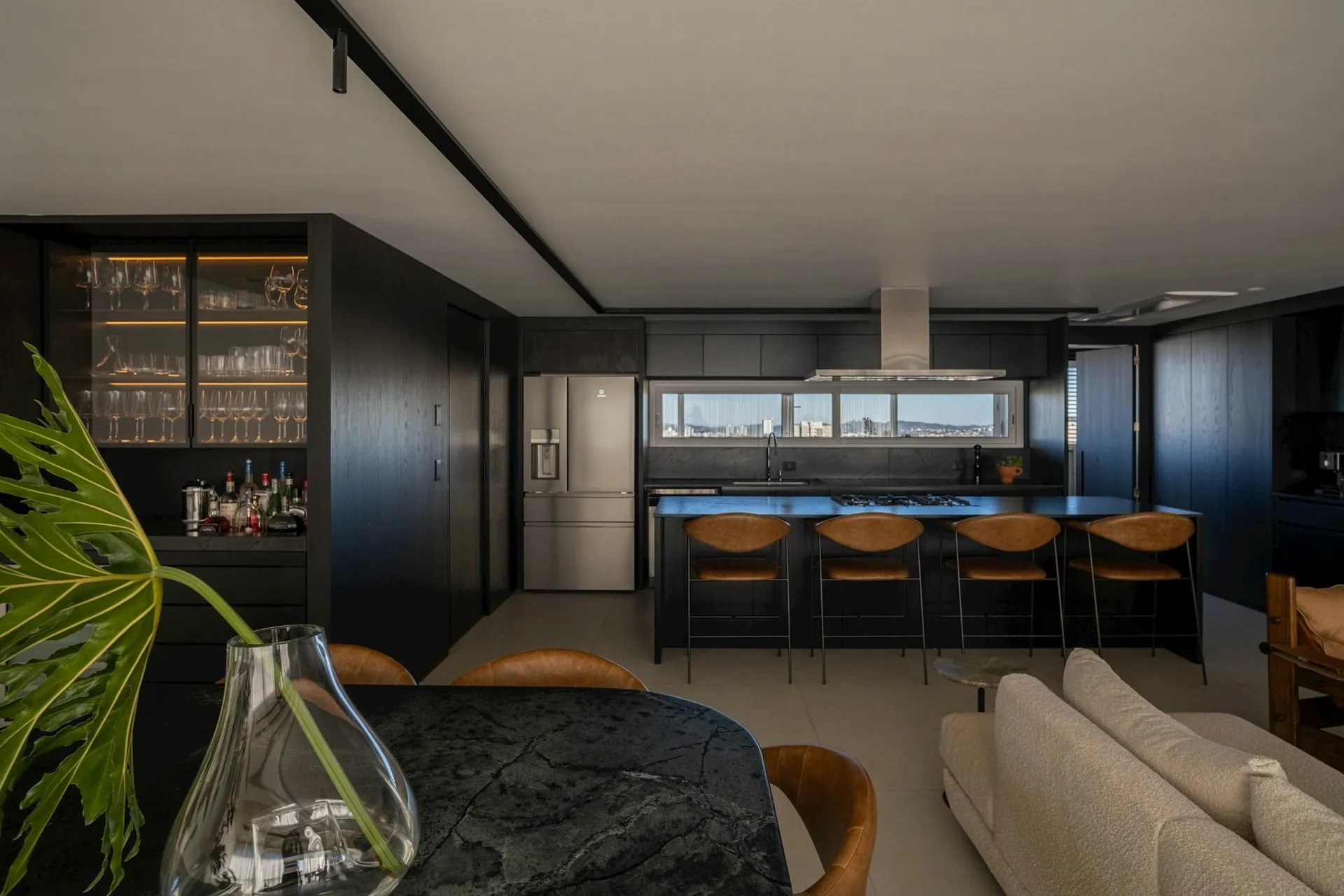
Navy cabinetry, open-plan island
Specification
The same three answers,
on every quote.
Board thickness and moisture rating, edging method, hardware brand. Ours are printed on the quote so you can hold them against anything else you are offered.