Where the power
points should go.
Almost every kitchen renovation ends with someone wishing there were more power points, in different places. It costs nothing to fix on a drawing and a great deal to fix afterwards.
The short answer
There is no fixed number a kitchen needs, but almost every kitchen is planned with too few. Count the appliances that live on the bench permanently, add the ones used weekly, add the ones inside cabinets @EM@ microwave, dishwasher, oven, rangehood, bin motor, under-cabinet lighting @EM@ and then add spares, because you will buy appliances you have not thought of. All of it goes on the service drawing before rough-in, because moving a point after the splashback is on means removing the splashback.
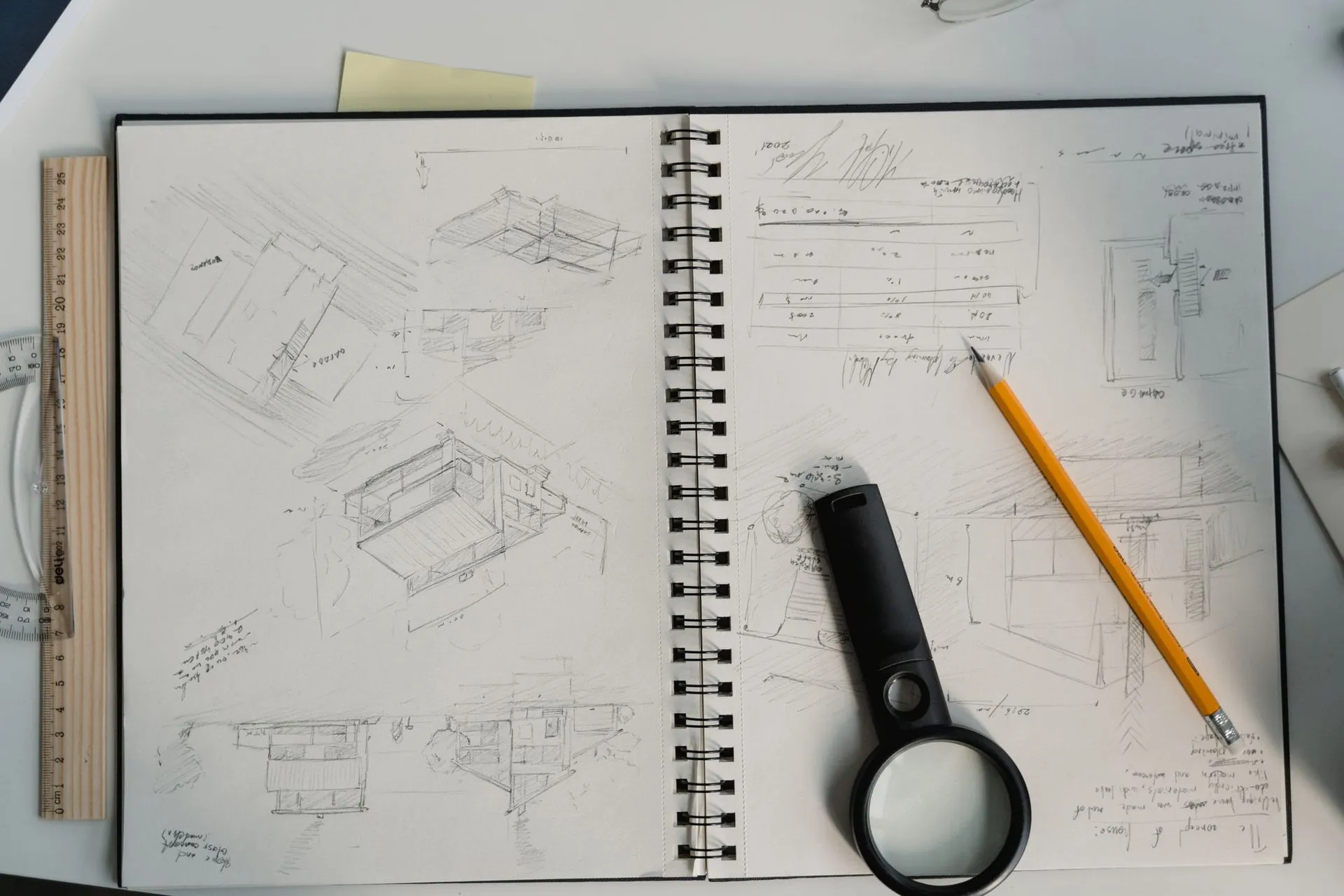
Count what actually lives on the bench
Kettle, toaster, coffee machine and a phone charger is four before you have cooked anything. A stand mixer, blender or air fryer is more. Appliances that sit out permanently need a point they can stay plugged into; appliances used weekly need one within reach of where they are stored. Those are different positions.
The ones that are easy to forget
The dishwasher and the oven need their own supply and often a dedicated circuit. The rangehood needs power above the cooktop. A microwave built into a cabinet needs a point inside that cabinet, positioned so the plug does not stop the appliance sliding back. Motorised bins and under-cabinet lighting each need their own. None of these are visible on a bench, and all of them are awkward to add later.
Height and position
Bench-height points sit above the splashback, and their exact height matters if the splashback is a single slab @EM@ the cut-outs are made when the slab is made. Points inside cabinets need to clear shelves and drawer boxes. An island needs its supply routed through the floor before the slab or the flooring is finished, which makes it one of the earliest decisions in the whole job.
How it gets recorded
Every order ships with a dimensioned service drawing marking each waste, water point and outlet, so your electrician roughs in to the plan rather than to a guess. That drawing is the single thing that prevents a cabinet being cut on site to clear a point nobody planned for. send us the dimensions and it comes back with the drawing.
Sizes, hardware and services
More in this series: Standard cabinet sizes · Bench height · Hinge overlay · Benchtop thickness · Drawers vs cupboards · Appliance cut-outs · Undermount vs topmount · Under-cabinet lighting · Soft close vs push to open · Runner load ratings · The work triangle.
Frequently asked
Common questions
If your question is not here, call the studio. We would rather talk it through than have you guess.
Ask us directly →How many power points does a kitchen need?
There is no fixed number, and most kitchens are planned with too few. Count permanent bench appliances, weekly ones, and everything inside cabinets, then add spares.
Where should kitchen power points go?
Above the splashback at bench height for bench appliances, inside cabinets for built-in appliances, and in the island floor supply for island points. Positions go on the service drawing.
Can power points be added later?
Yes, but adding one above a benchtop usually means removing and replacing the splashback, and an island point means lifting flooring. It is far cheaper to decide before rough-in.
Do appliances need dedicated circuits?
Ovens and dishwashers commonly do. Your licensed electrician determines that from the appliance specifications and the wiring rules.
Delivered assembled
The assembly is done
before it arrives.
Carcasses built square on a bench, Blum hardware fitted, doors hung and adjusted to even gaps. On site you are fixing finished cabinets to a wall, not building them on the floor. Our own team fits it in Central Queensland; your installer fits it anywhere else in Australia. Prefer to build it yourself? The same kitchen ships flat pack.
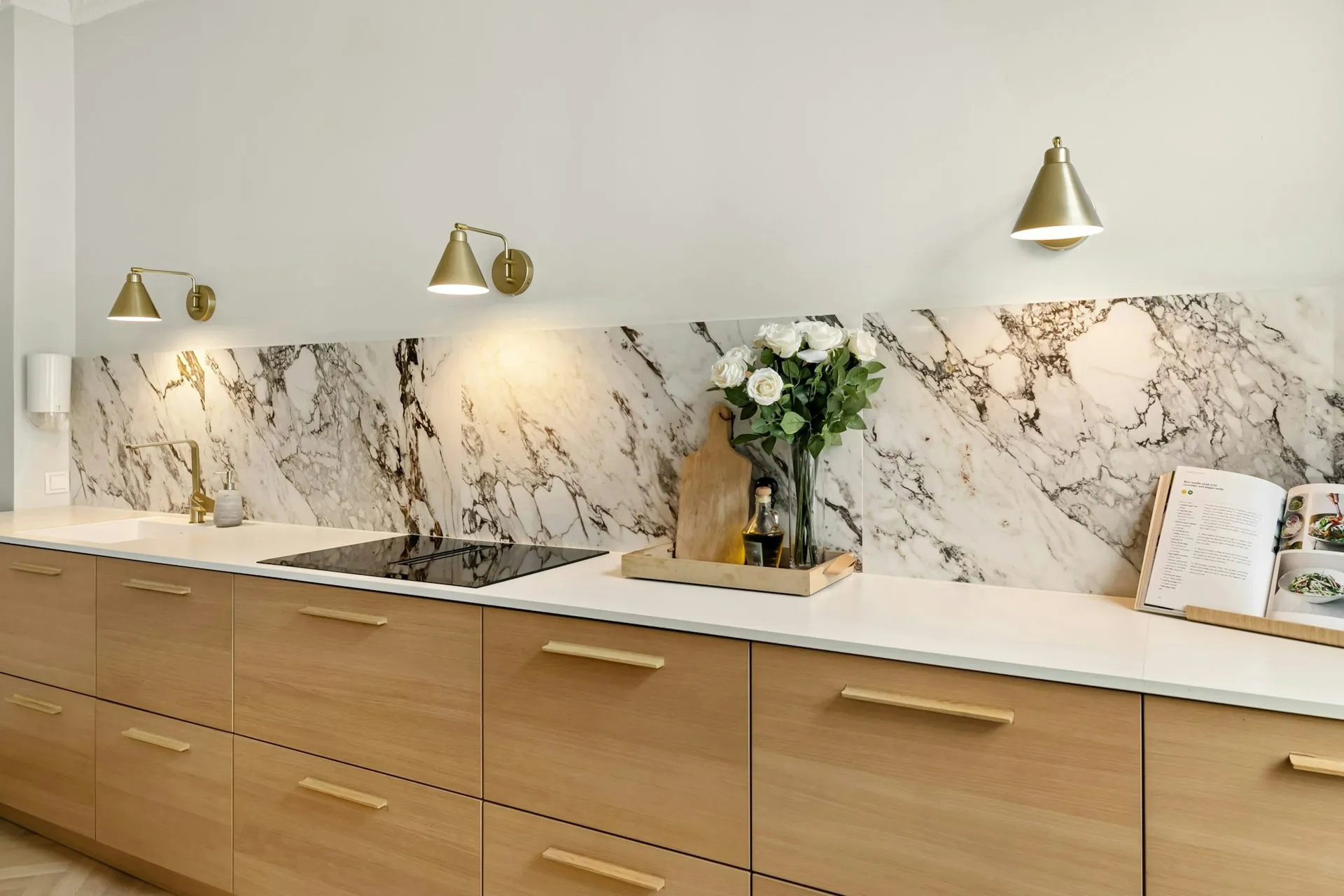
Oak run, doors hung and adjusted before delivery
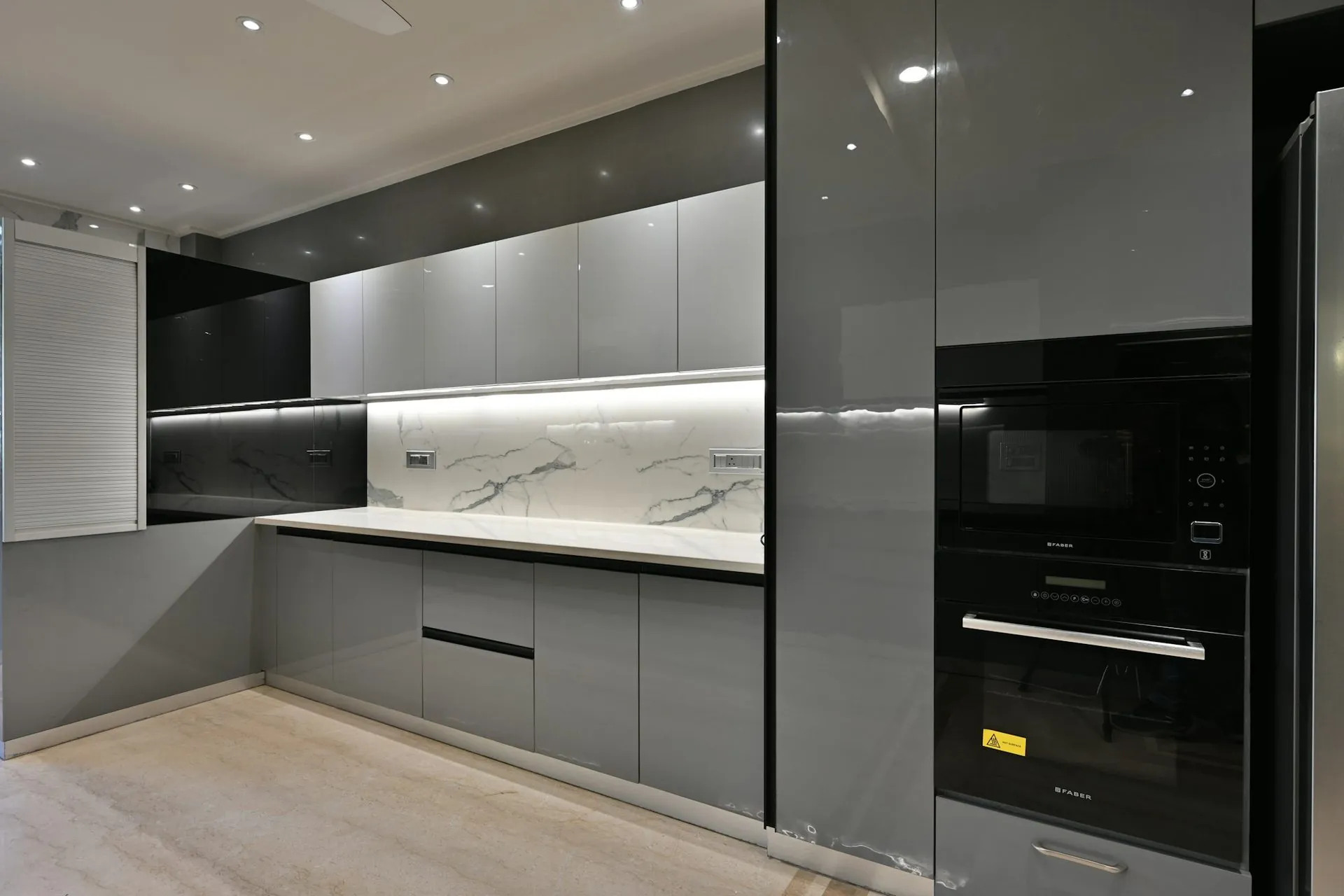
Gloss doors, adjusted to even gaps before delivery
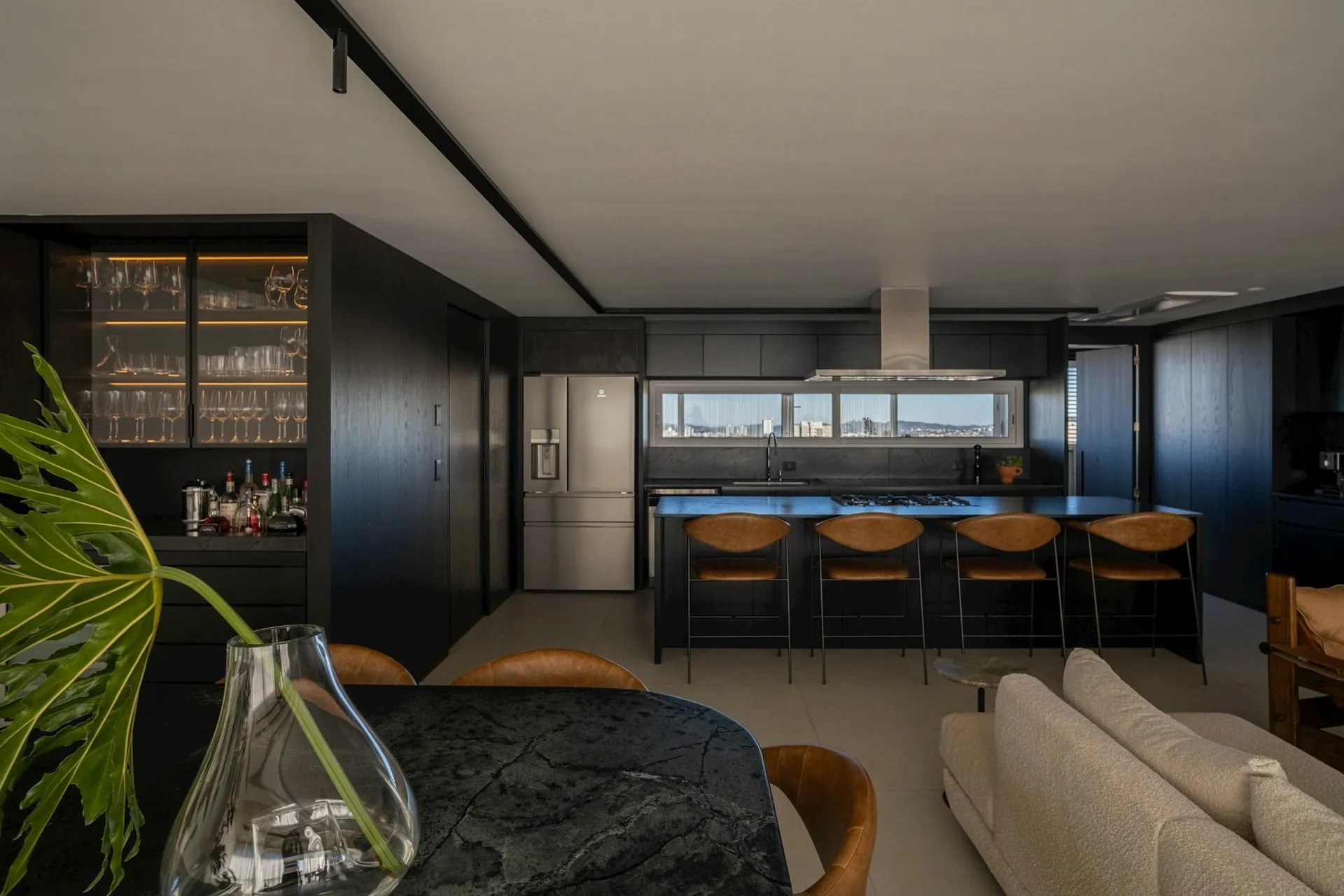
Navy cabinetry, open-plan island

Specification
The same three answers,
on every quote.
Board thickness and moisture rating, edging method, hardware brand. Ours are printed on the quote so you can hold them against anything else you are offered.