The checklist we work
through at your table.
Most kitchen renovations go wrong before anything is ordered. Almost always it is one of these, missed early and discovered late.
The short answer
In this order: measure the room and photograph it, decide a real budget, list the five things that annoy you about the current kitchen, settle the layout before the finishes, sort services before the walls close, lock the appliance models, then ask every quote the same seven questions. Most renovations go wrong at step four or five, not at the build.

Before you contact anybody
Three things, and they take an afternoon. Measure the room — wall to wall, floor to ceiling, and the position of every window, door and power point. Photograph it from all four corners. Decide your real number, not the number you would like to be true. Any company worth talking to will design to a budget honestly stated, and none of them can design to one they are guessing at. Our costs page shows the bands before you have to say anything to anyone.
Work out what is actually wrong with the current kitchen
Write down the five things that irritate you most. Not what looks dated — what does not work. The bin is in the wrong place. Two people cannot pass. There is nowhere to put a hot tray. This list is worth more to a designer than any number of saved photographs, because it describes how you actually use the room. A kitchen that fixes those five things and looks ordinary will make you happier than a beautiful one that fixes none.
Decide the layout before the finishes
People choose a colour first and a layout last. It is backwards. The layout is constrained by the room and costs nothing to change on paper; the finishes are free to choose and expensive to change once ordered. Settle the shape, the clearances and where the sink, bin and dishwasher sit in relation to each other — the layouts guide covers the numbers — then choose how it looks.
Services, before the walls close
This is the one that costs money when missed. Power to an island, a second sink, a water point for the fridge, extraction for a cooktop, and whether the existing switchboard can carry a new oven. All of it is cheap while the wall is open and expensive afterwards. If you are building, this conversation belongs before the slab — see kitchen islands for why an island in particular has to be decided early.
Lock the appliances first
Cabinetry is built around appliances, not the reverse. The oven, cooktop, dishwasher, rangehood and fridge all have to be chosen, and their exact model dimensions known, before a single cabinet is drawn. A fridge cavity built for a fridge you then change is a rebuild, not an adjustment. Buy or at least confirm the models before design finishes.
Ask every quote the same seven questions
Carcass board thickness and moisture rating. Hardware brand and warranty. Edging — glued or laser-bonded. Who installs it, employee or subcontractor. Whether the quote is fixed or an estimate. Lead time from deposit. What happens if something is damaged in transit. Ask us the same. A company that answers all seven in writing is telling you something; one that gets vague on two of them is telling you more.
Plan for the weeks without a kitchen
Eight to twelve weeks from deposit, and roughly one to two weeks without a working kitchen during install. Set up a temporary bench with the kettle, toaster and microwave somewhere else in the house before demolition, not during it. Know where the fridge is going to live. It sounds trivial and it is the thing families remember most about the process.
Before you pay the final invoice
Walk the kitchen with the installer. Open and close every door and drawer. Check the alignment of the gaps — they should be even, which is the fastest way to judge whether cabinetry was fitted or forced. Run the tap and check under the sink for leaks. Confirm the warranty is in writing and that you have been told what is and is not covered.
Frequently asked
Common questions
If your question is not here, call the studio. We would rather talk it through than have you guess.
Ask us directly →How long does a kitchen renovation take?
Eight to twelve weeks from deposit to handover for most kitchens, of which one to two weeks is the disruptive part where the old kitchen is out and the new one is going in. Our process page sets out what happens in each week.
What is the most common mistake?
Choosing finishes before settling the layout, and leaving services until the walls are closed. Both are cheap to get right early and expensive to fix late.
Do I need to buy appliances before the design is finished?
You need to have chosen them and know the exact model dimensions. Cabinetry is built around appliances, so changing a fridge or an oven after drawings are signed off usually means rebuilding a cabinet rather than adjusting one.
Delivered assembled
The assembly is done
before it arrives.
Carcasses built square on a bench, Blum hardware fitted, doors hung and adjusted to even gaps. On site you are fixing finished cabinets to a wall, not building them on the floor. Our own team fits it in Central Queensland; your installer fits it anywhere else in Australia. Prefer to build it yourself? The same kitchen ships flat pack.
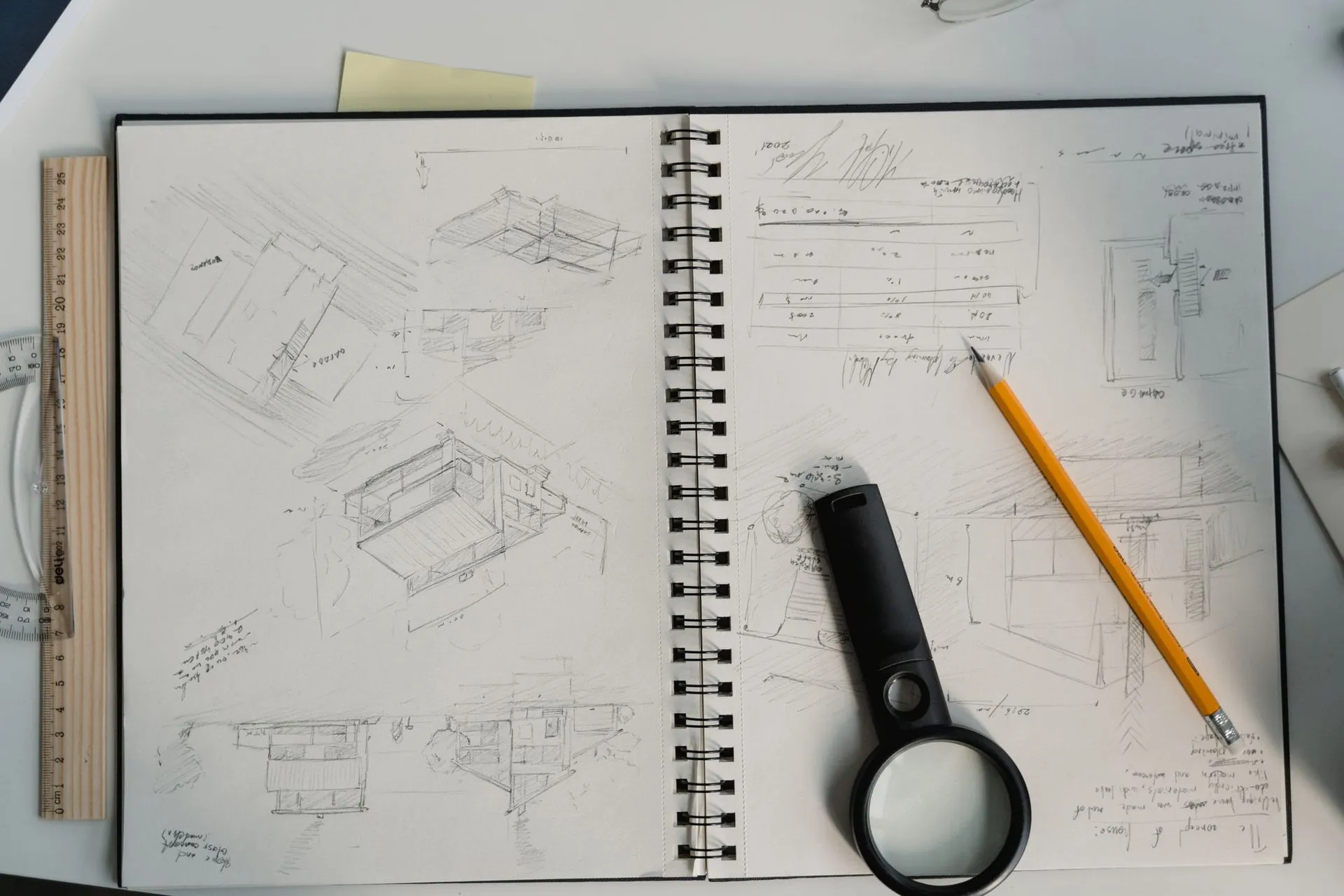
Service drawings for your trades
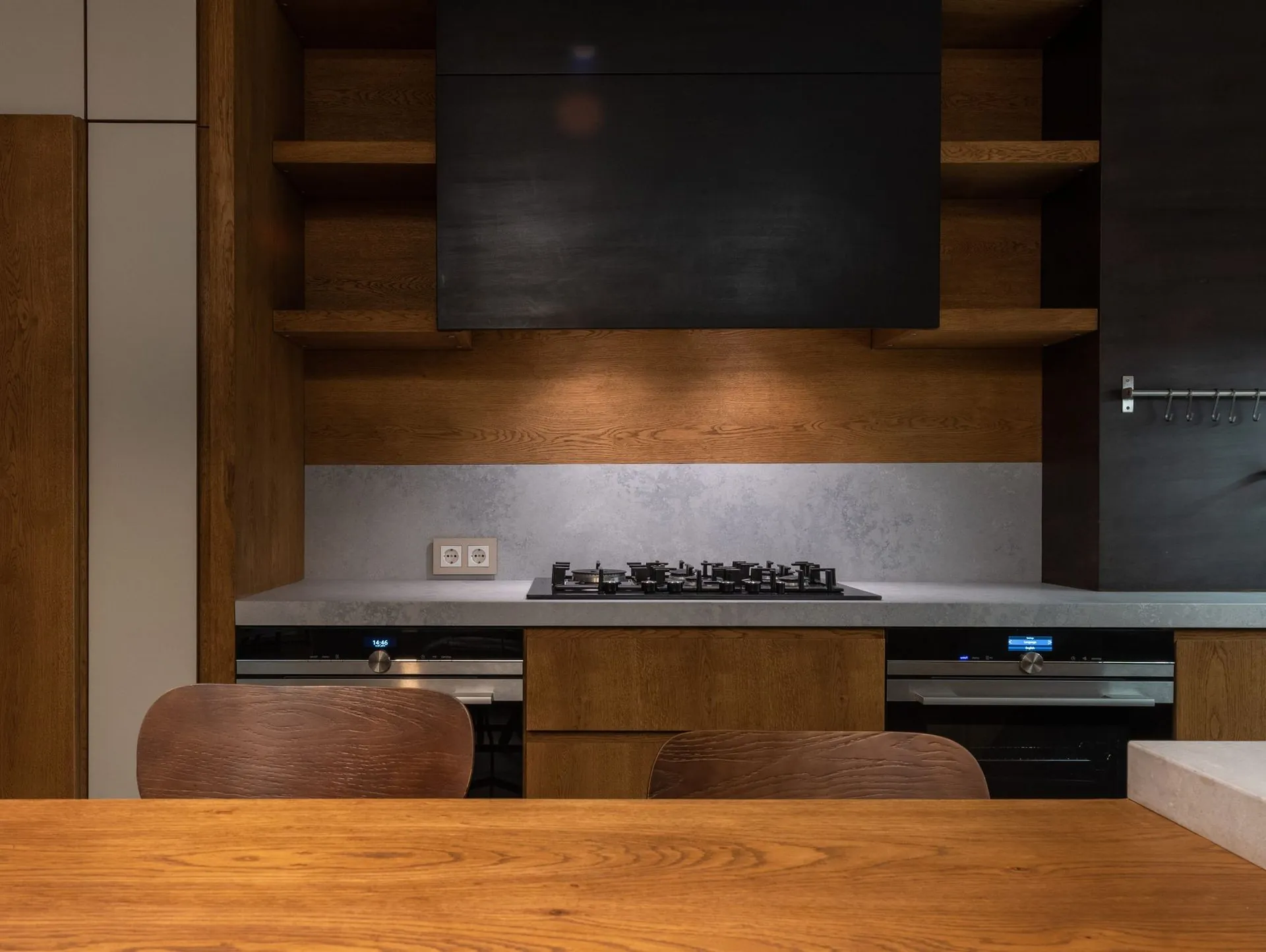
Laser-bonded edging, no glue line
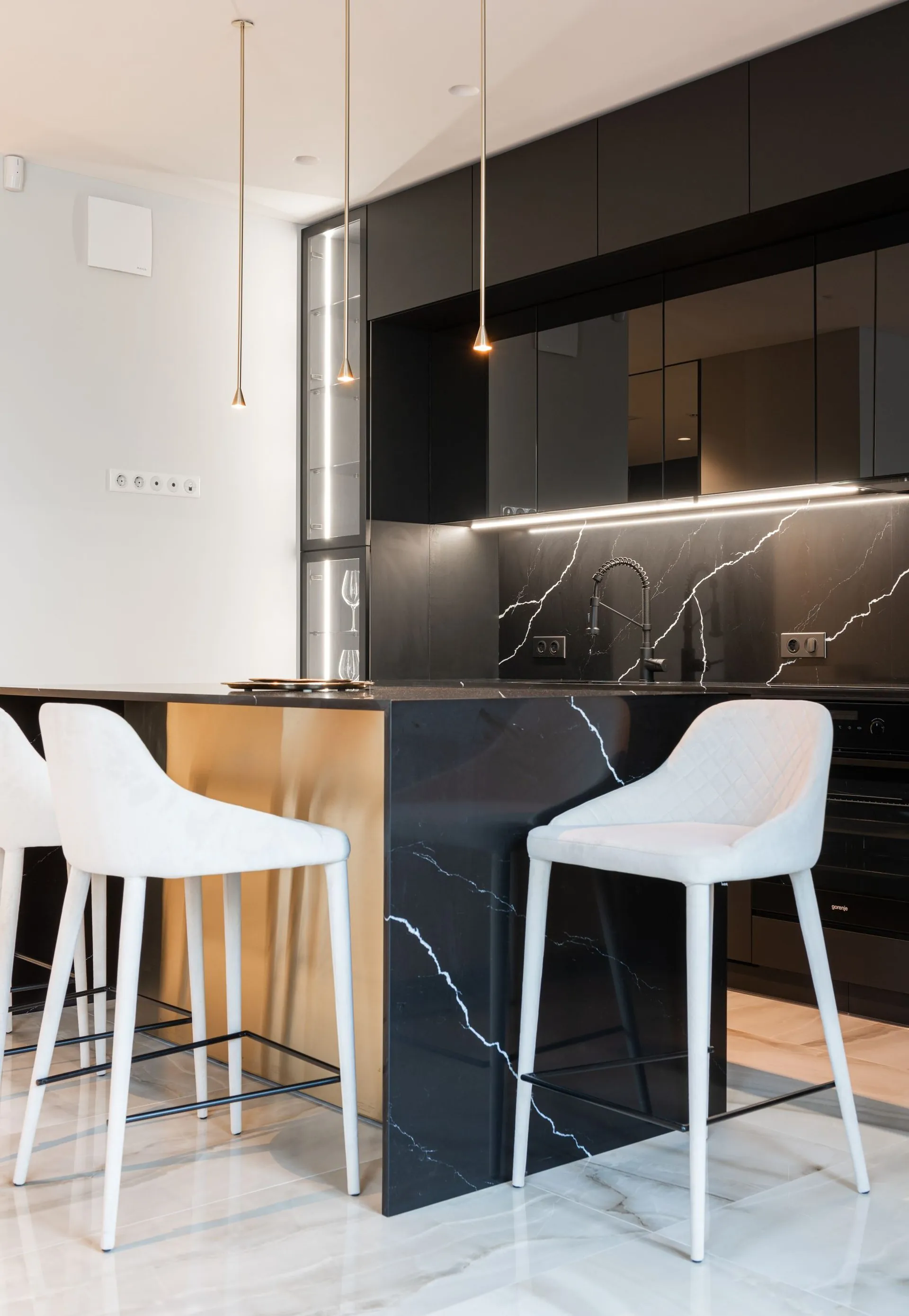
Black joinery, marble bar
The checklist
Bring us the list.
We will work through it with you.
Ninety minutes at your kitchen table with your measurements, your photographs and your five annoyances. You leave with a concept direction and a realistic number.