The kitchen allowance in your
new-build contract.
Most project-home contracts price the kitchen as an allowance, not a kitchen. What you do with that line before you sign decides whether you get the builder’s standard, pay a marked-up upgrade, or source it yourself for the difference.
The short answer
A kitchen PC item (prime cost) or allowance is a fixed dollar figure the builder has set aside for the kitchen in your contract. If the kitchen you actually choose costs more, you pay the difference — usually plus the builder’s margin on that difference. You have four options: accept the standard kitchen, upgrade through the builder, take a credit and supply your own, or fit a kitchenette-grade standard and replace it after handover. The third is where the money is, and it has to be agreed before you sign.
What a PC item actually is
A prime cost (PC) item is an allowance in a building contract for something that has not been selected yet — the builder puts a dollar figure against it so the contract can be signed. A provisional sum is the same idea for work rather than goods. Kitchens turn up as either, or as a “standard inclusion” with a specification attached. In Queensland the contract has to state each allowance, and the QBCC publishes what a builder must tell you about them. The number is a placeholder for a real kitchen, and it is almost always set to hit a contract price rather than to suit how you cook.
How the maths works when you go over
If the kitchen you choose costs more than the allowance, the difference is added to the contract as a variation, and the contract will state the builder’s margin on that difference. That margin is the part people miss. An upgrade through the builder is priced by the builder’s kitchen supplier, then marked up, so you are paying two businesses to sell you one kitchen. If you come in under the allowance you are credited the difference, though in practice a standard kitchen is priced so that nobody does.
Option one: accept the standard kitchen
It is the cheapest path on paper and the right one if you intend to sell or rent the house soon. Look hard at the specification, not the display-home kitchen: board thickness, whether the drawers are full-extension, what brand the hinges and runners are, whether the benchtop is laminate or stone and at what thickness. Most standard inclusions are chosen to a price, and the parts that fail first in a kitchen — runners, hinges, edging — are exactly where a standard kitchen saves the money.
Option two: upgrade through the builder
Simplest, and the builder carries the warranty and the coordination. The cost is the margin on every dollar over the allowance, and the fact that you are choosing from the supplier’s range on the builder’s terms. Ask for the upgrade to be itemised — cabinetry, benchtop, hardware, appliances — so you can see what each line costs against the allowance rather than one total.
Option three: delete the kitchen and supply your own
This is the option worth negotiating, and it has to happen before you sign. You ask the builder to remove the kitchen from their scope and credit the allowance. Three things to pin down in writing: the credit amount (it is often less than the allowance, because the builder’s cost for the standard kitchen is not the allowance figure); who does the plumbing and electrical fit-off and when; and what the builder charges to accommodate an owner-supplied kitchen. Builders vary from “no problem” to “no” to a coordination fee, and the answer tells you something about the builder. The kitchen becomes yours to warrant, and your supplier’s drawings become the document their trades rough in from — our guide to getting a supplied kitchen installed covers how that sequence runs.
Option four: fit the cheapest standard and replace after handover
Some people take the builder’s standard kitchen, get their certificate, and replace it. It avoids the negotiation entirely, but you pay for a kitchen you will throw away and you pay again for demolition, and a house generally needs a working kitchen sink and cooking facilities before a certifier will sign it off as habitable, so you cannot simply leave the space empty — ask your certifier. It makes sense only when the builder refuses option three and the credit on offer is small.
What to ask before you sign
What exactly is the kitchen allowance, and is it a PC item, a provisional sum or a standard inclusion? What is your margin on PC overruns? If I delete the kitchen, what is the credit? Do you accept owner-supplied kitchens, and is there a fee? Who does fit-off, and at what stage? Will your plumber and electrician rough in to my supplier’s drawings? Every one of those has a plain answer, and a builder who will not give one is telling you how the rest of the build will go.
Timing on the programme
A supplied kitchen has to be on site after the floor is down, walls are sheeted and painted, and rough-in is complete, and before fit-off. That window is short and it moves. Give your supplier the builder’s programme, not a guess, and tell the site supervisor who is supplying the kitchen so nobody orders the standard one by default. Benchtops are templated off the installed cabinetry, so stone adds a week or more to that window — our measuring guide covers what to record from the plans before the frame is even up.
Last checked: September 2026. General guidance, not legal or contract advice. Prime cost and provisional sum rules for Queensland domestic building contracts are set out by the QBCC and change; how your own builder handles deletions, credits and owner-supplied items is in your contract and in their hands. Read both before you sign.
What the kitchen costs
From a kitchenette
to fully bespoke.
Supplied and installed in Central Queensland; shipped flat pack or assembled anywhere in Australia. Every figure is a real range, not a from-price with the catches left out.
From $4,500
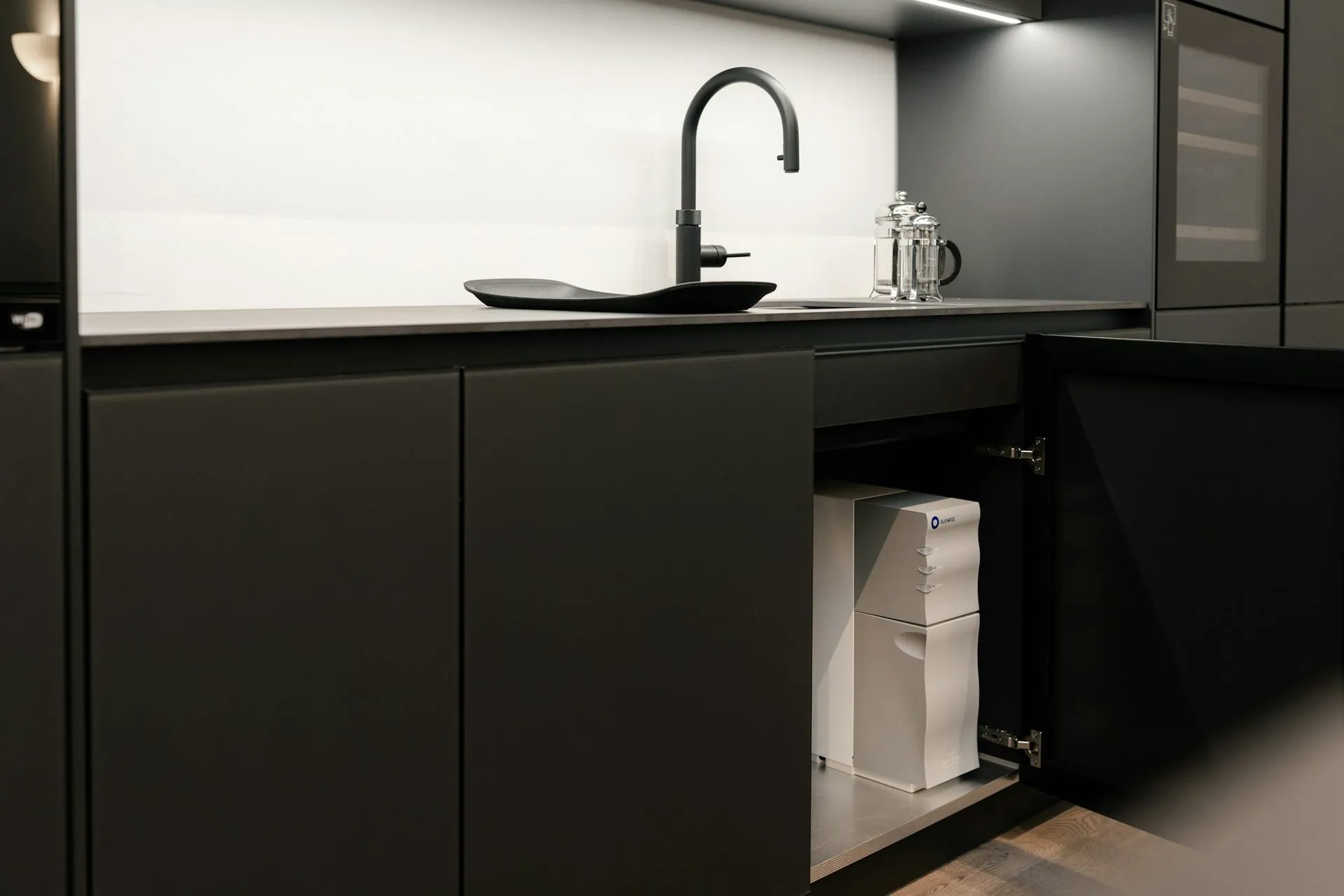
Kitchenette
For a studio, an under-house room or a short-stay unit. Sink, bench and cold storage; cooktop and microwave where they fit. Same carcasses and hardware as a full kitchen.
See what's included →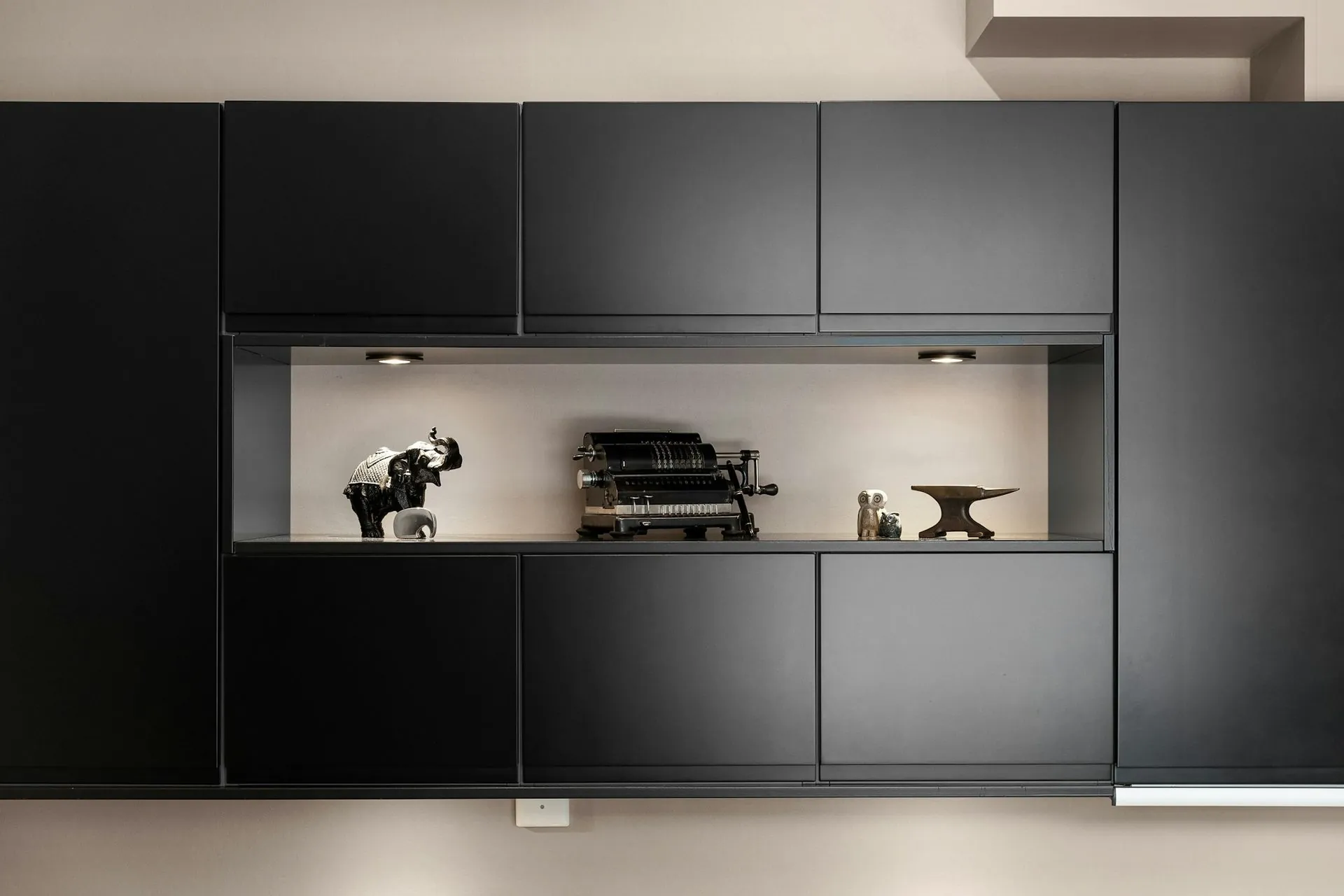
$15,000 – $23,000
Essence
Handleless, quiet, exact. Soft-matte doors on Blum soft-close runners with a stone benchtop. Our entry to bespoke, drawn to your room rather than picked from a catalogue.
See what's included →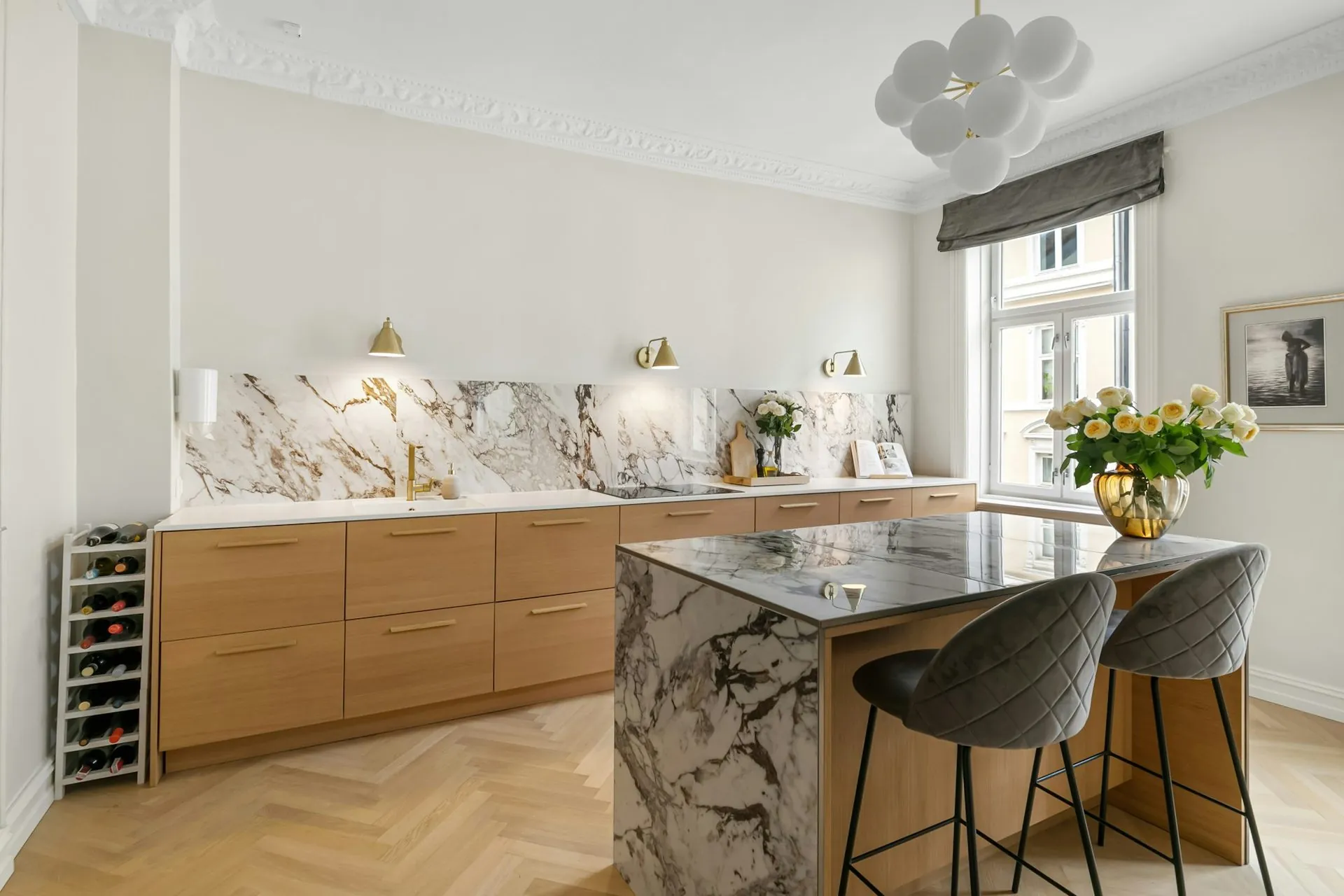
$26,000 – $42,000
Maison
What most Rockhampton families build. Timber veneer against a full-height stone splashback, a waterfall island, integrated lighting and a butler’s pantry behind a hidden door.
See what's included →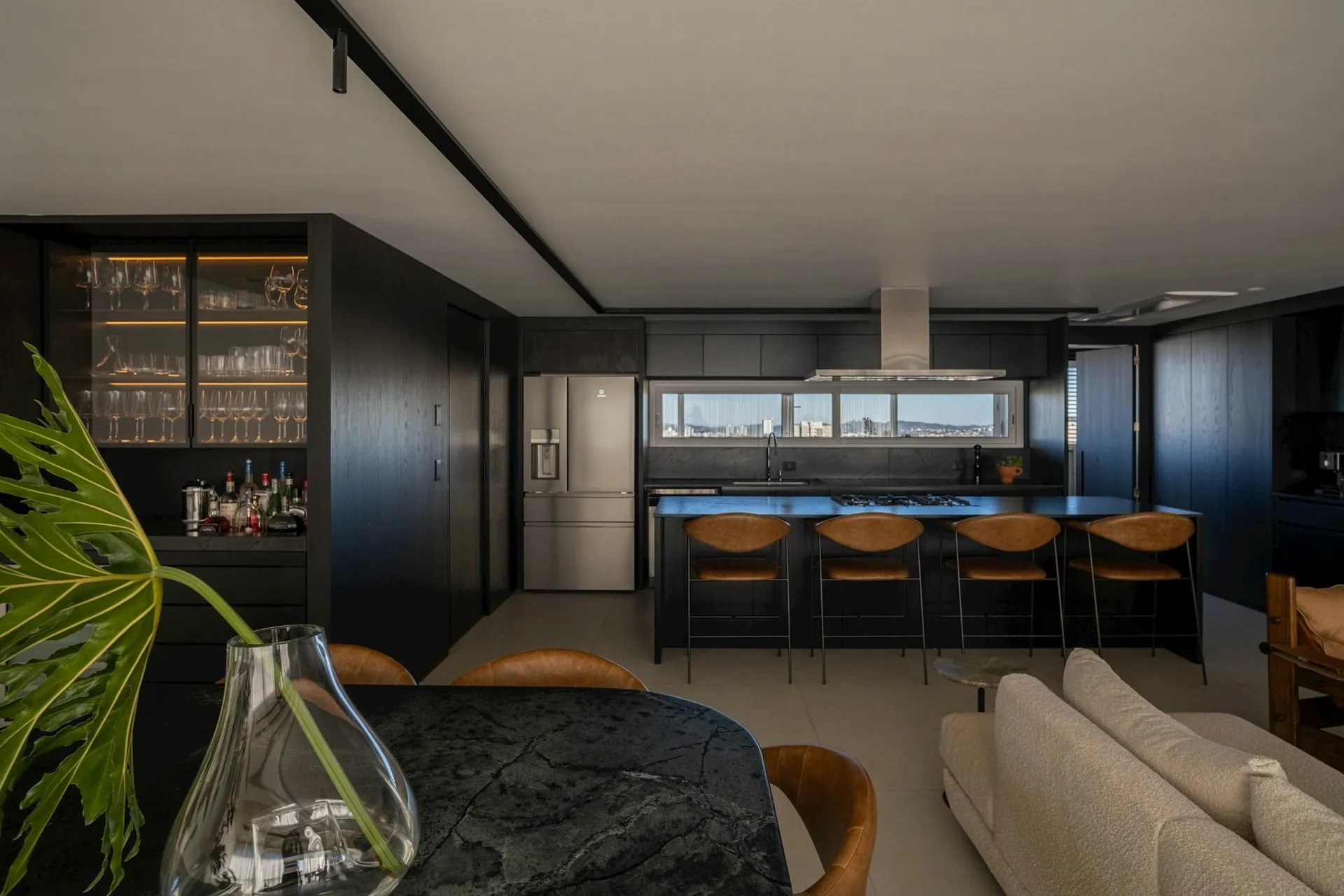
$47,000 +
Atelier
No constraints. Book-matched slabs, curved and fluted cabinetry, solid brass, wine walls and a pantry built like a jewellery box. One project at a time.
See what's included →Frequently asked
Common questions
If your question is not here, call the studio. We would rather talk it through than have you guess.
Ask us directly →What is a kitchen PC item?
A prime cost item is a dollar allowance in a building contract for something not yet selected — here, the kitchen. If your kitchen costs more than the allowance you pay the difference plus the builder’s stated margin; if it costs less, you are credited.
Can I supply my own kitchen in a new build?
Usually, if it is agreed before contract. The builder deletes the kitchen from scope, credits an amount, and you supply the kitchen for their trades to fit off. Some builders charge a coordination fee and some refuse; ask early.
Is the credit the same as the allowance?
Often not. The builder’s actual cost for the standard kitchen is usually less than the allowance figure, and the credit is based on their cost. Get the credit figure in writing before you sign.
Who warrants an owner-supplied kitchen?
Your supplier, not the builder. The builder’s statutory warranty covers their work; the cabinetry warranty comes from whoever supplied it. Blum hardware carries its own lifetime mechanical warranty.
Can I leave the kitchen out and do it after handover?
A dwelling generally needs a sink and cooking facilities to be certified as fit to occupy, so an empty kitchen space is usually not an option. Ask your certifier. Replacing a cheap standard kitchen after handover is possible but means paying for a kitchen twice.
Delivered assembled
The assembly is done
before it arrives.
Carcasses built square on a bench, Blum hardware fitted, doors hung and adjusted to even gaps. On site you are fixing finished cabinets to a wall, not building them on the floor. Our own team fits it in Central Queensland; your installer fits it anywhere else in Australia. Prefer to build it yourself? The same kitchen ships flat pack.
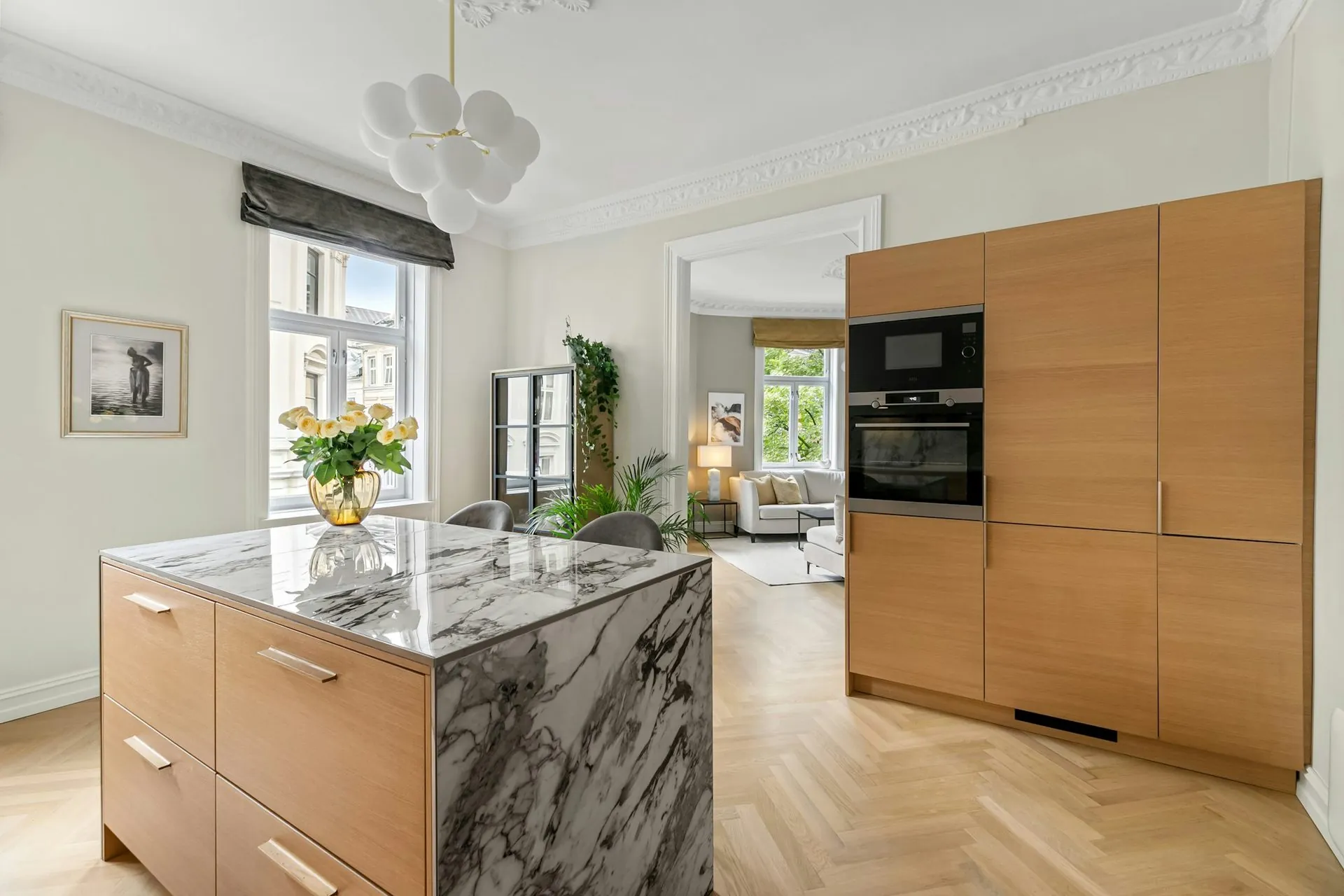
Island with seating overhang
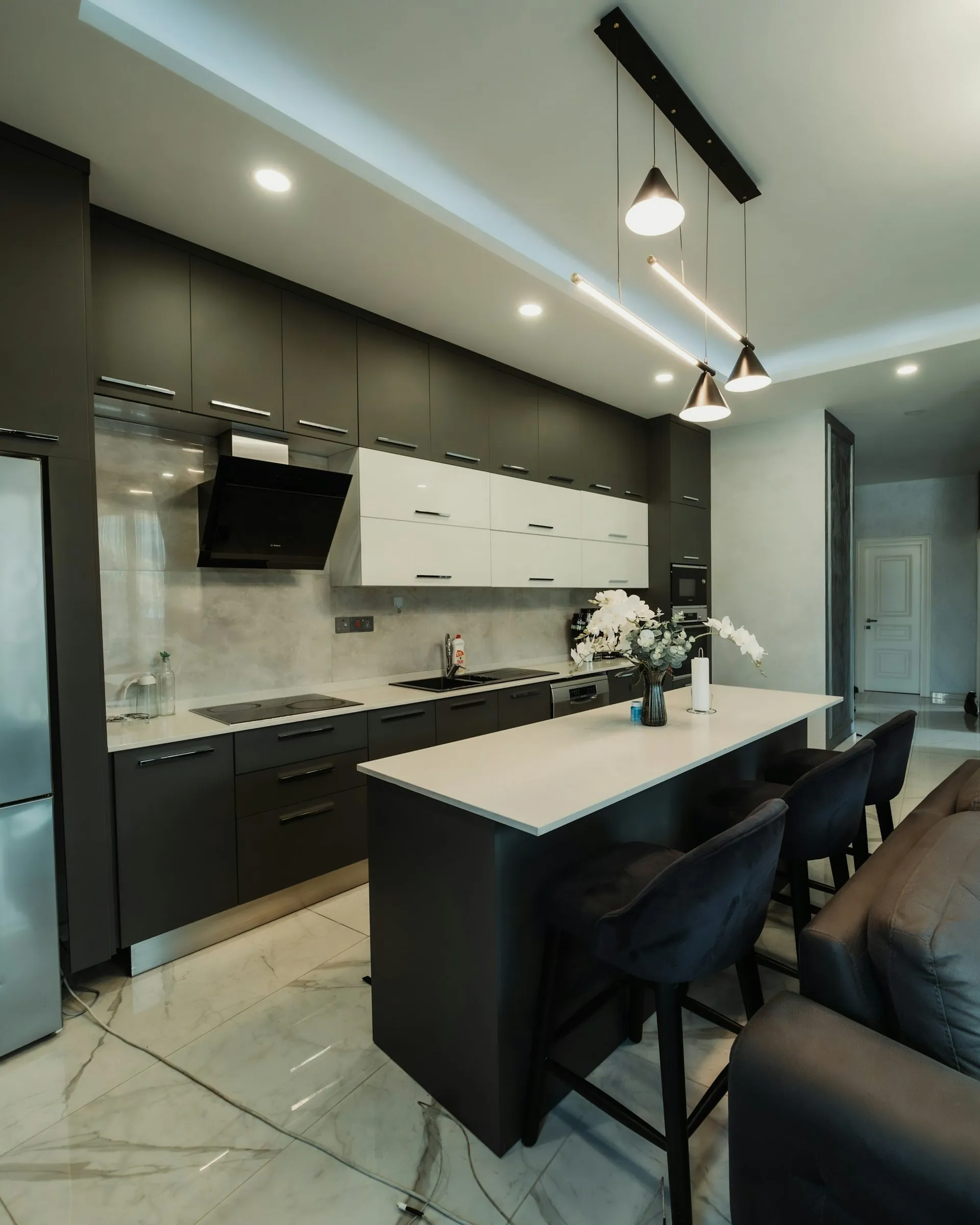
Long island, one delivery
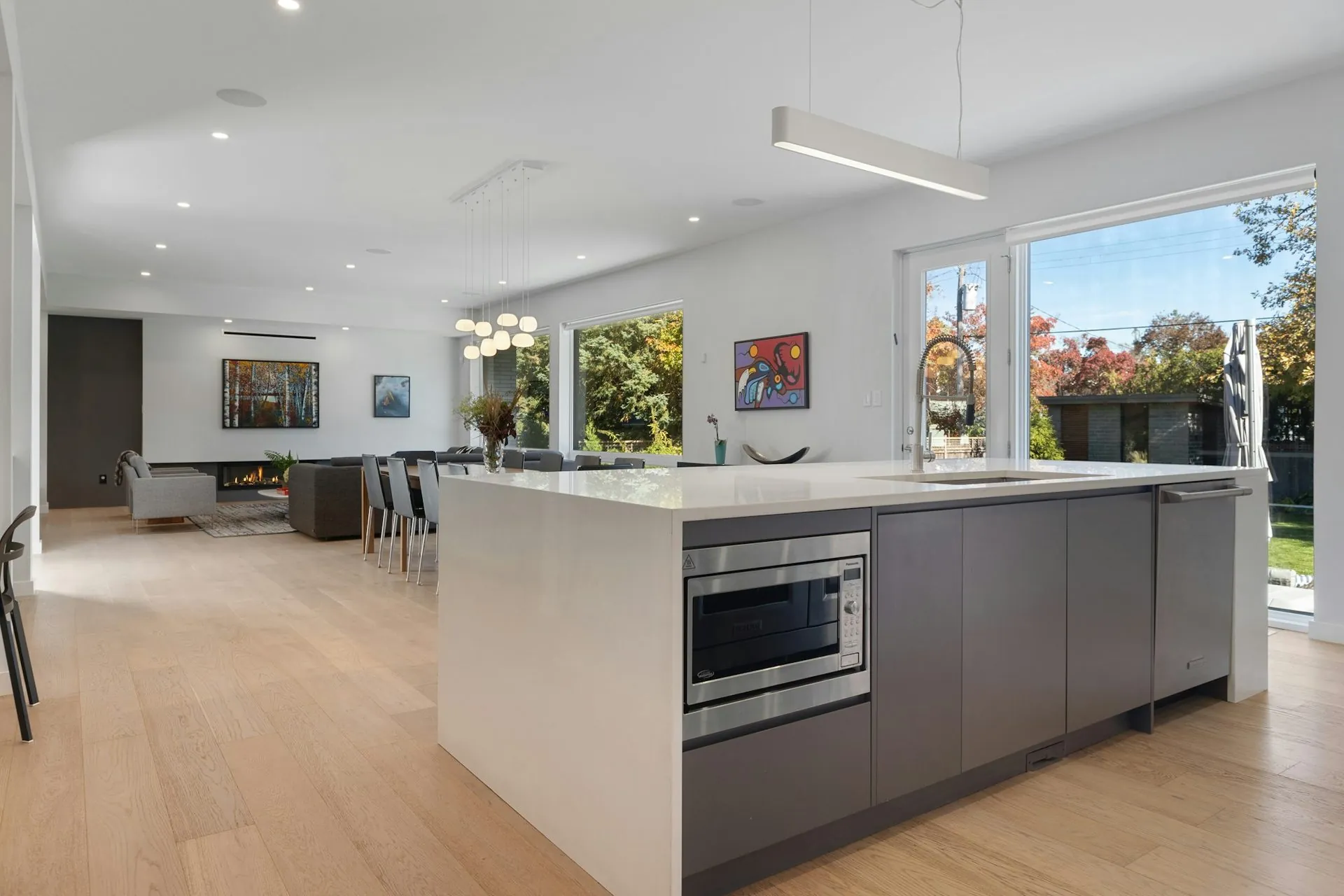
A long run arrives as numbered assembled units
New builds
Two numbers,
side by side.
The builder’s upgrade price and ours, for the same kitchen. Delivered assembled to your site on the builder’s programme, with service drawings for their plumber and electrician.