Benchtops,
compared honestly.
The largest surface in the room, the one that takes the abuse, and the single choice that moves your price most.
The short answer
Porcelain and sintered stone are the most durable — heat resistant, UV stable and non-porous, which is what matters in a Central Queensland kitchen. Engineered stone is the common upgrade and adds roughly $1,750 on a compact run. Laminate is included and better than its reputation. Natural marble is the most beautiful and the least forgiving.
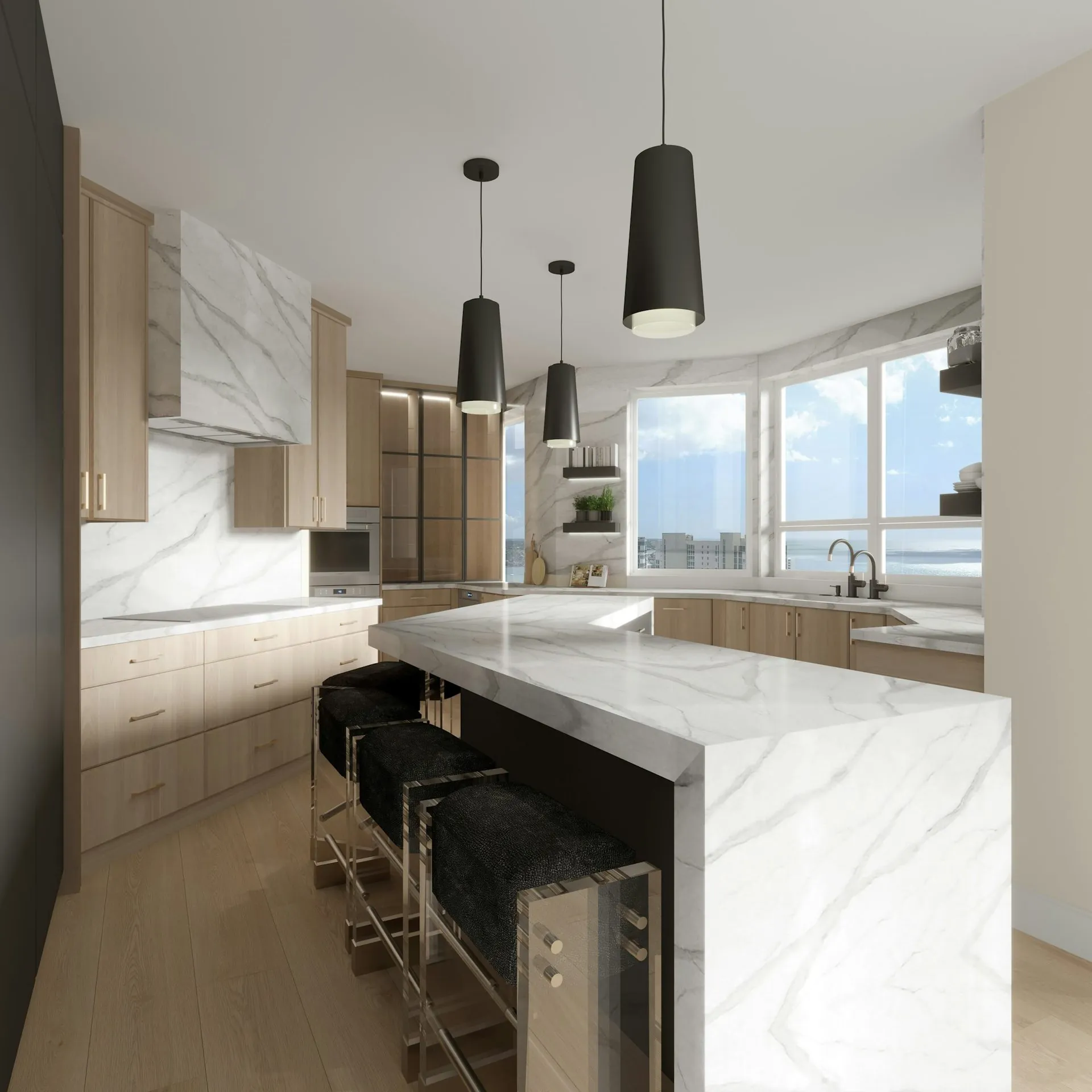
Laminate
Included in every collection, and better than its reputation. Modern laminates hold their colour, come in convincing stone and timber looks, and survive normal use for years.
Where it fails: heat and water at the edges. A hot pan will mark it permanently, and if water gets into a joint or an unsealed cut-out the substrate swells and there is no repair. In a rental or a secondary dwelling it is often exactly the right choice. In a kitchen you intend to keep for twenty years it is a compromise you will notice.
Engineered stone
The default upgrade, and adds around $1,750 on a compact run. Non-porous, consistent in appearance, and available in patterns that look like natural stone without natural stone’s variation.
Two things to know. It is not heatproof — a pan straight off the cooktop can mark it. And be aware that engineered stone containing crystalline silica has been the subject of significant regulatory change in Australia on worker-safety grounds; ask your supplier what they are actually selling you and how it is fabricated.
Porcelain and sintered stone
Our recommendation for most Central Queensland kitchens. Heat resistant to a degree the others are not, UV stable so it will not shift colour in a room that gets afternoon sun, non-porous, and extremely hard.
The trade-offs are cost and edges. It is dearer than engineered stone, and because the pattern is often surface-printed, a mitred edge needs to be done well or the join reads. Ask to see a mitred sample rather than a flat one.
Natural stone — marble and granite
The most beautiful and the least forgiving. Marble is porous, etches with anything acidic, and will develop a patina whether or not you wanted one. Granite is far harder and more practical but has fallen out of fashion in a way that has nothing to do with performance.
Choose marble with your eyes open. People who love it accept the marks as character. People who wanted it to stay pristine are unhappy within a year. We will show you an aged sample, not just a polished one, before you sign.
What we would actually specify
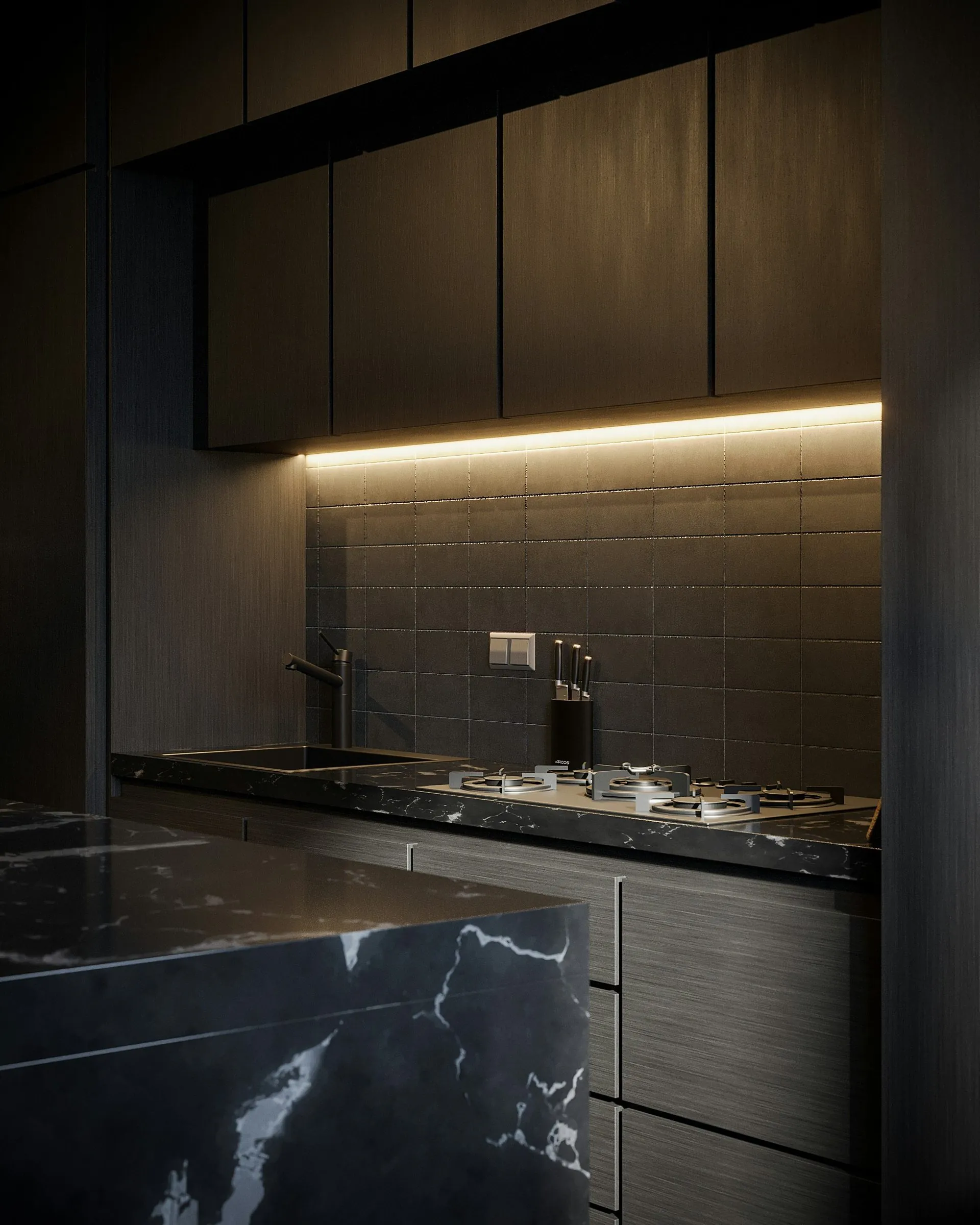
For a rental or a granny flat: laminate, and put the saving into hardware. For a family kitchen that will be used hard: porcelain or sintered stone. For a kitchen where appearance leads and the owner understands the trade-off: natural marble on the island, something tougher on the working runs.
That last combination is more common than people expect, and it is often the sensible answer — the beautiful stone where it is seen, the practical stone where the cooking happens.
Which stone reads as current is a separate question from which one lasts, and the 2026 colours and materials guide covers it.
Frequently asked
Common questions
If your question is not here, call the studio. We would rather talk it through than have you guess.
Ask us directly →What is the most durable kitchen benchtop?
Porcelain and sintered stone. They are heat resistant, UV stable, non-porous and extremely hard, which makes them the best performers in a Queensland kitchen that gets afternoon sun. They cost more than engineered stone and the mitred edges need to be well made.
How much does a stone benchtop add?
Engineered stone adds roughly $1,750 on a compact run, with porcelain and sintered stone above that and natural marble or granite above again. On a larger kitchen the gap widens, because you are paying per square metre of slab.
Can you put a hot pan on engineered stone?
No. Engineered stone is not heatproof and a pan straight off the cooktop can mark it permanently. Porcelain and sintered stone handle heat far better. If you are a cook who moves pans directly to the bench, that difference should decide your choice.
Does marble stain?
Marble is porous and etches with anything acidic — lemon, wine, vinegar — regardless of sealing. It develops a patina. Owners who love marble accept that as character; owners who expected it to stay pristine are usually unhappy. We show clients an aged sample before they commit.
Delivered assembled
The assembly is done
before it arrives.
Carcasses built square on a bench, Blum hardware fitted, doors hung and adjusted to even gaps. On site you are fixing finished cabinets to a wall, not building them on the floor. Our own team fits it in Central Queensland; your installer fits it anywhere else in Australia. Prefer to build it yourself? The same kitchen ships flat pack.
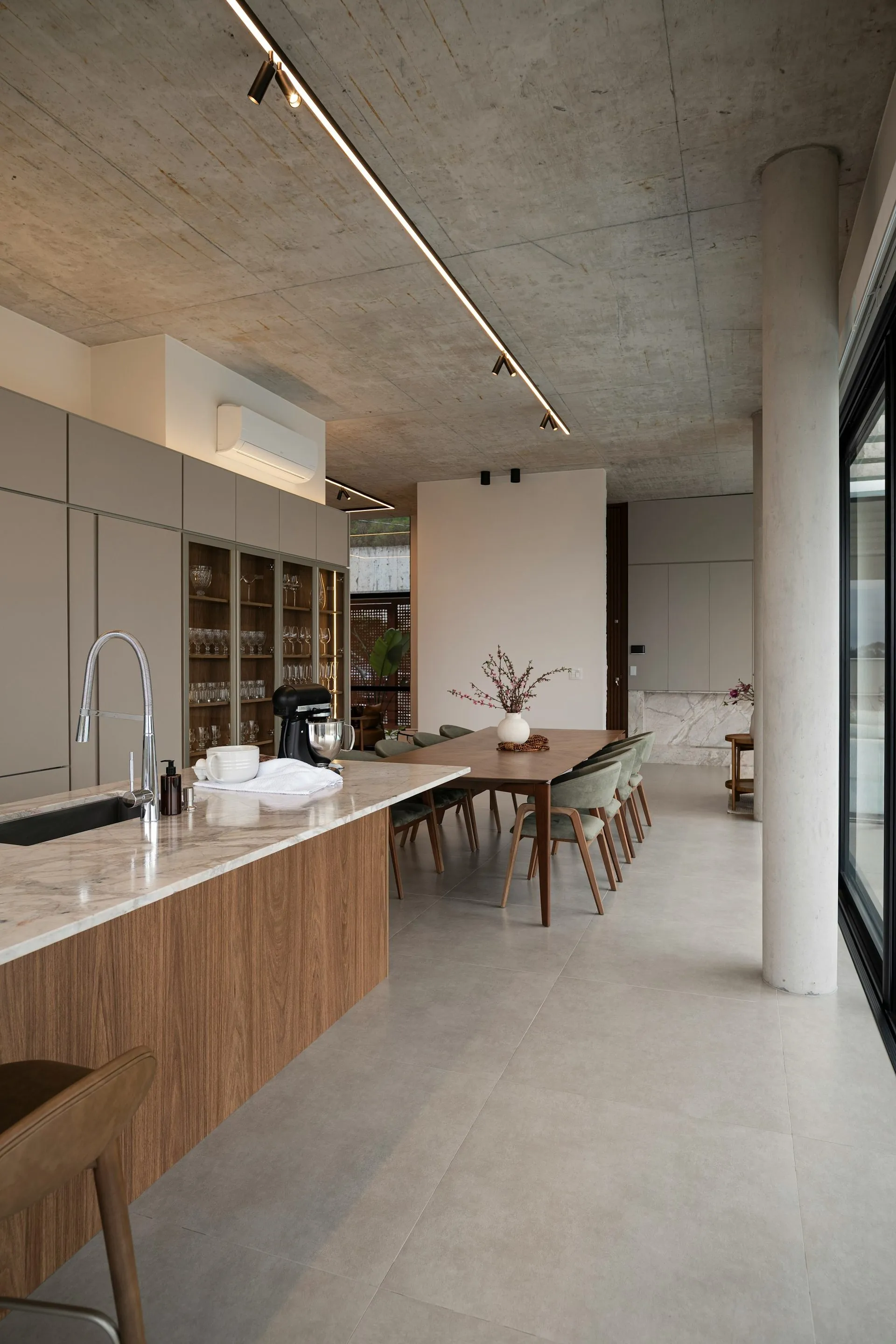
Timber island, stone top
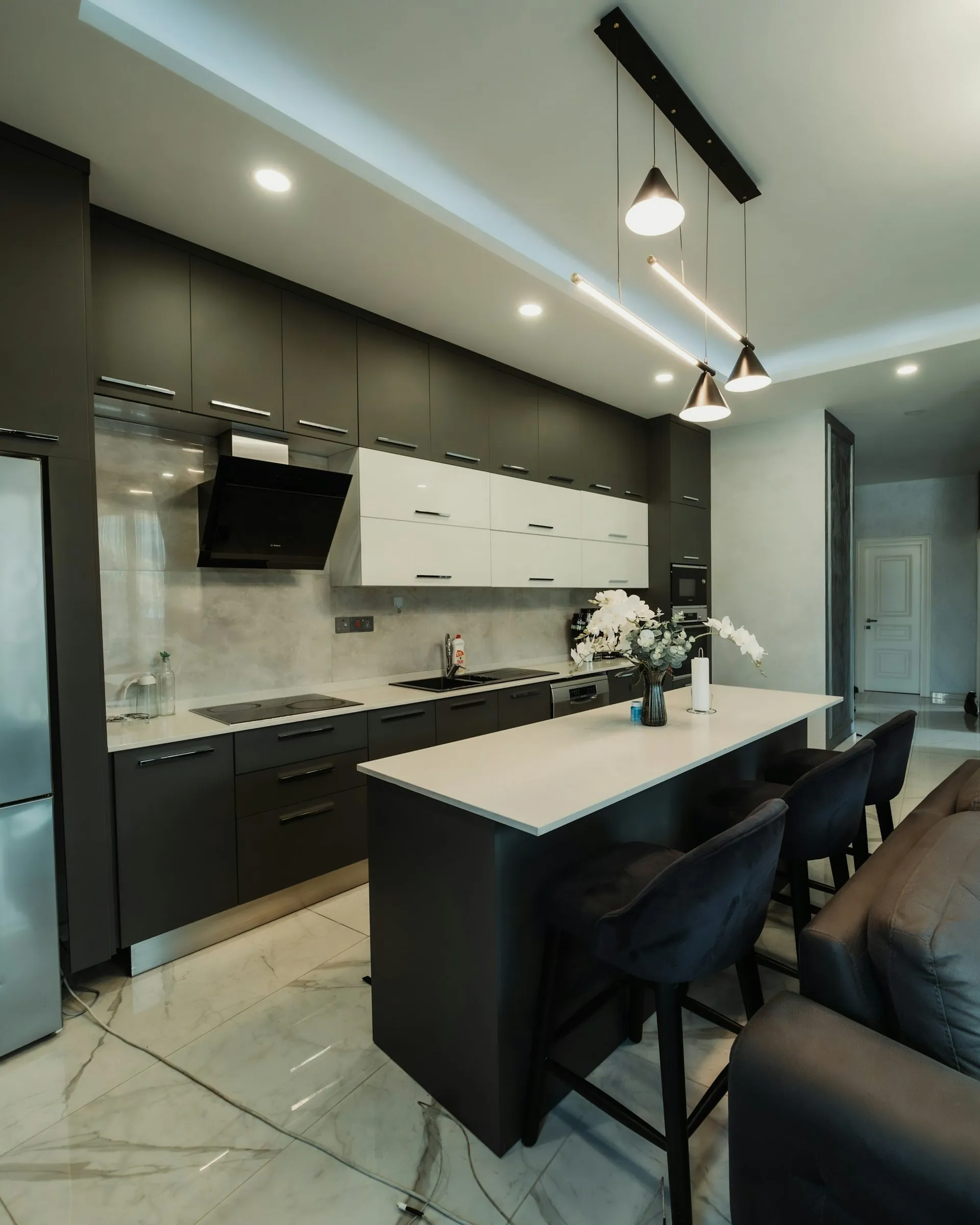
Long island, one delivery
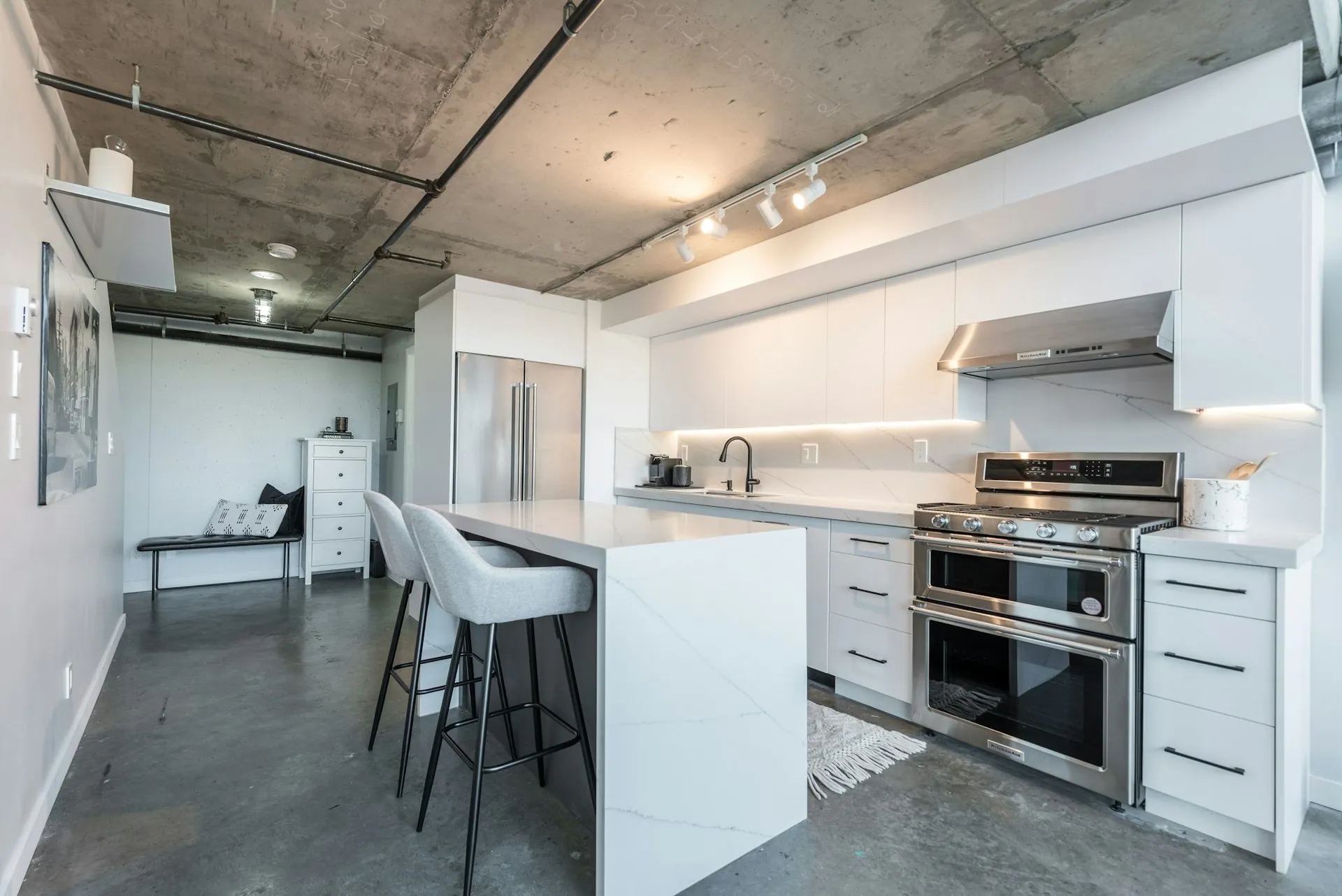
Concrete-look doors, matte black hardware
Benchtops
Hold the samples
before you choose.
Photographs lie about stone. We bring real offcuts to your kitchen so you see them in your own light, next to your own floor. Free, and yours to keep whatever you decide.